

ORNL's Communications team works with news media seeking information about the laboratory. Media may use the resources listed below or send questions to news@ornl.gov.
1 - 10 of 4399 Results
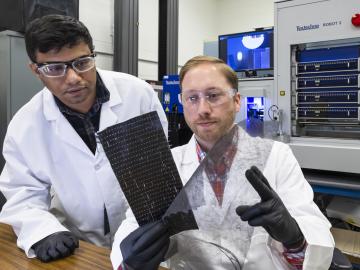
Researchers at ORNL have developed an innovative new technique using carbon nanofibers to enhance binding in carbon fiber and other fiber-reinforced polymer composites – an advance likely to improve structural materials for automobiles, airplanes and other applications that require lightweight and strong materials.
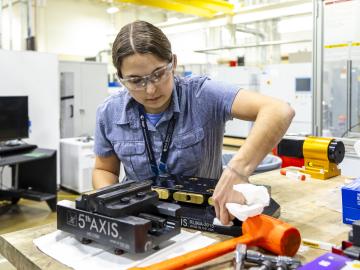
The Energy Science and Technology Directorate has released a new strategic vision to accelerate breakthroughs in energy technologies into real-world solutions that strengthen U.S. energy security and global competitiveness.
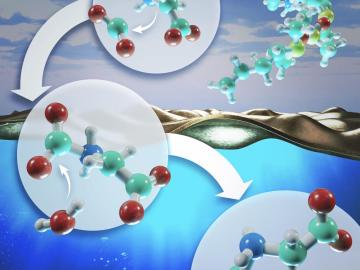
Using the now-decommissioned Summit supercomputer, researchers at ORNL ran the largest and most accurate molecular dynamics simulations yet of the interface between water and air during a chemical reaction. The simulations have uncovered how water controls such chemical reactions by dynamically coupling with the molecules involved in the process.

The Center for Bioenergy Innovation, or CBI, at the Department of Energy’s Oak Ridge National Laboratory has promoted Melissa Cregger and Carrie Eckert to serve as chief science officers, advancing the center’s mission of innovations for new domestic biofuels, chemicals and materials.
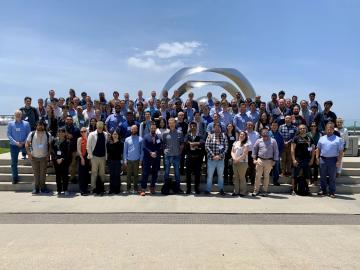
Members of the Quantum Science Center, or QSC, gathered at an all-hands meeting in Baton Rouge, Louisiana, in mid-May to reflect on the remarkable accomplishments from the past five years and to prepare for what members hope to be the next five years of the center.
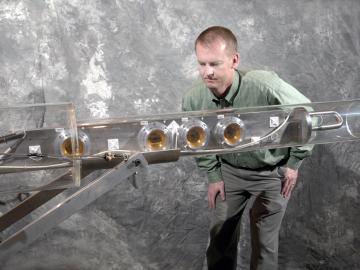
Van Graves, an engineering manager at ORNL, is celebrating 40 years of dedicated service leading a diverse range of prominent engineering projects at ORNL and internationally.
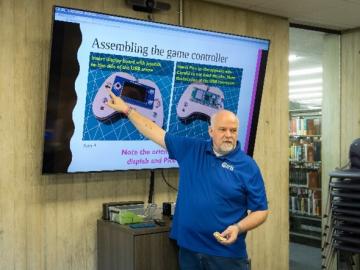
ORNL's Thomas Proffen, a neutron scattering scientist, has been awarded the 2025 STEM Advocate Award by the Tennessee STEM Innovation Network for his outstanding contributions to inspiring students in technology. Proffen’s efforts focus on promoting coding, robotics and STEM education among youth.
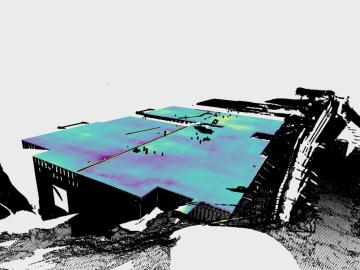
Researchers at ORNL have developed a tool that gives builders a quick way to measure, correct and certify level foundations. FLAT, or the Flat and Level Analysis Tool, examines a 360-degree laser scan of a construction site using ORNL-developed segmentation algorithms and machine learning to locate uneven areas on a concrete slab.
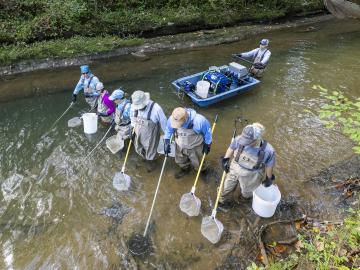
ORNL’s Biological Monitoring and Abatement Program, or BMAP, is marking 40 years of helping steward the DOE’s 33,476 acres of land on which some of the nation’s most powerful science and technology missions are carried out.
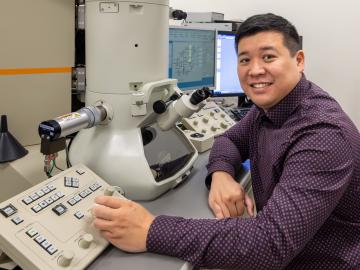
As the focus on energy resiliency and competitiveness increases, the development of advanced materials for next-generation, commercial fusion reactors is gaining attention. A recent paper examines a promising candidate for these reactors: ultra-high-temperature ceramics, or UHTCs.