All News

1 - 10 of 25 Results

A close-up of a laboratory experimental setup showing a cylindrical metal vacuum chamber with a circular optical viewport emitting bright blue light. A FLIR camera and optical sensors are mounted on an aluminum rail aimed at the glowing chamber interior. The viewport is surrounded by bolts and insulation straps, and a hinged metal mesh cover is open to the right, revealing the illuminated interior used for diagnostics or plasma experiments.

Researchers at ORNL are helping to enable the next generation of abundant, affordable nuclear energy by combining 80 years of know-how with the latest scientific techniques, facilities and equipment. The lab’s longstanding expertise in degradation of materials in the harsh environments of nuclear reactors make it the go-to place for a resurgence of interest in liquid metals and molten salts for both advanced fission and fusion reactors. 

Kyoto Fusioneering’s UNITY-1 blanket and thermal cycle test facility will complement the new breeding blanket testing infrastructure being developed with ORNL.

ORNL is partnering with Kyoto Fusioneering on a new public-private partnership that leverages each institution’s expertise in fusion technology to develop world-leading fusion test facilities and technology and accelerate the deployment of commercial fusion power. 

An illustrative rendering of Type One Energy’s high-heat flux facility depicts the high-temperature helium loop (left) and the vacuum vessel (center).

ORNL, Type One Energy and the University of Tennessee, Knoxville, are partnering to establish a world-class facility that will drive American innovation and move fusion energy closer to reality. This high-heat flux facility, located in TVA’s Bull Run site in East Tennessee, will evaluate how materials react under extreme conditions in a fusion device. 

A view looking lengthwise through a cylindrical structure containing multiple concentric copper coils. Electrical cables and instrumentation are attached to the central support rod, with laboratory equipment visible through gaps in the coil assembly.

MPEX is a new ORNL facility designed to recreate the extreme conditions at the edge of fusion reactors so researchers can test how plasma-facing materials survive. Its capabilities will speed the development of durable components needed for future fusion power plants.

Three men sit around a table in an office, discussing documents and taking notes. Open reference books lie on the table, and shelves filled with books and files are visible in the background.

Decades of nuclear fission research are providing critical insights to help scientists design the next generation of fusion systems, and few understand that connection better than ORNL’s Michael Loughlin. 

FREDA logo with a blue background and neon blue lines coming from the bottom left, plus a circle in the middle filled with half science atom symbol and half gear

FREDA is a new tool being developed at ORNL that will accelerate the design and testing of next-generation fusion devices. It is the first tool of its kind to combine plasma and engineering modeling capabilities and utilize high performance computing resources.

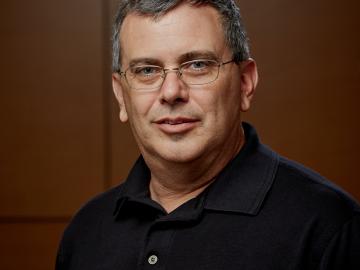
A portrait of John Sanseverino.

John joined the MPEX project in 2019 and has served as project manager for several organizations within ORNL.

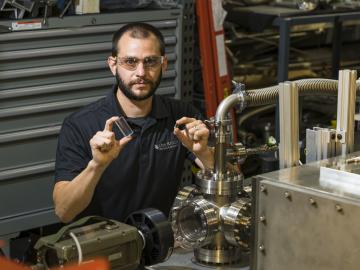
A portrait of Larry Baylor

The award was given in “recognition of his lifelong leadership in fusion technology for plasma fueling systems in magnetically confined fusion systems.”
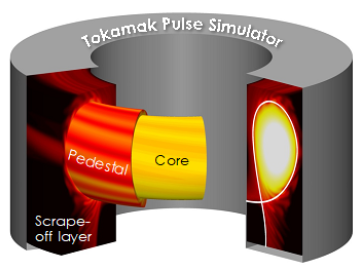
: This schematic of tokamak core-pedestal-boundary regions show what will be simulated by an ORNL project applying machine learning to plasma physics modeling. Credit: Giacomin et al., J. Comput. Phys., 463, (2022) 111294, https://doi.org/10.1016/j.jcp.2022.11294

ORNL will lead three new DOE-funded projects designed to bring fusion energy to the grid on a rapid timescale.
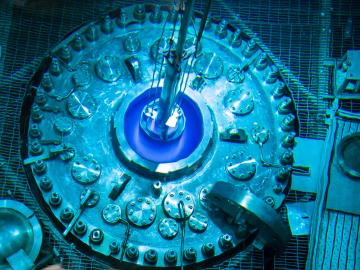
HFIR

Creating energy the way the sun and stars do — through nuclear fusion — is one of the grand challenges facing science and technology. What’s easy for the sun and its billions of relatives turns out to be particularly difficult on Earth.