

ORNL's Communications team works with news media seeking information about the laboratory. Media may use the resources listed below or send questions to news@ornl.gov.
1 - 10 of 55 Results
Three flights, five thousand miles and half a dozen clearances and permissions stood between Tetiana Maltseva and the Department of Energy’s Oak Ridge National Laboratory. When she finally arrived at the lab to represent Ukraine at the 2024 Nuclear Energy Management School, her vision was clear.

Three staff members in ORNL’s Fusion and Fission Energy and Science Directorate have moved into newly established roles facilitating communication and program management with sponsors of the directorate’s Nuclear Energy and Fuel Cycle Division.

Two fusion energy leaders have joined ORNL in the Fusion and Fission Energy and Science Directorate, or FFESD.

“Three-Dimensional Breast Cancer Spheroids” submitted by radiotherapeutics researcher Debjani Pal is stunning. Brilliant blue dots pop from an electric sphere threaded with bright colors: greens, aqua, hot pink and red.

ORNL is leading three research collaborations with fusion industry partners through the Innovation Network for FUSion Energy, or INFUSE, program that will focus on resolving technical challenges and developing innovative solutions to make practical fusion energy a reality.
In fiscal year 2023 — Oct. 1–Sept. 30, 2023 — Oak Ridge National Laboratory was awarded more than $8 million in technology maturation funding through the Department of Energy’s Technology Commercialization Fund, or TCF.

The heat is on at this year’s Molten Salt Reactor Workshop – where top research and industry minds are melding to advance development on molten salt technology – at ORNL.
The Department of Energy’s Oak Ridge National Laboratory hosted the second 2023 cohort of the International Atomic Energy Agency’s Lise Meitner Programme in October.
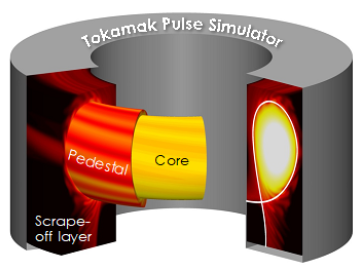
ORNL will lead three new DOE-funded projects designed to bring fusion energy to the grid on a rapid timescale.
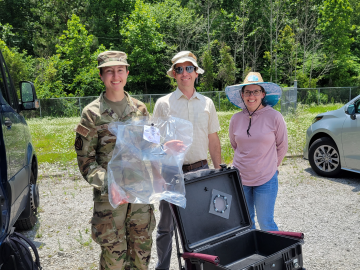
Cadet Elyse Wages, a rising junior at the United States Air Force Academy, visited ORNL with one goal in mind: collect air.