

ORNL's Communications team works with news media seeking information about the laboratory. Media may use the resources listed below or send questions to news@ornl.gov.
1 - 10 of 18 Results
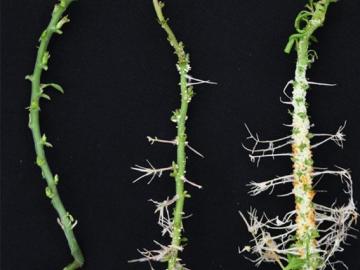
Oak Ridge National Laboratory scientists identified a gene “hotspot” in the poplar tree that triggers dramatically increased root growth. The discovery supports development of better bioenergy crops and other plants that can thrive in difficult conditions while storing more carbon belowground.
![Coexpression_hi-res_image[1].jpg](/sites/default/files/styles/list_page_thumbnail/public/Coexpression_hi-res_image%5B1%5D_0.jpg?itok=OnLe-krT "Coexpression_hi-res_image[1].jpg")
While studying the genes in poplar trees that control callus formation, scientists at Oak Ridge National Laboratory have uncovered genetic networks at the root of tumor formation in several human cancers.
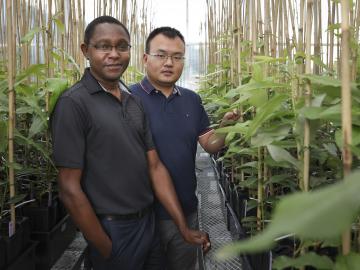
For decades, biologists have believed a key enzyme in plants had one function—produce amino acids, which are vital to plant survival and also essential to human diets. But for Wellington Muchero, Meng Xie and their colleagues, this enzyme does more than advertised. They had run a series of experiments on poplar plants that consistently revealed mutations in a structure of the life-sustaining enzyme that was not previously known to exist.
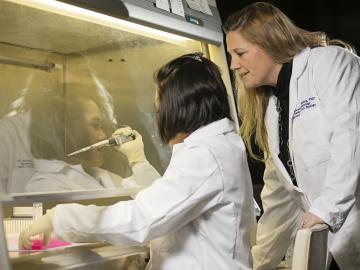
A new process to identify certain microbes in women could be used to diagnose endometriosis without invasive surgery, even before symptoms start. A collaborative research team including Oak Ridge National Laboratory analyzed bacteria from a small sample of premenopausal women undergoing laparoscopic surgery for suspected endometriosis.

Brian Davison, a researcher at the Department of Energy's Oak Ridge National Laboratory, has been awarded a 2017 fellowship by the Society for Industrial Microbiology and Biotechnology (SIMB).
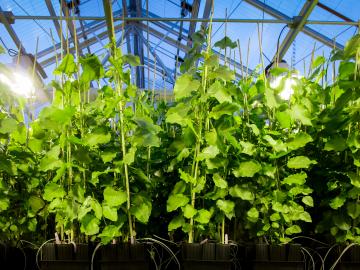
Researchers at the Department of Energy’s Oak Ridge National Laboratory (ORNL) have released the largest-ever single nucleotide polymorphism (SNP) dataset of genetic variations in poplar trees, information useful to plant scientists
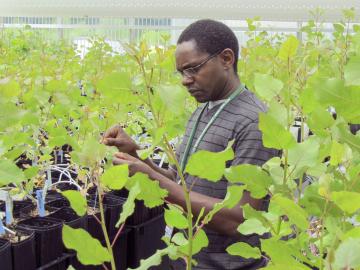
GreenWood Resources has licensed an Oak Ridge National Laboratory technology based on the discovery of a gene in poplar (Populus trichocarpa) that makes it easier to convert poplar trees into biofuels. GreenWood, a global timberland investment and asset m...
Biofuels pioneer Mascoma LLC and the Department of Energy's BioEnergy Science Center have developed a revolutionary strain of yeast that could help significantly accelerate the development of biofuels from nonfood plant matter.
A major multinational report on bioenergy and sustainability released Tuesday concludes the sustainable production of bioenergy can be an important tool for addressing climate change. Two researchers at the Department of Energy's Oak Ridge National Lab...
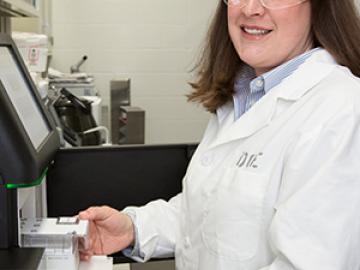
Scientists focused on producing biofuels more efficiently have a new powerful dataset to help them study the DNA of microbes that fuel bioconversion and other processes.