

ORNL's Communications team works with news media seeking information about the laboratory. Media may use the resources listed below or send questions to news@ornl.gov.
1 - 10 of 212 Results
Electrolytes that convert chemical to electrical energy underlie the search for new power sources with zero emissions. Among these new power sources are fuel cells that produce electricity.
Scientists at ORNL used neutrons to end a decades-long debate about an enzyme cancer uses.
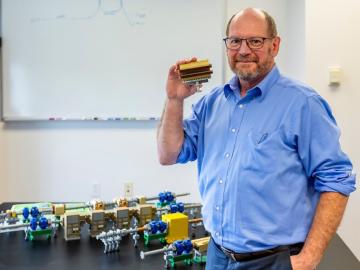
Using LEGO® bricks, Robert Saethre has worked to create a model of the ring injection region of the SNS pulsed accelerator that features the new Proton Power Upgrade magnets and vacuum chambers.
Scientists at ORNL have developed 3-D-printed collimator techniques that can be used to custom design collimators that better filter out noise during different types of neutron scattering experiments
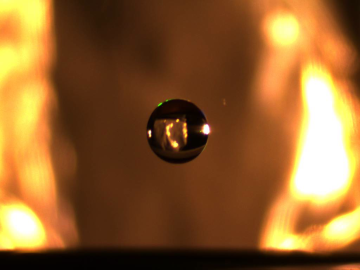
How do you get water to float in midair? With a WAND2, of course. But it’s hardly magic. In fact, it’s a scientific device used by scientists to study matter.
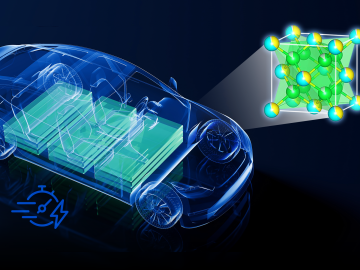
Currently, the biggest hurdle for electric vehicles, or EVs, is the development of advanced battery technology to extend driving range, safety and reliability.
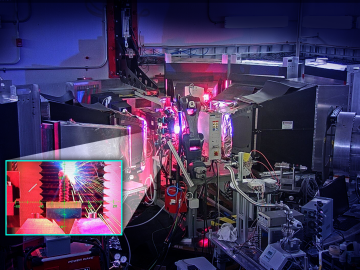
Using neutrons to see the additive manufacturing process at the atomic level, scientists have shown that they can measure strain in a material as it evolves and track how atoms move in response to stress.

ORNL’s Fulvia Pilat and Karren More recently participated in the inaugural 2023 Nanotechnology Infrastructure Leaders Summit and Workshop at the White House.
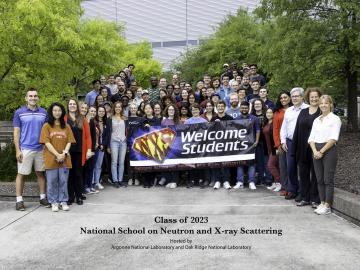
In 2023, the National School on X-ray and Neutron Scattering, or NXS, marked its 25th year during its annual program, held August 6–18 at the Department of Energy’s Oak Ridge and Argonne National Laboratories.
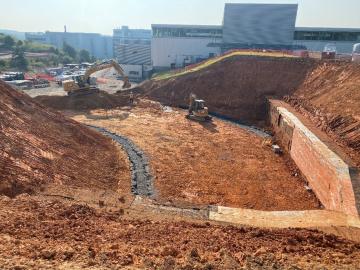
The Spallation Neutron Source — already the world’s most powerful accelerator-based neutron source — will be on a planned hiatus through June 2024 as crews work to upgrade the facility. Much of the work — part of the facility’s Proton Power Upgrade project — will involve building a connector between the accelerator and the planned Second Target Station.