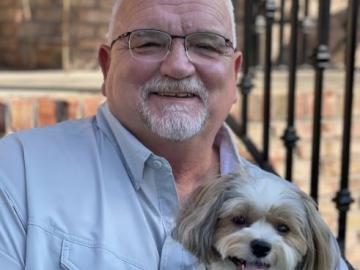
After retiring from Y-12, Scott Abston joined the Isotope Science and Engineering Directorate to support isotope production and work with his former manager. He now leads a team maintaining critical equipment for medical and space applications.


After retiring from Y-12, Scott Abston joined the Isotope Science and Engineering Directorate to support isotope production and work with his former manager. He now leads a team maintaining critical equipment for medical and space applications.
ORNL is the lead partner on five research collaborations with private fusion companies in the 2024 cohort of the Innovation Network for FUSion Energy, or INFUSE, program.

Jeremiah Sewell leads a team at ORNL, working on xenon-129 production for lung imaging.
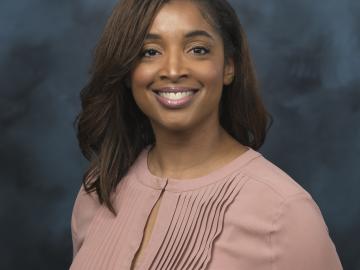
Leadership Tennessee has named Clarice Phelps to its 2024–2025 Signature Program Class XI to collaborate with professionals statewide to address Tennessee’s most serious issues.
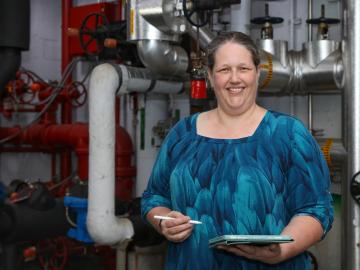
Sara Martinez ensures the safety and longevity of aging structures at Oak Ridge National Laboratory, employing her engineering expertise to protect against natural disasters and extend the lifespan of critical facilities.
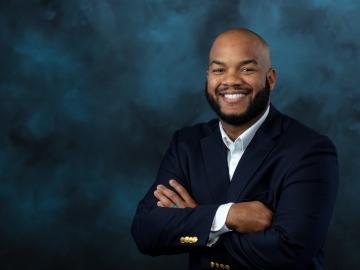
Early career scientist Frankie White's was part of two major isotope projects at the same time he was preparing to be a father.
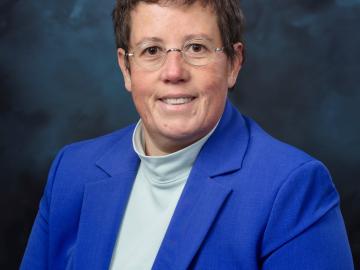
Lætitia H. Delmau, a distinguished researcher and radiochemist at Oak Ridge National Laboratory, has received the prestigious 2024 Glenn T. Seaborg Actinide Separations Award.
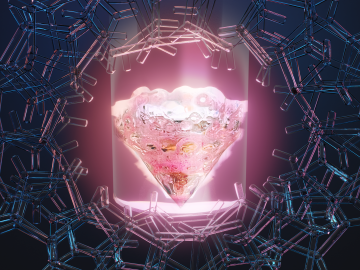
Scientists have uncovered the properties of a rare earth element that was first discovered 80 years ago at the very same laboratory, opening a new pathway for the exploration of elements critical in modern technology, from medicine to space travel.
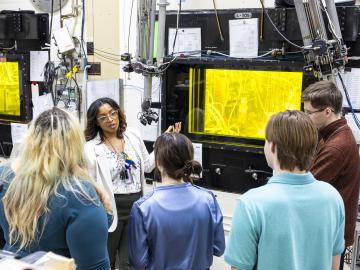
Students from the first class of ORNL and Pellissippi State Community College's joint Chemical Radiation Technology Pathway toured isotope facilities at ORNL.
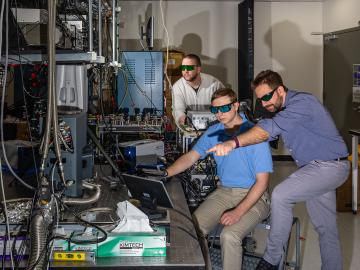
ORNL scientists are working on a project to engineer and develop a cryogenic ion trap apparatus to simulate quantum spin liquids, a key research area in materials science and neutron scattering studies.