

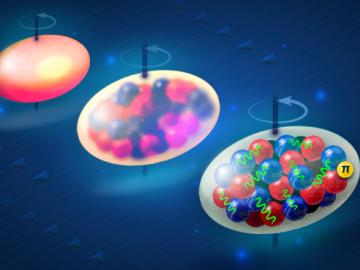
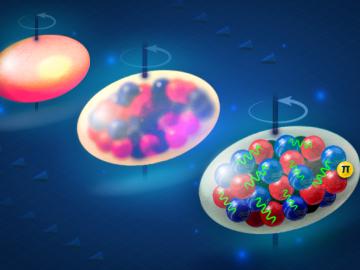
Using the Frontier supercomputer at ORNL, researchers have developed a new technique that predicts nuclear properties in record detail. The study revealed how the structure of a nucleus relates to the force that holds it together.
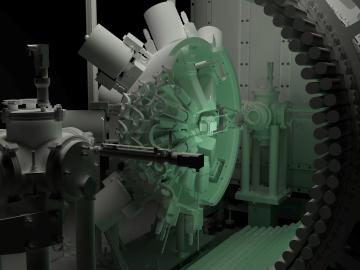
Scientists at ORNL are using advanced germanium detectors to explore fundamental questions in nuclear physics, such as the nature of neutrinos and the matter-antimatter imbalance.

Nuclear physicists at the Department of Energy’s Oak Ridge National Laboratory recently used Frontier, the world’s most powerful supercomputer, to calculate the magnetic properties of calcium-48’s atomic nucleus.

Scientists have determined that a rare element found in some of the oldest solids in the solar system, such as meteorites, and previously thought to have been forged in supernova explosions, actually predate such cosmic events, challenging long-held the
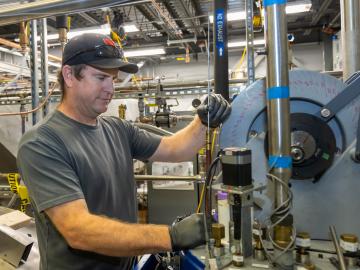
Associate Technician Sean Hollander is the keeper of the Fundamental Neutron Physics Beamline, which is operated by the Physics Division at the Spallation Neutron Source at ORNL, where scientists use neutrons to study all manner of matter.
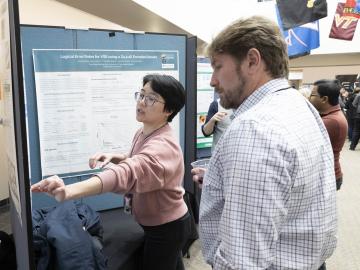
On Nov. 1, about 250 employees at Oak Ridge National Laboratory gathered in person and online for Quantum on the Quad, an event designed to collect input for a quantum roadmap currently in development.

Physicists William Raphael “Raph” Hix of the Department of Energy’s Oak Ridge National Laboratory and John Lajoie, who will join ORNL on Nov. 6 from Iowa State University, have been elected Fellows of the American Physical Society.

ORNL, a bastion of nuclear physics research for the past 80 years, is poised to strengthen its programs and service to the United States over the next decade if national recommendations of the Nuclear Science Advisory Committee, or NSAC, are enacted.

ORNL is leading two nuclear physics research projects within the Scientific Discovery through Advanced Computing, or SciDAC, program from the Department of Energy Office of Science.