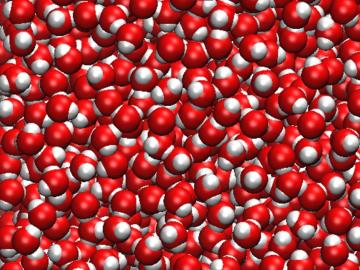
More than a year ago, ORNL computational scientists raised concerns about the accuracy of using a 2-femtosecond time step in liquid water simulations.


More than a year ago, ORNL computational scientists raised concerns about the accuracy of using a 2-femtosecond time step in liquid water simulations.
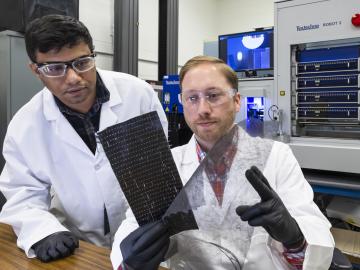
Researchers at ORNL have developed an innovative new technique using carbon nanofibers to enhance binding in carbon fiber and other fiber-reinforced polymer composites – an advance likely to improve structural materials for automobiles, airplanes and ot
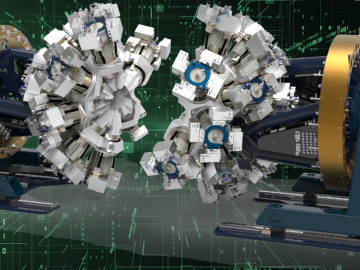
Analyzing massive datasets from nuclear physics experiments can take hours or days to process, but researchers are working to radically reduce that time to mere seconds using special software being developed at the Department of Energy’s Lawrence Berkel

ORNL researchers helped introduce college students to quantum computing for the first time during the 2025 Winter Classic Invitational, providing hands-on access to real quantum hardware and training future high-performance computing users through a uni

Researchers at ORNL tested a quantum computing approach to an old challenge: solving canonical fluid dynamics problems. The study relied on support from the Quantum Computing User Program, part of ORNL’s Oak Ridge Leadership Computing Facility.
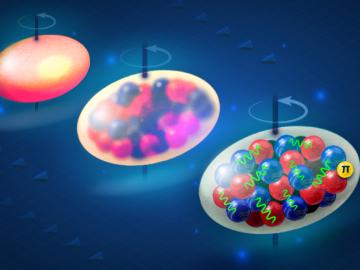
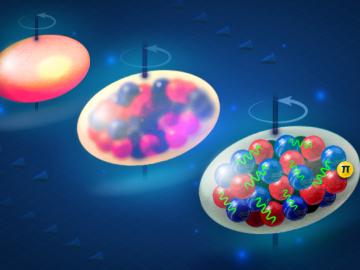
Using the Frontier supercomputer at ORNL, researchers have developed a new technique that predicts nuclear properties in record detail. The study revealed how the structure of a nucleus relates to the force that holds it together.

A workshop led by scientists at ORNL sketched a road map toward a longtime goal: development of autonomous, or self-driving, next-generation research laboratories.

Not only did ORNL take home top honors at the 2024 International Conference for High Performance Computing, Networking, Storage, and Analysis (SC24), but the lab’s computing staff also shared career advice and expertise with students eager to enter the
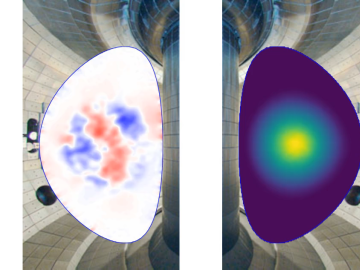
Scientists designing the world’s first controlled nuclear fusion power plant, ITER, needed to solve the problem of runaway electrons, negatively charged particles in the soup of matter in the plasma within the tokamak, the magnetic bottle intended to co