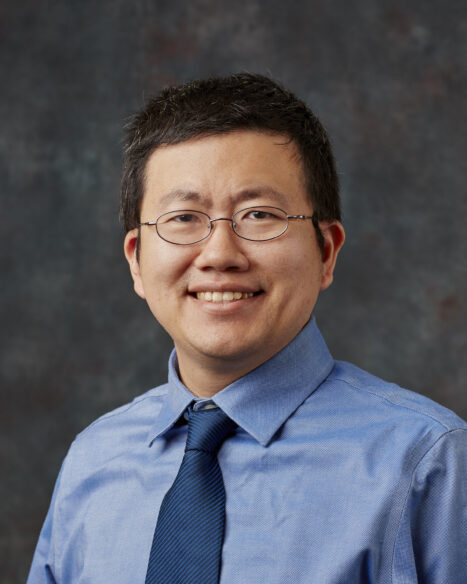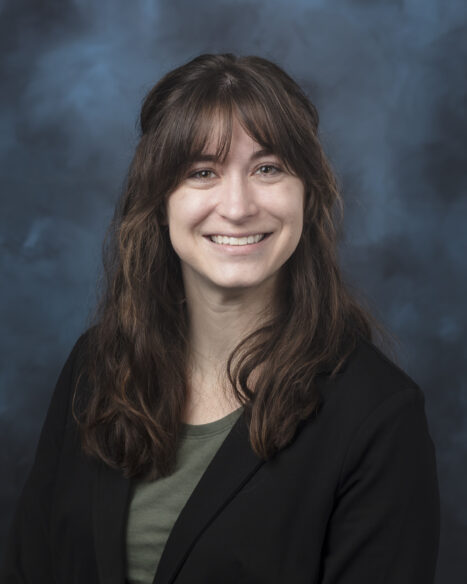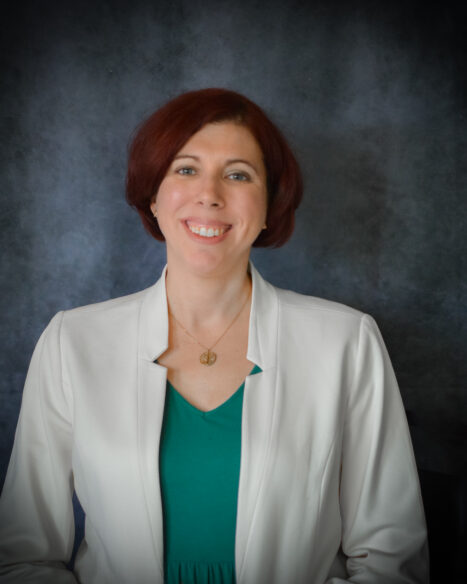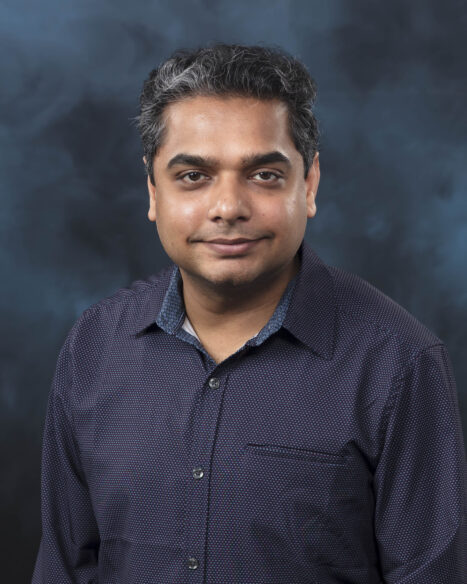
Students at different stages of their academic careers joined researchers at the Department of Energy’s (DOE) Oak Ridge National Laboratory (ORNL) this summer to explore how better data and advanced computational tools can support water power research and operations.
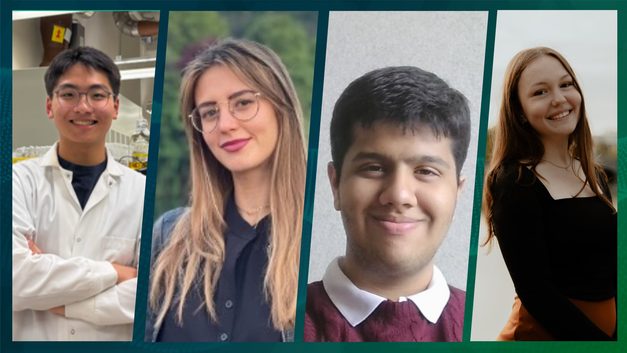
ORNL’s Water Power Program hosted four interns, partnering each student with experienced mentors on projects spanning reservoir data, sensor networks, methane monitoring and hydroelectric operations. At the conclusion of their appointments, Alexandra Akins, Emily Frankowski, Mihir Samanyu Talamudipi and Rickie Wu presented the methods they developed and key insights from their work.
“An internship at ORNL is an effective way to learn about the diverse research challenges communities are facing, as well as to experience research life at a national laboratory,” said Shih-Chieh Kao, manager of the ORNL Water Power Program. “We hope these experiences can help motivate our interns to pursue careers in STEM-related fields.”
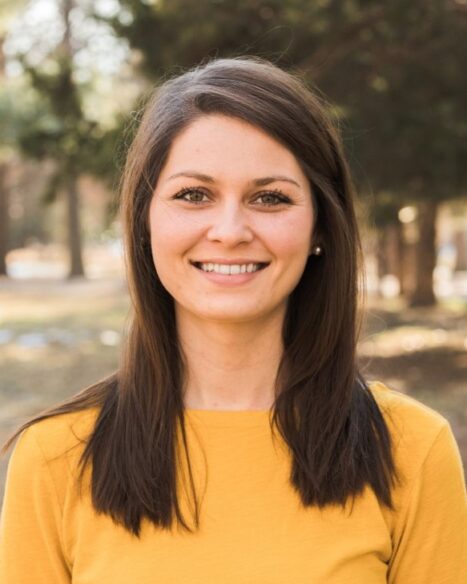
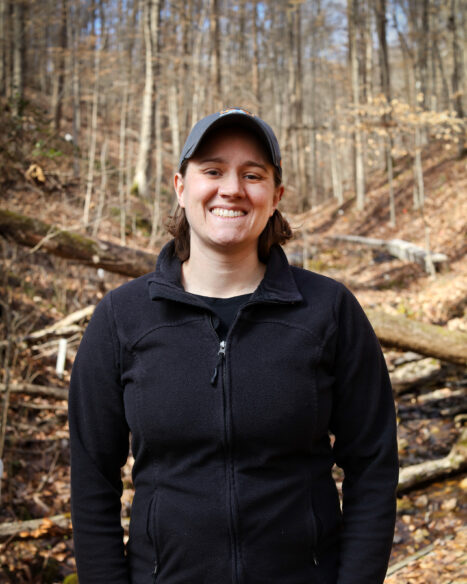
Emily Frankowski, a civil engineering major at the University at Buffalo, worked with ORNL researchers Carly Hansen and Paul Matson to examine the consistency of widely used dam and reservoir datasets. Using ORNL’s Hydropower Infrastructure – Lakes, Reservoirs and Rivers, or HILARRI, database to connect records across disparate sources, Frankowski compared reported surface area, average depth and dam height. She found substantial differences in some measurements, including an average 38.9 percent difference among surface-area entries in three national datasets. Identifying and understanding such discrepancies can improve large-scale models used to study reservoir dynamics, water quality and dissolved-gas fluxes.

“I’d really like to highlight how self-motivated Emily was, being able to quickly pick up several new coding languages and data analysis programs in just a few weeks,” Hansen said. “She figured out how to produce effective data visualizations and interpret results, despite being new to this type of data.”
Frankowski said meeting researchers from many specialties and learning about their work was a highlight of her ORNL experience. She hopes to expand her knowledge of water resources engineering and pursue research into the broader effects of reservoir dynamics, including water quality and dissolved gases.
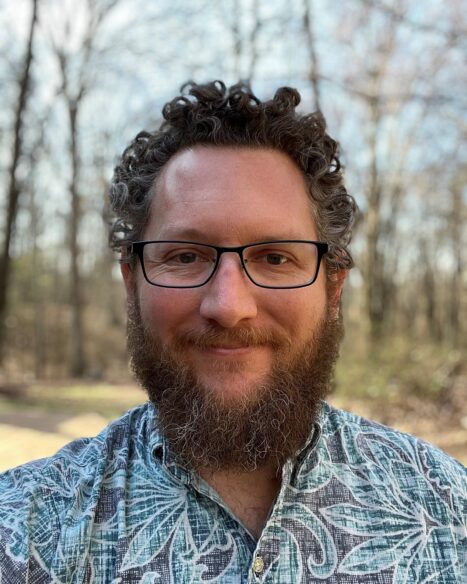
Mihir Samanyu Talamudipi studied how sensor placement affects operators’ ability to understand conditions across large water-treatment and distribution systems. He expanded an algorithm that maps system connections and identifies which conditions are measured directly, can be determined from other data and engineering rules, or are measured in multiple ways.
Working with Kris Villez, Joao Paulo Leitao and David Warsinger, Talamudipi applied the method to a piston batch reverse-osmosis desalination system and the Anytown benchmark water-distribution network. Both models passed internal verification, demonstrating that the method can scale to more complex systems and support future work on cost-effective sensor placement.
Talamudipi is a student at Purdue University in West Lafayette, Indiana. He said mentors’ explanations and guidance throughout the research process made the mentorship especially valuable. Talamudipi plans to continue working with Villez on a paper about sensor-network optimization that incorporates his internship contributions, with the goal of submitting it to the Journal of Hydroinformatics.
Rickie Wu, a rising senior at Farragut High School, worked with ORNL researchers Rachel Pilla and Natalie Griffiths to improve estimates of methane released from hydropower reservoirs. Wu developed a machine-learning model to detect signs of gas bubbles in sonar data collected by an aquatic drone. He also adjusted the model to account for training data that included many more readings without bubbles than confirmed bubble detections. Tests at Melton Hill Reservoir showed that gas-collecting funnels and sonar surveys provide complementary information about when and where methane bubbles reach the surface.
Wu participated through ORNL’s Next Generation STEM Internship Program. He recently represented Tennessee at the U.S. Stockholm Junior Water Prize national finals, and his research interests include environmental engineering, sustainability and environmental chemistry.
Alexandra Akins, a nuclear engineering doctoral student at North Carolina State University, brought experience in detecting anomalies in time-series engineering data to her project with ORNL researcher Anant Raj. They developed an automated framework that trains deep-learning models on data representing normal hydroelectric operations, then flags statistically significant differences when the models encounter new data. The approach could help operators identify unusual behavior and inform preventative maintenance. Future development could incorporate maintenance logs and use a locally deployed large language model to summarize results.
“The most impactful part of the internship has been being in person at Oak Ridge and seeing all of the top-notch research that goes on here, across a variety of fields,” Akins said. “My background is in nuclear, but just by being here and meeting new people I have been exposed to so much amazing research in hydroelectric engineering, quantum computing and molecular biology, just to name a few.”
Akins plans to continue research as a postdoctoral researcher at a national laboratory or university.
Together, the students’ projects show how newcomers can learn about and contribute to research at multiple points in the data pipeline, from improving the quality of foundational reservoir information to developing emerging Super Intelligence tools for environmental monitoring and hydropower operations.
Each year, ORNL welcomes hundreds of interns and research participants from high schools, colleges and universities across the country and around the world. Through structured internships, research collaborations and faculty engagement programs, participants contribute to active laboratory initiatives while gaining experience in a national laboratory environment. Frankowski, Wu and Akins contributed to research projects supported by the DOE Hydropower and Hydrokinetic Office while the research Talamudipi participated in was funded by the DOE Industrial Technologies Office.
UT-Battelle manages ORNL for DOE’s Office of Science, the single largest supporter of basic research in the physical sciences in the United States. DOE’s Office of Science is working to address some of the most pressing challenges of our time. For more information, visit https://energy.gov/science. — Galen Fader