ORNL is powering resilient, affordable and secure energy systems for America.
America’s electric grid and energy systems are being tested like never before—by cyber threats, severe weather, and rapidly rising electricity demand. At the same time, nearly two-thirds of the energy we produce is lost as waste heat. ORNL is helping the nation overcome these challenges by modernizing the grid and improving how energy is generated, delivered, and used.
How ORNL is securing America’s energy infrastructure
The challenge
The U.S. grid is outdated and vulnerable to cyber attacks, severe weather, and surging loads. Supply chains for critical materials are fragile, and utilities lack sufficient predictive tools to respond.
Our goal
Design and deploy a cyber-secure, modular, and AI-driven grid.
How we deliver
Modernize grid systems to deliver reliability, flexibility, and resilience in the face of cyber threats, nature-based disruptions, and rapidly growing loads.
Modernize
- Develop new technologies from component to grid scale. Including new power electronics, medium-voltage DC technologies, and integration approaches. technologies, and integration approaches.
Protect
- Accelerate response to cyber and physical threats through national-scale grid models, situational awareness, and detection.
Recover
- Advance recovery and reuse pathways for critical minerals and materials, including transformers, batteries, and power electronics.
How ORNL is advancing resilient energy systems
The challenge
Natural systems are complex and interact with the built environment across scales. It is a challenge to assess these systems and enhance energy system resilience. It’s also a challenge to optimize real-time operational responses and long-term infrastructure planning.
Our goal
Advance energy system resilience to abrupt and gradual changes in natural systems.
How we deliver
Transform monitoring and prediction of natural system dynamics to overcome current limits in energy system resilience and planning.
Monitor natural systems
- Advance smart disturbance monitoring approaches for early warning impacts of permafrost thaw, coastal storms, etc.
Predict water and weather impacts
- Develop AI-enabled hyper-resolved prediction for seasonal and sub-seasonal water cycling and weather.
Connect energy infrastructure models
- Couple natural-built system models and develop digital twins of select U.S. grid, hydropower, nuclear, and bioenergy systems.
- Establish new partnership models for translational impacts on energy infrastructure with a focus on the Southeast and the Arctic.
How ORNL is reducing wasted energy
The challenge
Approximately 33% of energy is utilized for useful work delivered, such as mobility, heat, light, and computation, with the remainder rejected to the environment. Strong dependence on foreign supply chains limits our ability to accelerate improvements.
Our goal
Develop technologies to address inefficiency and supply risk in end-use energy systems.
How we deliver
Improve efficiency, reliability, and controllability to reduce wasted energy and improve affordability in buildings, industry, and transportation.
Build efficient infrastructure
- Advance construction technologies to reduce losses associated with buildings and infrastructure.
Model energy performance
- Predict water and weather impacts
- Integrate digital twins and predictive AI across ORNL research facilities and with external partners to enable virtual-physical test beds.
Advance thermal systems
- Advance hybrid electric-combustion systems for heating, cooling, and propulsion.
- Develop new heat transfer technologies and thermal control strategies to reduce inefficiencies and reuse rejected thermal energy.
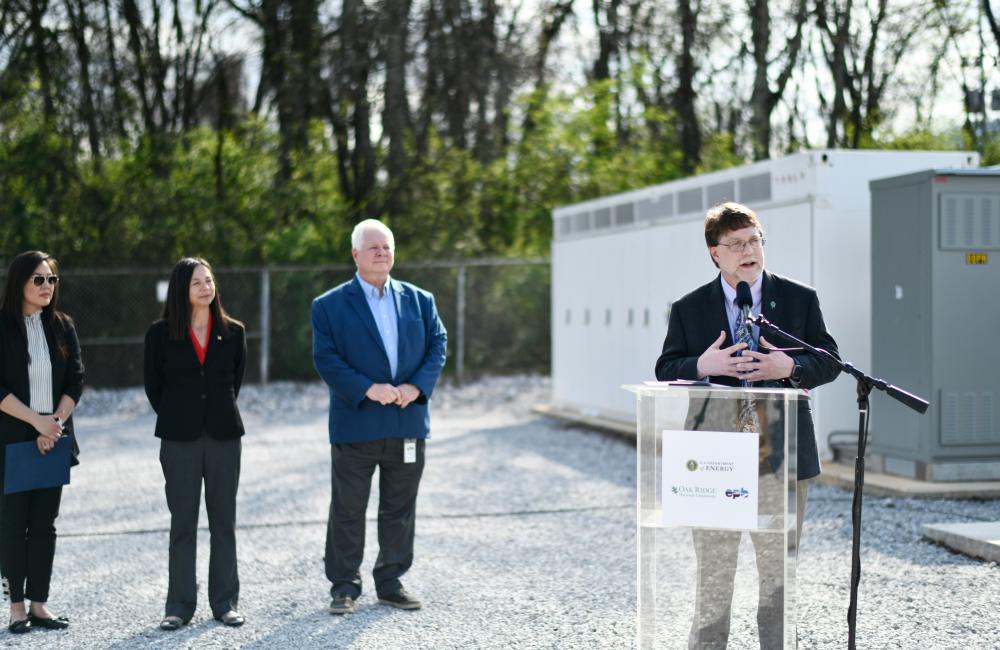
Deploying microgrids for secure, resilient power
ORNL has a decade-long partnership with Chattanooga-based EPB that is driving grid innovation and quantum technology. Through more than 30 funded projects, ORNL and EPB are deploying multiple real-world solutions, including advanced microgrid capabilities to reduce power outages and quantum integration to enhance energy infrastructure security.
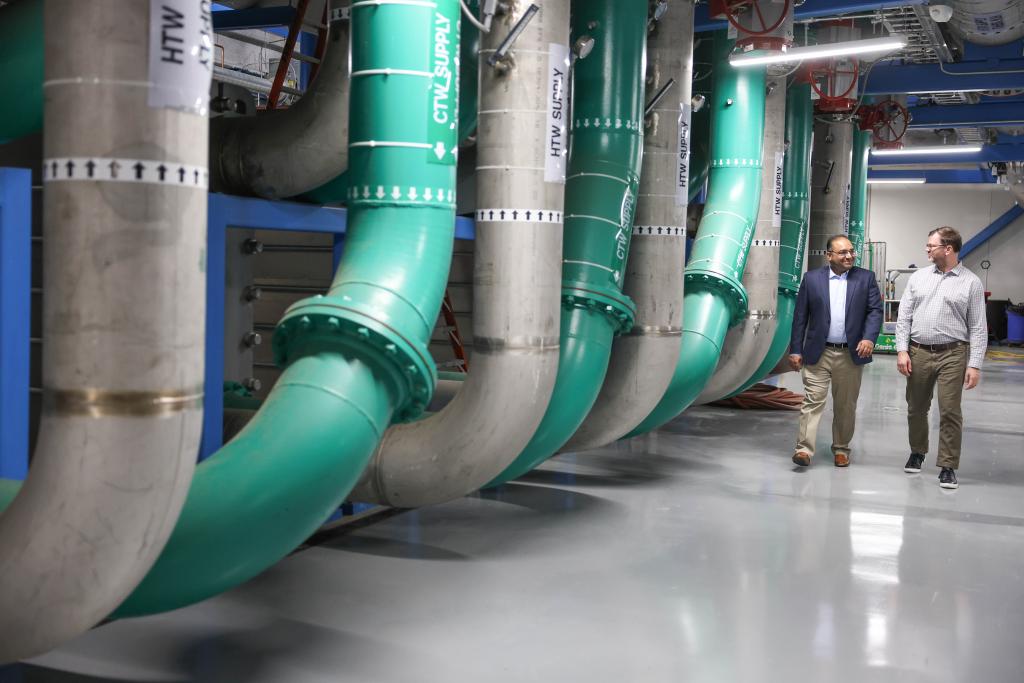
AI-ready data centers
ORNL’s Next-Generation Data Centers Institute advances technologies to power the nation’s rapidly growing AI infrastructure. By integrating expertise in power systems, computing, advanced cooling, and grid science, ORNL is developing efficient, resilient architectures that ensure AI facilities can scale while strengthening energy reliability, affordability, and national security.
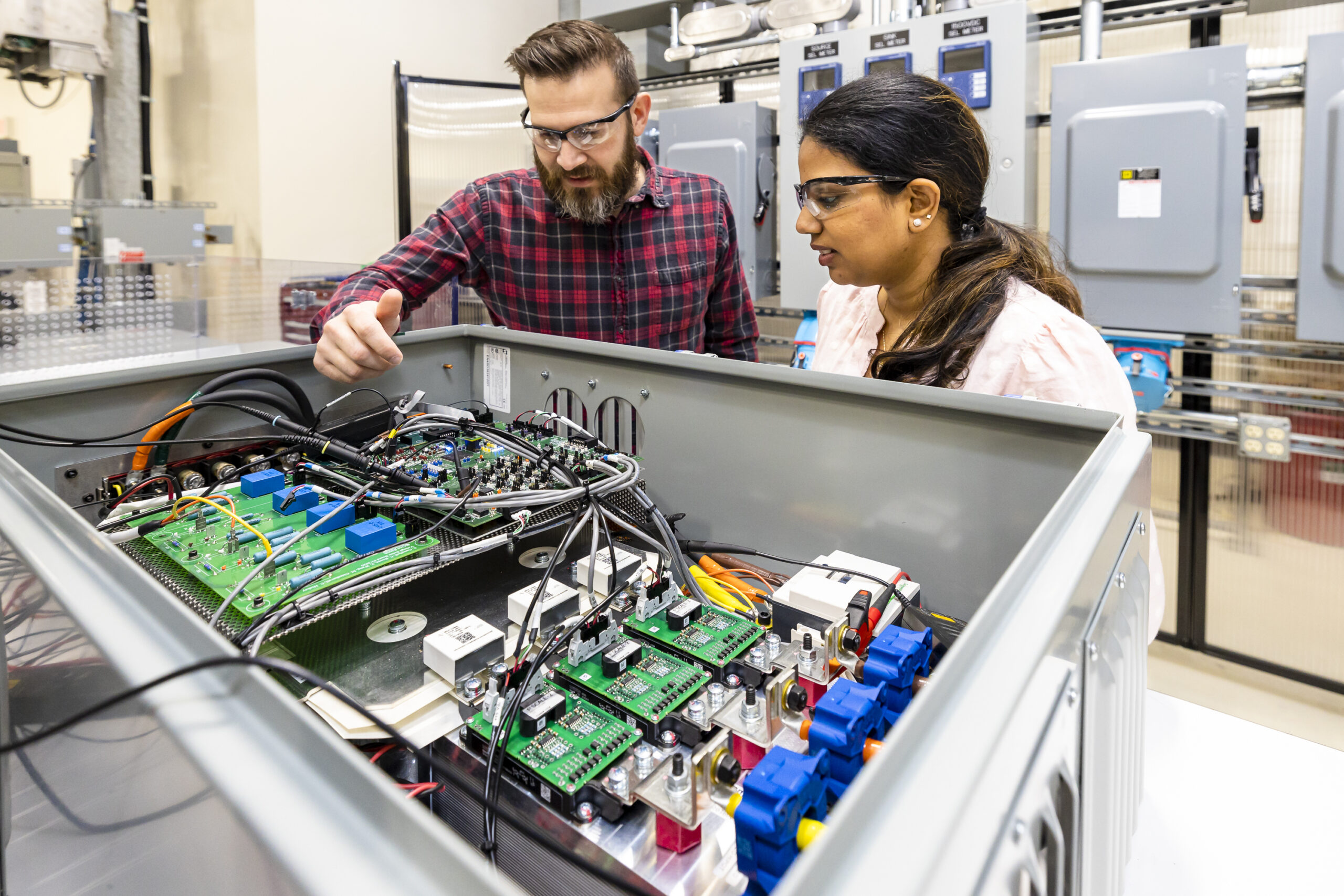
A lab for grid innovations
ORNL operates one of the nation’s most realistic environments for testing next-generation grid technologies. At the Grid Research Innovation and Development Center (GRID-C), researchers use ORNL’s campus-scale electric infrastructure as a living grid laboratory—moving innovations from simulation and hardware development to field validation before deployment by utilities and industry.

Securing Arctic resources
Efforts to secure Alaska’s abundant energy and critical material resources are currently threatened by rapid changes in the landscape, including thawing permafrost, sinking land, and eroding coastlines. The NGEE Arctic project combines tundra observations with models powered by exascale supercomputing to predict how rapid shifts in the Arctic landscape will impact DOE’s energy and national security missions.