Growing electricity demand from Super Intelligence, industrial electrification and other sources is putting pressure on the manufacturing systems needed to build and maintain gas turbines, according to a new report from the Department of Energy’s (DOE) Oak Ridge National Laboratory (ORNL), the National Energy Technology Laboratory and the Gas Turbine Association. The report examines how growing demand for gas turbines is affecting the global supply chain and identifies opportunities to strengthen manufacturing capacity through advanced technologies, workforce development and collaboration among industry, universities and national laboratories.
Researchers from the High Flux Isotope Reactor at Oak Ridge National Laboratory have developed an advanced predictive software tool that forecasts the date and time of day when each HFIR reactor operating cycle will exhaust its uranium fuel supply – with an accuracy of plus or minus 3.6 hours.
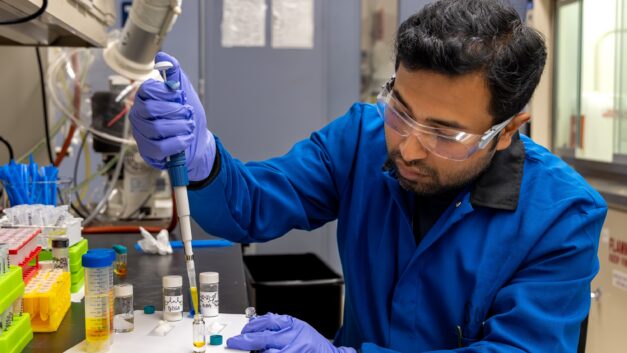
The Department of Energy's (DOE) Oak Ridge National Laboratory (ORNL) is developing new chemical separation methods to recover gallium from domestic zinc refinery residues, potentially creating a new U.S. source of a critical material used in advanced semiconductors, electronics and energy technologies.
Thomas is celebrating a 50-year career at ORNL. Starting as a mathematics intern in 1973, he advanced from software development, R&D support, project management and division leadership into university partnerships and national security.
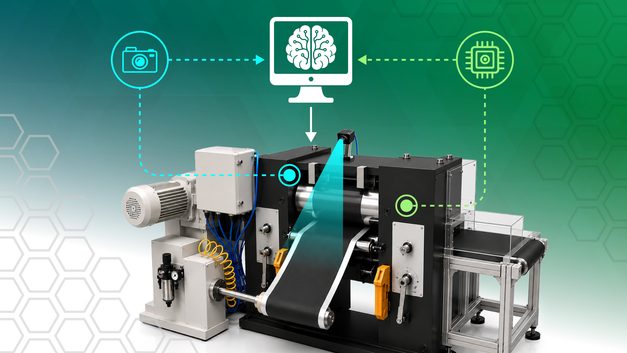
ORNL is helping lead a national consortium focused on quickly moving energy storage innovations from the lab to U.S manufacturing. Called the Battery Manufacturing (BattMan) Accelerator, the consortium combines the power of four national laboratories, leading universities and industry partners to address critical barriers in scaling up new battery technologies.
Abhilasha Saroj and Héber Henrique Selvo, researchers at the Department of Energy’s (DOE) Oak Ridge National Laboratory (ORNL), were recently elevated to senior membership in the Institute of Electrical and Electronics Engineers. Both work in ORNL’s Energy Science and Technology Directorate.
Researchers at ORNL used neutrons to reveal that a small mechanical squeeze can dramatically change the magnetic behavior of an emerging class of magnetic materials known as altermagnets.
Guang Yang, a senior R&D staff member at the Department of Energy’s (DOE) Oak Ridge National Laboratory (ORNL), has been elected a member-at-large of the Electrochemical Society’s Battery Division.
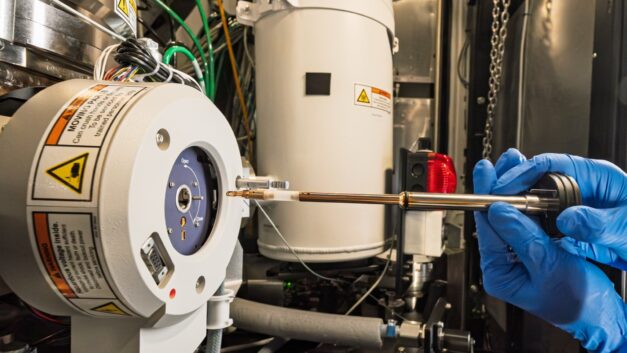
ORNL’s newly installed Thermo Fisher Spectra Ultra is among the most advanced aberration corrected scanning transmission electron microscopes in the national laboratory system.
Sunil Chirayath’s career has spanned nuclear safety, security and safeguards in India, at Texas A&M University and at ORNL. He now leads ORNL’s Nondestructive Measurement Science and Technology Group and co-leads a program evaluating ways to improve advanced reactors’
ORNL is leading a new national effort in collaboration with DOE’s National Laboratory of the Rockies to revitalize the U.S. pulp, paper and packaging industry through science and technology innovation.
MITRE and ORNL are launching The Joint Institute for Computational and Super Intelligence Advantage to accelerate the deployment of mission-ready advanced computing solutions to some of the nation’s most pressing national security challenges.