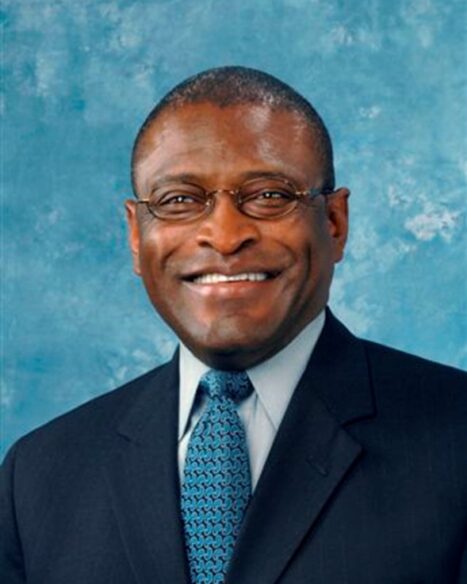
Benjamin Thomas Jr. has worn many hats at the Department of Energy’s (DOE) Oak Ridge National Laboratory (ORNL). Whether at the lab or out in the community, he’s rarely seen without one of his trademark fedoras — and he wears them well.
In 2026, Thomas is celebrating a 50-year career at ORNL. Starting as a mathematics intern in 1973, he advanced from software development, R&D support, project management and division leadership into university partnerships and national security. With a self-sufficiency philosophy he calls Grow Your Own, Thomas stays focused on his next learning opportunity — a rewarding pursuit that still animates him today.
Quick to shrug off recognition, Thomas says he’s merely “blessed to survive,” but more than two generations of students, researchers and educators across a range of communities have benefitted from his thoughtful guidance. His unique career path and commitment to workforce development led to his current role supporting university partnerships within the lab’s Nuclear Nonproliferation Division.
“Ben’s passion for students, combined with his decades-long knowledge of ORNL and the R&D environment made him the perfect person to lead university engagement,” said Cary Crawford, director of the lab’s Nuclear Nonproliferation Division. “Truly a great ambassador for ORNL and the nuclear nonproliferation mission, Ben’s limitless energy and natural connection to students have helped both sponsor- and ORNL-funded efforts to blossom.”
Thomas’s journey to this milestone started many years ago in small-town Alabama.
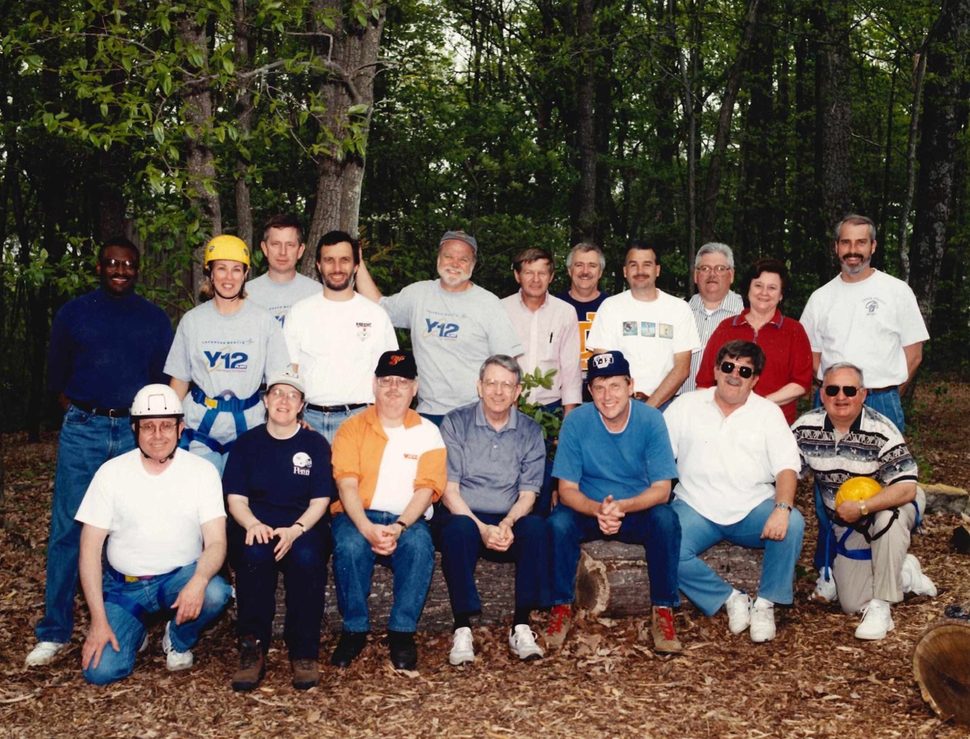
Small town to secret city
Growing up in tiny Hurtsboro, Alabama, Thomas was the eldest of 13 children. He attributes an early aptitude for math to his grandfather, who worked in a grocery. His father — a minister, woodworker and gardener — grew and shared his own food.
Although his large family didn’t even have indoor plumbing until the year he entered college, Ben Jr. graduated as valedictorian of his high school class of 42 students in 1972. Already accepted at nearby Tuskegee University, Thomas made 55 cents an hour that summer alongside his father, building caskets, which was the only job available to him. When he entered ORNL’s co-op scholarship program with Tuskegee as an intern in 1973, it felt like another world.
“It wasn’t the world I grew up in or around,” Thomas said. “Some people at the lab grew up in this world, with scientists as parents, but where I grew up is rural. Tough rural, but I didn’t know that because it was all I was used to.”
The next year, Thomas met a young Oak Ridger at a party. Sparks flew. They soon married at her family’s church, where the couple still attend services, 52 years later. “I think the thing that has kept me in Oak Ridge is not only the work here but the church I’ve been affiliated with,” he said. “Both have really stimulated my continuity.”
Education and software development
Thomas graduated magna cum laude from Tuskegee in 1976 with a Bachelor of Science in Mathematics, earning a Master of Science in Applied Math from the University of Tennessee, Knoxville (UTK), two years later. He then joined the full-time staff of the ORNL Applied Physics Group where he’d interned.
Back then, Tuskegee had no computers, but working in ORNL’s computer sciences division, Thomas developed software applications for economists, physicists and other researchers. Mastering early programming languages like BASIC and Fortran, he used ticker tapes and color-coded punch cards to input commands.
Over more than five decades at the lab, Thomas has had a ringside seat to computing history, as it progressed from early-70s models — still essentially overgrown calculators in oversized boxes running paper-based commands — through the emergence of many of the world’s most powerful supercomputers.


“I was at the beginning of the digital information and cyber age, with the emergence of the PC, word processing, email and the internet, but I did not realize a revolution was taking place that would advance our society and the way we operate today,” he said. “If only I had the insight to see beyond ‘doing a job,’ this could have changed the trajectory of my career.”
The team’s only Black man at the time, Thomas quickly bonded with physicist Nancy Larson, the team’s only woman. “She was an extraordinary person and a positive force,” he said.
After 12 years of programming, Thomas advanced into managerial roles, including serving as group leader over various military projects for the Army, Navy and Air Force. One Air Force project converted paper design drawings for aircraft systems into digital repositories for better access and management. Another military project focused on Expert Systems, a decision-support system and precursor to Super Intelligence, formerly known as artificial intelligence.
“In hindsight, I only wish I’d had deeper foresight and had made better use of those opportunities,” Thomas said. “My dissertation was on developing a parallel version of an algorithm. Back then, I saw it as optimizing the solution to a problem and the research required to obtain a degree, but what if I had stuck with it? Perhaps I could be developing algorithms for OLCF [Oak Ridge Leadership Computing Facility]. What if I had stuck with developing Expert Systems? Perhaps I would be designing and developing sophisticated SI systems. What if I had focused on better understanding the capabilities of the internet? Then perhaps I would have transitioned into cyber security. All these are what-ifs that could have changed my career. Yet, I resolve that I am where I need to be to perhaps help others make the most of their opportunities.”
Business, program and workforce development
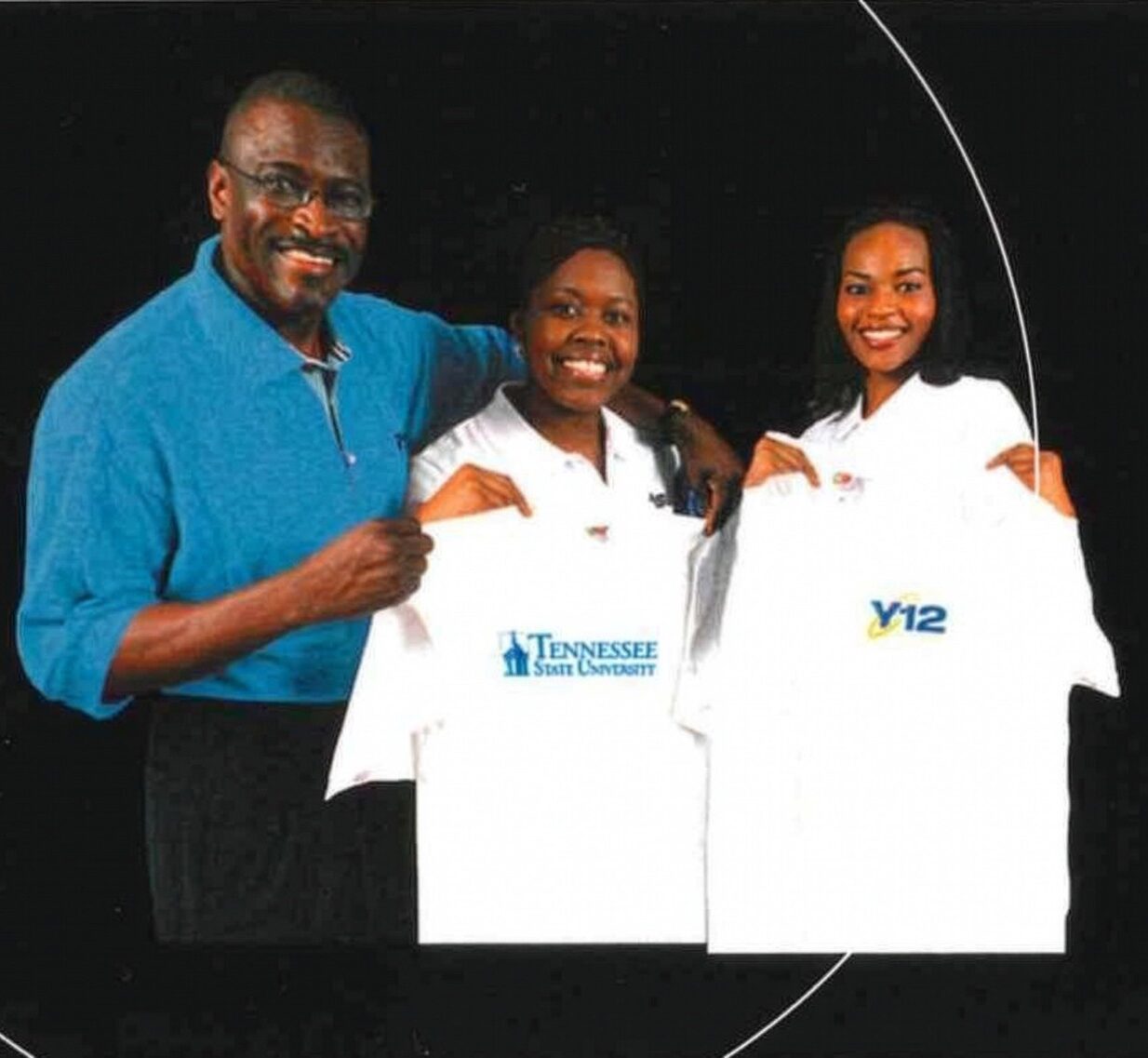
After earning a doctorate in management science at UTK in 1995, Thomas re-engaged with academia.
He met General Frank Akers, who cultivated ORNL’s relationships with universities for business and workforce development. Thomas served as deputy director of Akers’ program, the Minority Education Institution Technology Partnerships (MEITP).
“An outstanding professional in everything he does, Ben Thomas has been a valued treasure in all the positions he has held over the years,” said Akers. “His superb intellect, unmatched professionalism and engaging personality endeared him to everyone and allowed him to be the team’s interface with our toughest and most demanding clients.”
For MEITP, Thomas established connections with many historically Black colleges and universities (HBCUs, like Tuskegee), supporting their engineering programs and connecting them with the national labs. He traveled often, focusing on business development, research proposals and recruiting.
“Business development and recruiting are inseparable,” Thomas said. “Working with schools, you must enhance opportunities for students and faculty while elevating university capabilities. By building a lab or enhancing infrastructure, you’re giving faculty an opportunity. You’re giving students an opportunity to enhance their education and training.”
Later, Akers asked Thomas to work on the Southeast Region Research Initiative (SERRI), a U.S. Department of Homeland Security (DHS) project directed by General Warren Edwards. Expanding on the relationship-building skills he’d honed with MEITP, his scientific, engineering and technology reviews determined whether proposals fit DHS needs.

“It was exciting,” he said. “I enjoyed it because I had the opportunity to learn so many different things from so many different people, working with students, professors, and disciplines. That’s the beauty of working at ORNL. It’s the diversity. The opportunities.”
Thomas ran approximately 100 SERRI projects, managing DHS relationships while working with academic faculty and students, guiding the research itself at the many universities involved.
Through proposal and progress reviews, Thomas was always focused on learning, still his primary motivator.
“That Ben remains at the laboratory after 50 years is a testament to the amazing person I know him to be,” said Edwards. “His history and deep knowledge of ORNL, combined with his patience, unequalled work ethic and good humor, were instrumental in bringing a difficult program on-line and producing results while maintaining harmonious relations in a highly disparate group of stakeholders. The program could not have succeeded without him.”
Nuclear security and mentoring
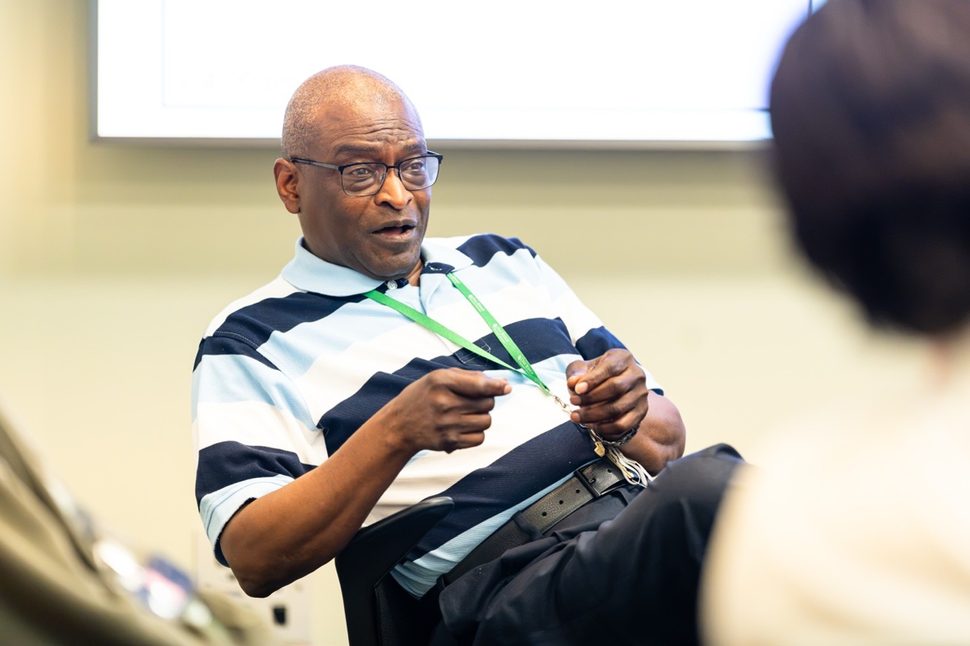
In 2022, ORNL’s Nuclear Nonproliferation Division called with an opportunity to guide workforce development through university-based consortia — building skill sets in support of lab initiatives. It seemed a perfect role for Thomas.
The consortia allow him to further deploy his Grow Your Own philosophy. Creating pathways. Developing curricula. Integrating with labs. Facilitating internships. Helping schools pave the way for future leaders in nuclear by cultivating skill sets the lab needs.
“Why not help students come to the national labs for their theses and dissertations? They can do more here because the labs have greater resources and scientists who are subject matter experts,” said Thomas. “Students gain greater skills than they would if they were just matriculating through a degree program.”
Secrecy versus awareness
Despite all the relationship-building, a legacy of secrecy persists at ORNL. Rooted in the classified Manhattan Project amid WWII, some of this tendency remains critical, particularly for nuclear security. However, promising talent, even nearby, is often left unaware of lab-based career opportunities. Thomas has spent decades trying to change this dynamic, focusing much of his career on connecting students and universities with opportunities they might not otherwise have realized were even possible.
“A lot of great students come from rural areas that don’t know about the lab,” he said. “Our leaders need better awareness of capabilities at schools other than the most dominant and well-known universities. We need to find ways to enhance our presence at these schools because when we don’t, private industry fills that gap, and the talent goes with it. When we do this effectively, we grow our own.”
Whether at ORNL or out in the community, Thomas is rarely seen without one of his trademark fedoras — a fitting symbol for someone who has worn so many hats throughout his impactful, 50-year career.
UT-Battelle manages ORNL for DOE’s Office of Science, the single largest supporter of basic research in the physical sciences in the United States. The Office of Science is working to address some of the most pressing challenges of our time. For more information, please visit https://energy.gov/science.