
Paul is exploring the next frontier: bridging quantum computing with neutron science. His research aims to integrate quantum algorithms with neutron scattering experiments, opening new possibilities for understanding materials at an atomic level.


Paul is exploring the next frontier: bridging quantum computing with neutron science. His research aims to integrate quantum algorithms with neutron scattering experiments, opening new possibilities for understanding materials at an atomic level.
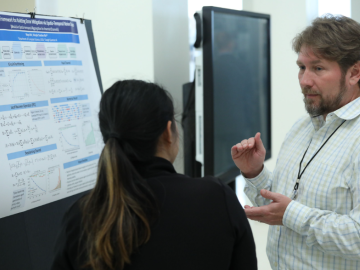
The fifth annual Quantum Science Center, or QSC, Summer School at Purdue University, held Apr. 21 through Apr. 25, 2025, welcomed its largest group of students to date.
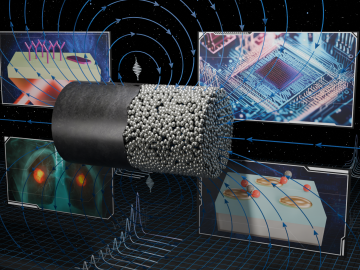
A research team from the Department of Energy’s Oak Ridge National Laboratory, in collaboration with North Carolina State University, has developed a simulation capable of predicting how tens of thousands of electrons move in materials in real time, or
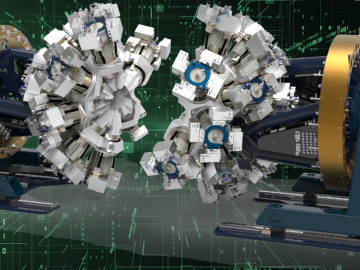
Analyzing massive datasets from nuclear physics experiments can take hours or days to process, but researchers are working to radically reduce that time to mere seconds using special software being developed at the Department of Energy’s Lawrence Berkel

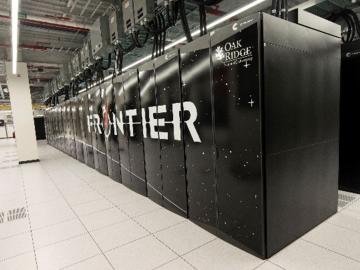
Research teams at the Department of Energy’s Oak Ridge National Laboratory received computing resource awards to train and test AI foundation models for science.

Working in collaboration with researchers from Oak Ridge National Laboratory, D-Wave Quantum Inc., a quantum computing systems, software and services provider, has shown its annealing quantum computing prototype has the potential to operate fa

Mariam Kiran, a quantum research scientist at the Department of Energy’s Oak Ridge National Laboratory, was recently honored as a finalist at the British Council’s Study U.K. Alumni Awards 2025, which celebrate the achievements of U.K.

ORNL researchers helped introduce college students to quantum computing for the first time during the 2025 Winter Classic Invitational, providing hands-on access to real quantum hardware and training future high-performance computing users through a uni

Researchers from ORNL have developed a new application to increase efficiency in memory systems for high performance computing.