Advancing Biodesign for Biotechnology Innovation, Energy, and Environmental Solutions
Scientists working in the Biodesign and Systems Biology section at Oak Ridge National Laboratory aim to uncover the fundamental mechanisms that shape biological responses—and use this knowledge to design solutions that enhance plant performance, optimize microbial interactions, and improve bioengineering processes.

What we do
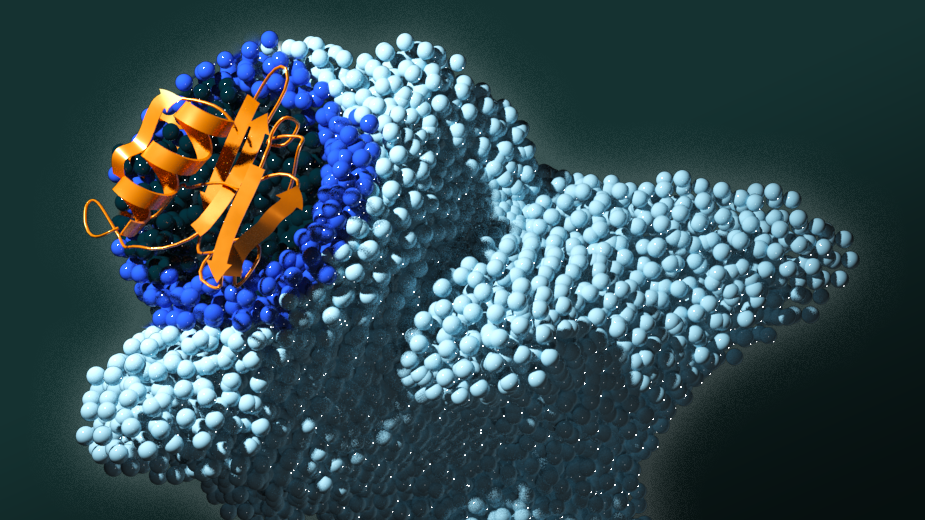
Study biological interactions
The team characterizes the intricate network of genes, proteins, metabolites, and environmental signals that lead to improved plant traits and performance. By studying how these components interact, scientists develop strategies to enhance crop resilience, productivity, and adaptability with the aim of improving bioenergy crops and strengthening domestic energy security.

Make connections
Researchers integrate cellular, molecular, and genomic approaches to study microbial communities and their interactions with hosts and the surrounding environment. Understanding these complex relationships allows the team to harness microbes for beneficial applications, such as improving soil health, advancing biofuel production, and addressing environmental contaminants.

Engineer biological systems
Another major emphasis of the research is on biosystems design, where researchers develop and apply innovative principles to engineer biological systems with precision in a variety of organisms, biofuels crops and associated biosystems. By employing both rational and automated design strategies, the team is creating new tools and methodologies to accelerate biotechnology advancements to solve pressing energy and environmental challenges.
Groups

Microbial Systems Biology
Investigating molecular mechanisms at genomic and biochemical levels to understand how microbial communities and individual species adapt to and interact with each other and with the environment
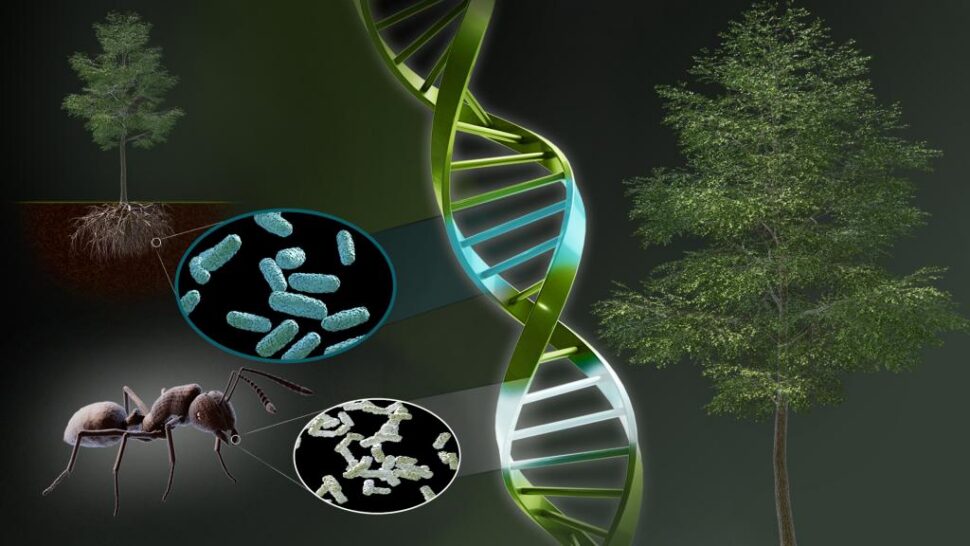
Plant Systems Biology
Exploring the network of genes, proteins, metabolites, and environmental signals that lead to improved plant characteristics and performance, focusing on the underlying molecular genetics, physiological processes, and mechanisms influencing plant-microbe interactions and bioenergy feedstock productivity
“We’re working from the organism to the ecosystem level to pioneer approaches that not only deepen our understanding of biological complexity but also translate scientific discoveries into real-world applications that benefit energy production, the environment, and the bioeconomy”
Timothy J Tschaplinski
Section Head
Publications
Oct, 2026
Journal
Microbial Community Dynamics in Full-Scale Water Reuse Reverse Osmosis System Revealed by Longitudinal Monitoring Using Membrane Fouling Simulators
Membrane fouling, especially biofouling, hinders the efficiency of reverse osmosis (RO) membranes in water reuse, leading to higher energy consumption and operating costs. Understanding biofilm microbial community composition and dynamics is critical to developing biofouling mitigation strategies, but the need to sacrifice membrane modules has restricted the progress and s…
Sep, 2026
Journal
RAPID: an interactive R/Shiny platform for end-to-end 16S rRNA and ITS amplicon sequence analysis using DADA2
Motivation: Amplicon sequencing of 16S rRNA and internal transcribed spacer (ITS) gene regions is the most widely used approach for characterizing bacterial and fungal communities, respectively. The DADA2 pipeline has become a standard for inferring amplicon sequence variants (ASVs), offering single-nucleotide resolution over traditional OTU clustering. However, executing…
Sep, 2026
Journal
Genome sequences of five phylogenetically diverse bacterial isolates from the Populus root microbiome
Five bacterial genomes were sequenced from isolates obtained from Populus deltoides and Populus trichocarpa roots collected in Tennessee and Oregon. These genomes expand the representation of underrepresented bacterial genera within the Populus root microbiome and provide new reference resources for studies of plant-associated bacteria.
Contact