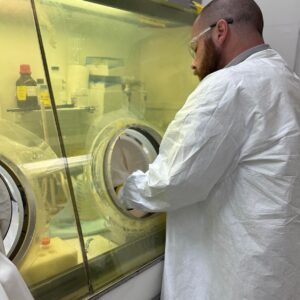
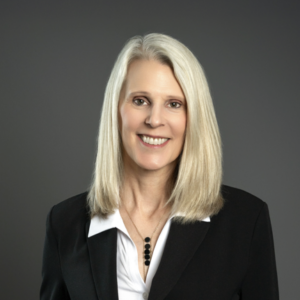
ORNL researchers are improving methods to recover tiny amounts of rare radioisotopes produced during californium-252 production. The more efficient processes increase purity and recovery while reducing workers’ radiation exposure, providing materials for research on the heaviest elements.
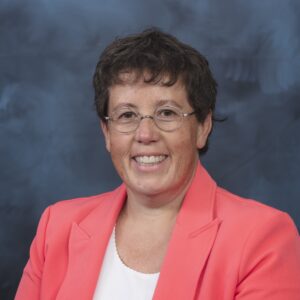
ORNL radiochemist Lætitia Delmau was elected a 2026 American Chemical Society Fellow for her contributions to radiochemical separations, actinide science, mentoring and service. She was also named an ACS Industrial and Engineering Chemistry Division Fellow for her research, leadership and professional service.
Oak Ridge National Laboratory is advancing nuclear battery technology to provide reliable, long-lasting power for remote and extreme environments, from deep space to national security applications. ORNL researchers are exploring new radioisotope fuels, more efficient energy conversion, improved thermal management and advanced manufacturing to make nuclear batteries safer, more efficient and easier to deploy.
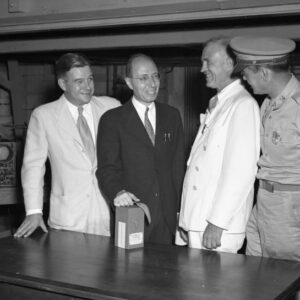
On Aug. 2, 1946, as newspaper reporters crowded the stage, scientists at Clinton Laboratories in Oak Ridge, Tennessee, made a ceremony of the very first official shipment of a reactor-created radioisotope. Carbon-14, a medical isotope, was sent to the Barnard Free Skin and Cancer Hospital in St. Louis, Missouri, from what would become the Department
Oak Ridge National Laboratory has resumed production of W-188/Re-188 generators, which provide the radioactive isotope Re-188 for medical research. Vanderbilt researchers used an updated ORNL generator to test a Re-188-based treatment for prostate cancer in mice, with preliminary results described as promising.
Flexible Research Platform (FRP) is a two-story multi-zone unoccupied research apparatus that can be used to physically simulate light commercial buildings common in the United States' existing building stock. The FRP can accurately monitor and evaluate various configurations of envelope systems and HVAC systems with system controls, occupant schedules, and plug loads. It allows users to apply desired test scenarios and settings, and can also provide data collected during testing from more than 500 sensors.
The wall air and moisture penetration test chambers subject 2.4×3 m (8×10 ft) wall assemblies to simulated indoor and outdoor temperatures of 15.6 to 32.2°C (60 to 90°F) and −17.8 to 43.3°C (0 to 110°F), respectively, and 10 to 90% relative humidity. Other simulated outdoor conditions are positive and negative wind/gust pressures, rain, and solar radiation.
The rotatable guarded hot box measures heat flux across large-scale wall/fenestration assemblies. It accommodates systems as large as 4×3 m (13×10 ft) and as thick as 0.6 m (2 ft). Chambers on both sides can maintain a range of temperatures; low-side (39 to 140°F, 4 to 60°C) and high-side (75 to 140°F, 24 to 60°C). Using this Hot Box, it is possible to expedite the conduction of accurate thermal experiments with a minimum of human interaction.
The Center for Molecular Biophysics (CMB) at Oak Ridge National Laboratory (ORNL) has been advancing molecular science since 2006, with support from ORNL and the University of Tennessee. The center conducts research at the intersection of biology, chemistry, physics, computation, and neutron sciences, using high-performance computer simulations and biophysical experiments to study the structure and function of biologically relevant molecular systems.
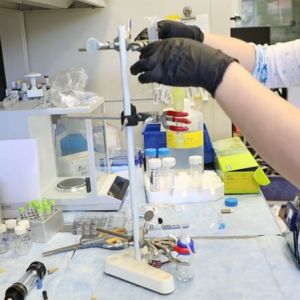
ORNL has developed a new californium-252 processing method that reduces separation time by about a week while maintaining the same quality. As the only producer of californium-252 in the western world, ORNL is also increasing production to meet growing demand for the isotope.
Internationally recognized radiopharmaceutical scientist Carolyn Anderson has been named the UT-ORNL Governor's Chair for Nuclear Medicine: Radiopharmaceutical Therapies, joining the University of Tennessee and Oak Ridge National Laboratory to advance targeted cancer therapies. Her appointment strengthens Tennessee's growing leadership in nuclear medicine through collaborative research, isotope science, and the development of next-generation cancer treatments.
Isotopes Applications & Capabilities at ORNL Explore More of Isotopes 600+ Staff 300+ Isotopes 80+ Years How Isotopes Power Medicine, Security, Space Frequently Asked Questions