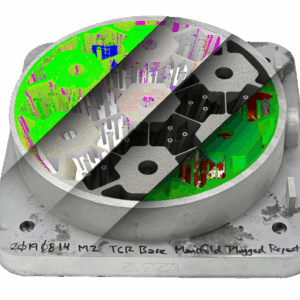
Peregrine is transforming additive manufacturing by giving industry real-time, artificial intelligence (AI)-powered quality control that reduces waste, accelerates certification, and enables the production of born-qualified parts.
ORNL researchers developed an AI-powered monitoring system that automatically detects and corrects temperature-related errors during large-scale 3D printing of composite plastic parts. Using thermal cameras, sensors and computer vision, the system adjusts printing speed in real time to improve layer bonding, reduce defects, and minimize wasted material. The technology could help manufacturers produce large custom products more efficiently and reliably while reducing the need for constant human supervision.
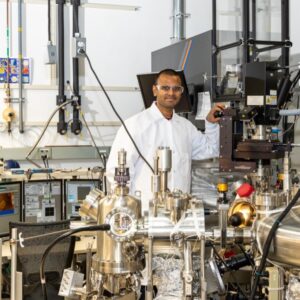
Researchers at ORNL’s Center for Nanophase Materials Sciences are developing autonomous workflows that combine advanced instruments, AI, simulations and theory to accelerate microelectronics research. These systems can interpret experimental data in real time, guide next steps during materials synthesis and analysis, and help scientists better understand and optimize next-generation materials for memory devices and transistors.
ORNL researchers have developed a “digital twin” system that pairs a real-world water purification plant with a virtual model to optimize operations in real time. The system adjusts plant performance based on energy prices and operating data, reducing energy use, costs and maintenance downtime. Tested with partners in California, the approach offers a scalable, data-driven solution for more efficient water treatment systems.
Dr. Rob Moore explains that AI and automation can accelerate solutions to long-standing scientific challenges, despite introducing new but more manageable hurdles. ORNL’s “Labs of the Future” initiative will expand on earlier work by creating large-scale, interconnected autonomous research workflows across facilities. Rather than replacing scientists, AI will handle repetitive tasks, allowing humans to focus on creativity, strategy, and collaboration in an increasingly AI-integrated research environment.
ORNL’s Rob Moore is a recognized leader in the development of autonomous science and self-driving laboratories. In this three-part series, he is discussing how artificial intelligence and automation have led to the cutting edge of autonomous scientific research.
Rob Moore is a leader in autonomous science at ORNL, where he advances AI-driven, self-driving laboratory systems to accelerate materials discovery. Building on his work with the INTERSECT initiative, he now leads efforts toward fully autonomous research through the Labs of the Future program, supporting DOE’s broader Genesis Mission.
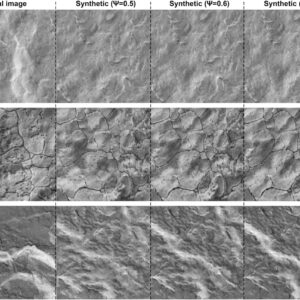
ORNL researchers developed a machine learning model that generates realistic tungsten microstructure images, helping fill gaps in costly experimental data. The approach supports virtual experiments to design more durable fusion reactor components and reduce maintenance costs.
Yongtao Liu is an R&D staff member at Oak Ridge National Laboratory’s Center for Nanophase Materials Sciences (CNMS). In the Data NanoAnalytics Group, he is helping nanomaterials research move toward experiments that can run with far less handholding.
Researchers at Oak Ridge and Pacific Northwest national laboratories have partnered with Smith-Root Inc. to commercialize “eDNA-bot,” a patented, autonomous aquatic robot that collects and analyzes environmental DNA in real time using artificial intelligence. Developers say the technology could enable continuous, lower-cost biological monitoring for hydropower licensing, invasive species detection and wastewater pathogen monitoring.
AI is transforming polymer research by integrating computational modeling with high-throughput automated experimentation, as highlighted by ORNL’s Rigoberto Advincula in a recent National Academy of Engineering webinar. These AI-driven autonomous laboratories, capable of real-time decision-making and adaptive optimization, are accelerating materials discovery, experimental design and innovations in synthesis and catalysis.
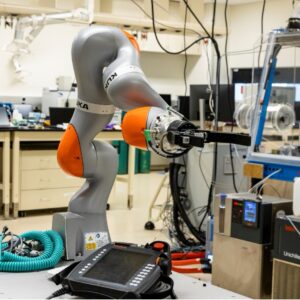
Researchers at ORNL are pushing the boundaries of science by combining artificial intelligence, automation and leading-edge imaging technology in a push toward autonomous experimentation. By leveraging the strengths of each of these elements in coordination with human intuition, they hope to create autonomous workflows that enhance researchers’ abilities to answer some of the toughest questions in science.