The U.S. Department of Energy’s (DOE) Office of Science has selected four national laboratory-led projects to drive breakthroughs in advanced robotics and automation for scientific infrastructure. The DOE national laboratories house and operate some of the world’s most advanced scientific instruments, computing systems and experimental facilities. These selected projects aim to rapidly accelerate progress in
With support from the Department of Energy (DOE) national laboratories, including Oak Ridge National Laboratory (ORNL), Texas-based company Element3 has launched the first domestic lithium mining project in 50 years. This achievement is likely to have a big impact, turning the United States from a net importer of lithium to a country well on the
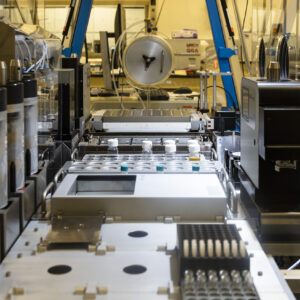
Project Details The Orchestrated Platform for Autonomous Laboratories (OPAL) combines artificial intelligence (AI), robotics, and automated experimentation to accelerate breakthroughs accross biology, biotechnology and energy science. This multi-laboratory project led by the U.S. Department of Energy seeks to create a network of autonomous laboratories that can learn, adapt and reduce the time from biological discovery
Click here for static version. What if one answer to the supply crisis isn’t buried in a mine shaft, but growing quietly in a field? For too long, the United States has relied on foreign sources for most of the raw materials powering its technological future, the essential minerals in every smartphone, battery pack and
Researchers at ORNL and the University of Tennessee, Knoxville, demonstrated an AI-driven workflow that guided data collection in real time during a beamline experiment at Cornell University's CHESS facility. The approach allowed the AI to adjust measurements as data was collected, advancing autonomous scientific research and supporting DOE's Genesis Mission.
At ORNL, science never sleeps Accelerating Science Progress in many of the modern sciences depends on the ability to explore complex relationships, analyze increasingly unwieldy datasets, and rapidly test new ideas. Traditional experimental workflows—where scientists design, perform, and analyze experiments sequentially—can struggle to keep pace with the scale and complexity of today’s scientific challenges. Self-driving
Behind every self-driving laboratory at ORNL is a team most people never see. Facilities and Operations workers are building and maintaining the infrastructure that makes autonomous science possible.
Melissa Cregger discusses how ORNL’s Center for Bioenergy Innovation is developing fast-growing, resilient bioenergy crops such as poplar, switchgrass, pine, and eucalyptus to support sustainable production of fuels, chemicals, and materials. She highlights breakthroughs like the high-yield “Booster” gene and explains how AI, automation, and advanced phenotyping are accelerating the discovery and development of improved feedstocks for real-world growing conditions.
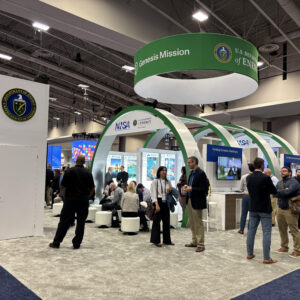
ORNL had a major presence at the 2026 AI+ Expo for National Competitiveness with multiple ORNL researchers presenting and demoing their latest work. Hosted by the Special Competitive Studies Project, the event brought together leaders from technology, academia, industry and government to discuss the rapidly evolving role of artificial intelligence in advancing U.S. innovation, energy resilience, competitiveness and national security.
ORNL is developing AI-powered digital twins for the Material Plasma Exposure eXperiment (MPEX) to accelerate the discovery and qualification of materials capable of withstanding the extreme conditions inside future fusion power plants. By combining simulations, experimental data, and autonomous control systems, the approach aims to shorten the path from facility construction to scientific discovery while advancing critical fusion energy technologies.
ORNL researchers demonstrated the first autonomous pulsed laser deposition (PLD) platform, combining AI, large language models and self-driving experimentation to rapidly synthesize and evaluate advanced thin-film materials. The approach accelerates materials discovery by up to 100 times, opening new opportunities for next-generation electronics, energy technologies and autonomous research laboratories.
Yongtao Liu, a researcher at the U.S. Department of Energy’s Oak Ridge National Laboratory, has been honored by the Royal Microscopical Society (RMS) and the Materials Research Society (MRS) for contributions to AI-enabled autonomous microscopy and materials research. Liu is an R&D staff member at the Center for Nanophase Materials Sciences (CNMS), a DOE Office