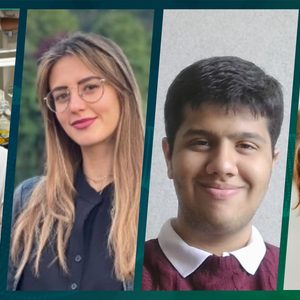
Students at different stages of their academic careers joined researchers at the Department of Energy’s (DOE) Oak Ridge National Laboratory (ORNL) this summer to explore how better data and advanced computational tools can support water power research and operations. ORNL’s Water Power Program hosted four interns, partnering each student with experienced mentors on projects spanning
ORNL has released the 2026 edition of the U.S. Hydropower Market Report, providing updated statistics and analysis of trends in conventional hydropower and pumped storage hydropower. The report primarily examines developments through the end of 2025, with selected updates from 2026, in areas including fleet capacity, investment, ownership, licensing, project development, plant performance, electricity markets and the supply chain.
ORNL researchers developed two domestically sourced materials for Smith-Root’s environmental DNA samplers that are cheaper and meet or exceed performance requirements. The materials could improve filtration while reducing reliance on international suppliers.
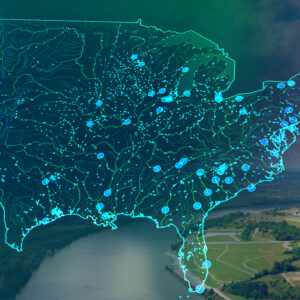
Researchers at ORNL and INL found that existing non-powered dams across the United States could generate as much as 15.2 terawatt-hours of electricity annually. The updated assessment uses improved data and modeling to help identify the most promising hydropower opportunities and provides new tools to support decision-making for policymakers, dam owners and researchers.
ORNL water resources engineer Carly Hansen studies how existing non-powered dams could also support hydropower without disrupting their current purposes. An ORNL-led assessment with Idaho National Laboratory identified 4 gigawatts of potential hydropower capacity at a subset of more than 2,600 non-powered dams using improved streamflow data and site-specific modeling.
An ORNL AI model can accurately predict river temperatures across the U.S., even in waterways without sensors. The system achieves about a 1.1°C median error and can estimate temperatures for all river reaches nationwide. Researchers say it could improve power plant cooling, energy reliability and environmental management.
Scott DeNeale is a water resources engineer whose work at ORNL’s Water Power Program centers on how hydropower research can be applied to water-energy systems. His specialty is bridging the gap between the intellectual products, like data and theory, and real-world infrastructure solutions. Recently, he has been studying in-conduit hydropower, a type of largely unutilized energy production that harnesses the water flowing through water pipes in municipal settings and industrial plants to make energy, no dam required.
Researchers at Oak Ridge and Pacific Northwest national laboratories have partnered with Smith-Root Inc. to commercialize “eDNA-bot,” a patented, autonomous aquatic robot that collects and analyzes environmental DNA in real time using artificial intelligence. Developers say the technology could enable continuous, lower-cost biological monitoring for hydropower licensing, invasive species detection and wastewater pathogen monitoring.
Researchers at ORNL used computer models to study whether abandoned coal mines could be turned into underground systems that store energy by pumping water.
Sean Turner, a senior engineer at ORNL, uses large-sample deep learning and hydrology models to predict river temperatures nationwide and assess their impacts on interconnected hydropower and nuclear operations, despite limited observational data. His work focuses on integrating river and power grid models to improve energy reliability, inform infrastructure siting and support water–energy decision-making.
ORNL is working with industry partners to develop a technique that combines 3D printing and conventional machining to produce large metal parts for energy applications. The project, known as Rapid Research on Universal Near Net Shape Fabrication Strategies for Expedited Runner Systems, or Rapid RUNNERS, recently received $15 million in funding from DOE.
Debjani Singh, a senior scientist at ORNL, leads the HydroSource project, which enhances hydropower research by making water data more accessible and useful. With a background in water resources, data science, and earth science, Singh applies innovative tools like AI to advance research. Her career, shaped by her early exposure to science in India, focuses on bridging research with practical applications.