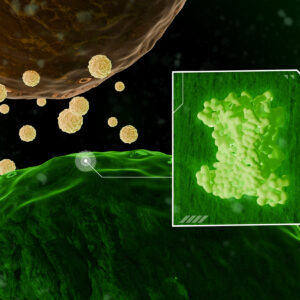
ORNL researchers developed tSAGE, a tool that rapidly engineers heat-loving microbes for industrial biotechnology. The platform can build and test hundreds of microbial strains in weeks instead of months or years. Researchers say it could improve manufacturing of fuels, chemicals and recycled products.
ORNL has named Katherine Kate Evans as associate laboratory director for the Biological and Environmental Systems Science Directorate. Evans will lead the directorate as it advances the science and technology needed to strengthen energy security, safeguard infrastructure and accelerate biotechnology innovation.
Orlando J. Rojas has been named the University of Tennessee-Oak Ridge National Laboratory Governor’s Chair for Circular Biomaterials. An internationally recognized leader in sustainable materials science, Rojas will hold a joint appointment in UT’s Herbert College of Agriculture and ORNL beginning in late 2026.
Lianhong Gu, distinguished staff scientist in the Biological and Environmental Systems Science Directorate at the Department of Energy’s Oak Ridge National Laboratory, has been named a fellow of the Ecological Society of America (ESA).
Jennifer Morrell-Falvey, a senior staff scientist at ORNL, has been elected as a fellow of the American Association for the Advancement of Science, or AAAS, one of the world’s largest general scientific societies and publisher
A new biosensor developed at ORNL detects the emerging presence of fungus on plants at the molecular level, paving the way for next-generation crop protection and the development of stress-tolerant plants.
Rebecca Wilkes, an ORNL synthetic biologist and UT-ORII Fellow, engineers microbes to convert biomass and waste into valuable chemicals. Her work aims to advance efficient biomanufacturing and support a domestic bioeconomy.
Scientists at ORNL were part of a multi-institutional team that explored how modern scientific approaches such as genomics and biochemical profiling can be combined to understand and improve disease resistance in the iconic American chestnut tree.
Carrie Eckert is working toward a future in which engineered microbes and plants are the workhorses of ultra-efficient biofactories, turning biomass into high-value products. As co-chief science officer for DOE's Center for Bioenergy Innovation at ORNL, she is stewarding a team of scientists across the country who are making that vision a reality.
To meet the growing demand for faster scientific discovery that strengthens bioeconomy, plant scientists worked with manufacturing systems engineers at ORNL to develop robotics and computer vision to accelerate the development of new stress-tolerant plants.
ORNL has launched a novel robotic platform to rapidly analyze plant root systems as they grow, yielding AI-ready data to accelerate the development of stress-tolerant crops for new fuels, chemicals and materials. The new platform adds belowground imaging to ORNL’s Advanced Plant Phenotyping Laboratory.
Scientists at ORNL were part of a team that identified the existence of a unique genetic code in microbes that can expand cellular building blocks in living organisms.