The Physics Division builds on ORNL strengths to perform outstanding leadership research for the nation in nuclear science, isotopes, and related areas. Our focus is on the areas of fundamental symmetries, nuclear structure physics, nuclear astrophysics, heavy-ion collisions, and isotope R&D and production.
To understand the structure, evolution, and interactions of the fundamental constituents of the universe through experimental and theoretical research along with solving practical problems to advance the interests of the nation and the world.
Through a combination of frontier measurements and world-leading theory, we address questions of critical importance in the basic and applied research communities. Some examples:
Measurement of neutrino-less double beta decay in deep underground labs will help define the New Standard Model
our simulations on the FRONTIER supercomputer of subatomic nuclei are leading to new insights on the quantum many-body problem
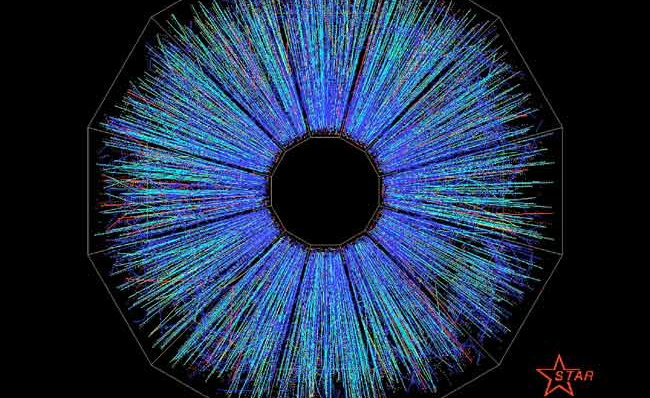
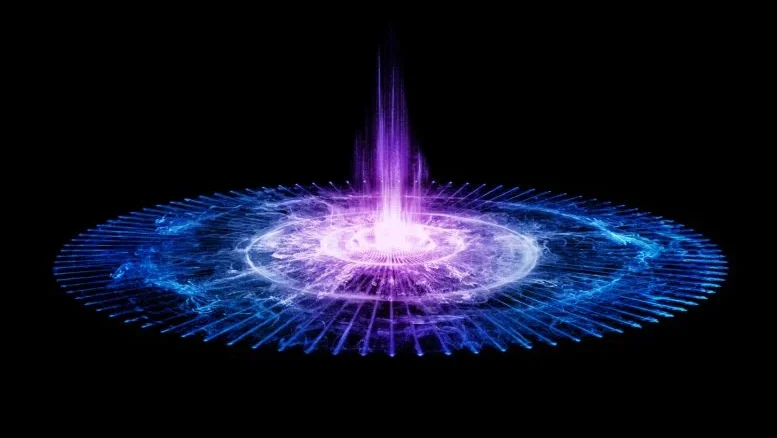
Measurements of heavy ion collisions at the most powerful accelerator labs probes the state of the quark-gluon plasma thought to exist in the early universe
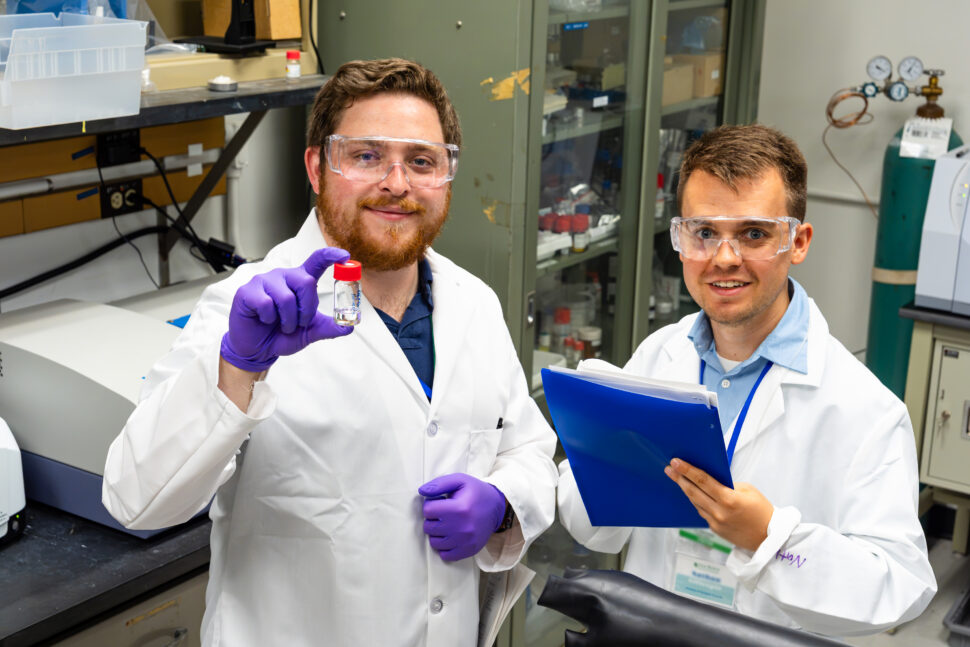
Production of rare and radioactive samples are used to diagnose and treat cancers as well as to create Tennessine, one of the heaviest elements in the periodic table
Measurements with beams of neutron-rich unstable nuclei probe the properties of exotic nuclei as well as the production of these nuclei in neutron-star mergers and core-collapse supernovae
State-of-the-art 3D simulations of these supernovae are redefining our knowledge of these catastrophic stellar events that create and disperse the elements of life
For these studies, our researchers are developing detectors with breakthrough technologies that have spinoffs in national security, nuclear medicine, and related fields, as well as software techniques that are relevant for quantum computing and hydrodynamic flows.
Delivering foundational knowledge in nuclear science and astrophysics through world-leading theoretical and experimental studies, as well as associated radiation detection technologies for next generation nuclear solutions needed by the nation and the world.