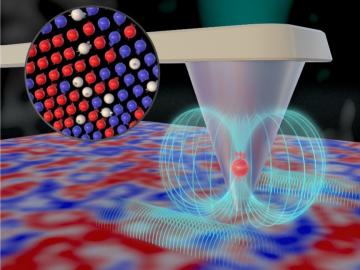
Working at nanoscale dimensions, billionths of a meter in size, a team of scientists led by ORNL revealed a new way to measure high-speed fluctuations in magnetic materials.


Working at nanoscale dimensions, billionths of a meter in size, a team of scientists led by ORNL revealed a new way to measure high-speed fluctuations in magnetic materials.
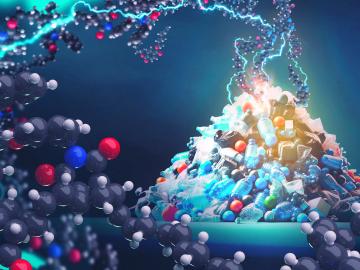
By editing the polymers of discarded plastics, ORNL chemists have found a way to generate new macromolecules with more valuable properties than those of the starting material.

ORNL researchers Valentino Cooper, Howard Wilson and Jiaqiang Yan have been named Fellows of the American Physical Society, a distinction recognizing their outstanding contributions to their fields.
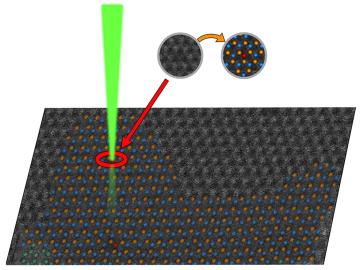

A new technology to continuously place individual atoms exactly where they are needed could lead to new materials for devices that address critical needs for the field of quantum computing and communication that cannot be produced by conventional means.

In a game-changing study, ORNL scientists developed a deep learning model — a type of artificial intelligence that mimics human brain function — to analyze high-speed videos of plasma plumes during a process called pulsed laser deposition.

A research team led by ORNL has bridged a knowledge gap in atomic-scale heat motion. This new understanding holds promise for enhancing materials to advance an emerging technology called solid-state cooling.
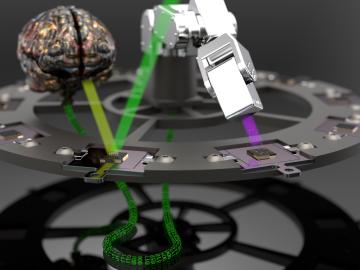
Today, scientific discovery is accelerated by automated experiments, artificial intelligence and high-performance computing.
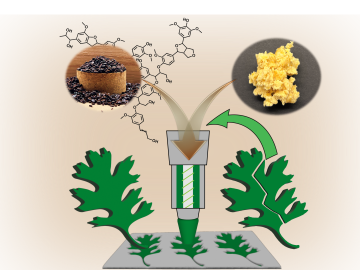
Oak Ridge National Laboratory scientists ingeniously created a sustainable, soft material by combining rubber with woody reinforcements and incorporating “smart” linkages between the components that unlock on demand.
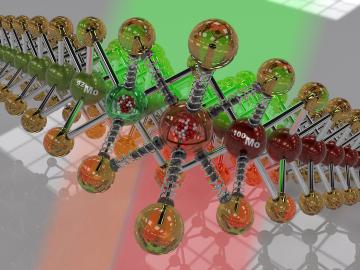
Research led by scientists at ORNL has demonstrated that small changes in the isotopic content of thin semiconductor materials can influence their optical and electronic properties, possibly opening the way to new and advanced designs