
Scientists at the Department of Energy’s Oak Ridge National Laboratory are leading a new project to ensure that the fastest supercomputers can keep up with big data from high energy physics research.


Scientists at the Department of Energy’s Oak Ridge National Laboratory are leading a new project to ensure that the fastest supercomputers can keep up with big data from high energy physics research.

Researchers across the scientific spectrum crave data, as it is essential to understanding the natural world and, by extension, accelerating scientific progress.
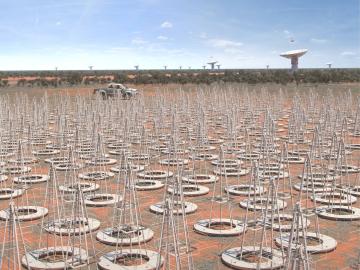
For nearly three decades, scientists and engineers across the globe have worked on the Square Kilometre Array (SKA), a project focused on designing and building the world’s largest radio telescope.
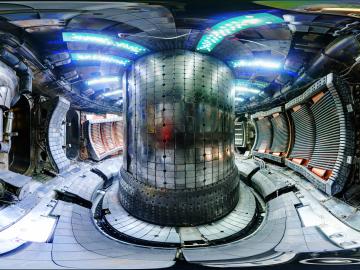
The same fusion reactions that power the sun also occur inside a tokamak, a device that uses magnetic fields to confine and control plasmas of 100-plus million degrees.


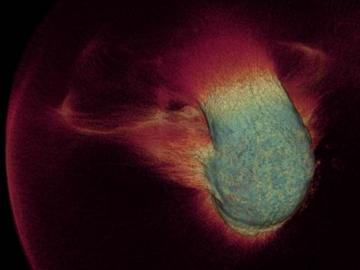
Since lasers were first produced in the early 1960s, researchers have worked to apply laser technology from welding metal to surgeries, with laser technology advancing quickly through the last 50 years.