Biodiversity and Ecosystem
About
Impacts on Hydropower Licensing Timelines in the U.S.

Overview/Objective
The number of hydropower facilities facing relicensing by the Federal Energy Regulatory Commission is projected to double between 2020 and 2030. Hydropower facilities provide Americans with reliable, affordable, and secure electricity, necessitating more efficient timelines for relicensing while balancing hydropower generation and environmental objectives.
A recent study led by the U.S. Department of Energy’s Oak Ridge National Laboratory researchers, in conjunction with the National Laboratory of the Rockies, was published in the March 2022 issue of Energy Policy. Considering the multiple and varied entities involved in the licensing process, the project team took an innovative approach to include key stakeholders in the study that represented environmental groups, utility companies, and state, federal, and tribal regulatory agencies. The goal was to better understand perceived obstacles from each vantage point and create a base level from which to work toward removing these barriers.
Results
The project team studied 107 randomly selected hydropower projects that received their licenses since October 1, 2005, to quantify length of steps for acquiring the first hydropower license and renewing an existing license, and to identify factors associated with timeline length and sources of uncertainty. All original licenses included in the sample were for projects adding power to a previously non-powered existing dam or constructing a hydropower facility in a canal. The Stakeholder Working Group met four times a year from 2018 to 2021.
The team’s findings demonstrated that licensing timelines varied depending on several factors. While those with greater environmental concerns predictably took longer to approve, new projects took less time—a difference of 2.5 years—than renewing existing licenses because of lower environmental complexity. The team also examined the three license processes—traditional, integrated, and alternative—to assess differences in license timelines. Initial findings showed that the integrated licensing process may shorten license timelines but may require more resources. The Stakeholder Working Group also suggested that incomplete submission of application materials can significantly impact timelines, causing an average delay of several months to a year.
Impact
Environmentally complex projects will require extensive and meaningful collaboration among stakeholders, applicants, and regulators to shorten licensing timelines. However, with new quantifiable data in hand and stakeholders working together to increase process efficiencies, the intent is to remove barriers that slow or inhibit greater hydropower generation, which already accounts for more than 7% of all U.S. electricity produced.
Using Environmental Genomics to Strengthen Hydropower Health

Overview/Objective
Researchers at the U.S. Department of Energy’s Oak Ridge National Laboratory (ORNL) are exploring the collection of environmental DNA (eDNA) and environmental RNA (eRNA), a cutting-edge form of biomonitoring that could simplify the licensing process for hydropower operators by dramatically improving the speed and accuracy of required environmental assessments at a much lower cost.
The goal is to create a robust eDNA/eRNA collection system that can supplement or, in certain cases, supplant conventional biomonitoring techniques like netting, trapping and electrofishing. These conventional techniques are intrusive, labor-intensive and expensive processes that require sending skilled professionals out to the field to catch the organisms to obtain DNA samples from their tissues. To get a more comprehensive sense of the species populating aquatic habitats, monitoring teams also must go out to the field on multiple occasions and still may not get truly representative results. Such methods can be ineffective at detecting rare or elusive species and can be harmful to organisms that are threatened with extinction by further reducing the already small number of individuals in existence.
By contrast, eDNA and eRNA samples are collected from water, not the organism itself, minimizing the impact on species and habitats. This alternative approach is possible because fish and other organisms shed their DNA and RNA into the water through excreting waste, reproduction, or decay. Once the samples are collected, researchers are then able to sequence these genetic materials and compare them with a database of known species to identify which organisms are living in and near the water. The advantage of eDNA is that it has a stable molecular structure and therefore persists in the environment, making it a reliable detector of species. However, this longevity, in combination with DNA secretions from decomposing organisms, can result in conflation of true species presence and historical species detection. That is not the case with eRNA, which is shed only by living organisms and has an unstable molecular structure, and can thereby provide insight into which animals and organisms have recently been present in a given habitat.
The team at ORNL has conducted a series of increasingly complex experiments to determine how eDNA and eRNA samples might be most effectively used. Their approach combines advanced genomics, high-performance computing, modeling, and automation to evaluate, refine and expand upon the use of eDNA and eRNA with the aim of developing new, transformative protocols and technologies tailored to the needs of the hydropower industry.
Results
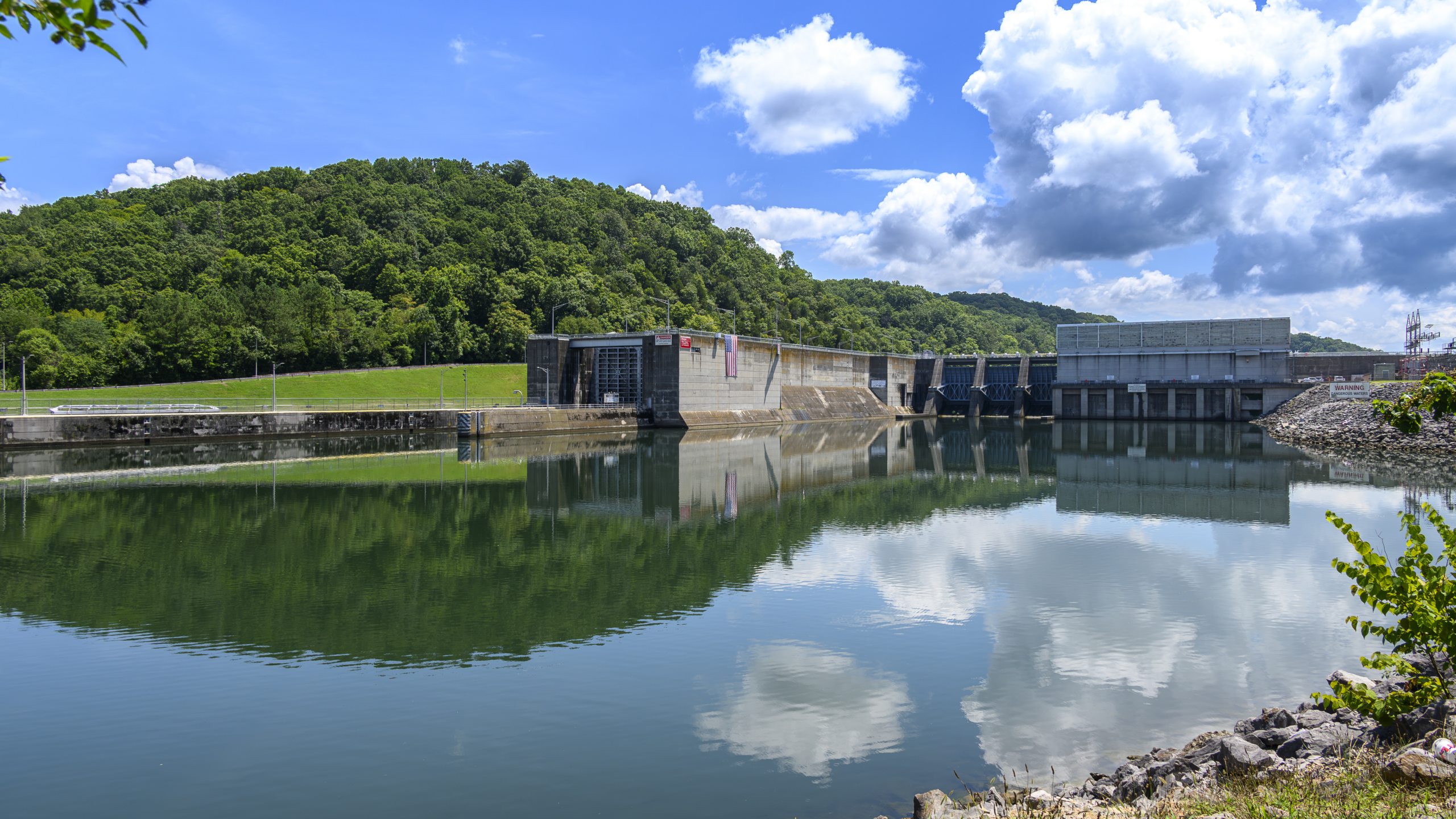
The project began in 2020, when researchers at ORNL and the Tennessee Valley Authority began a three-year pilot study comparing the efficacy of eDNA collection to conventional surveying methods. The study was conducted at four locations at a dam about seven miles south of the ORNL campus, the Melton Hill Reservoir, which is owned and operated by the TVA. Researchers took water samples from fall 2020 to spring of 2021, sequenced the environmental DNA, and benchmarked it against 30 years of conventional survey data maintained by the TVA.
The initial findings confirmed the effectiveness of eDNA, successfully detecting common fish species known to be present at Melton Hill, as well as unknown or low abundance species that had not previously been detected by conventional methods. The study suggested that eDNA surveys could be combined with conventional sampling to provide more comprehensive characterization of aquatic biota.
In the fall of 2022, the ORNL team launched a follow-up project, a collaboration with the Michigan Department of Natural Resources. During this phase, researchers wanted to find out if eDNA and eRNA could be sampled from the fast-running water that flows through fish ladders, bypass structures designed to help fish safely navigate around hydropower facilities, which would otherwise act as a physical barrier to their movements up or downstream. The team also wanted to find out if either eDNA or eRNA samples could be used to estimate which species are active users of the fish ladders and how many individual fish go through the passages over a given time period. After collecting samples from fish ladders on two rivers in southern Michigan, the St. Joseph and the Grand, the team demonstrated that eDNA and eRNA could be used in more turbulent, higher-velocity aquatic environments like fish ladders to determine which species are moving through a fish ladder and an approximation of how many individual fish went through. The study also showed that eRNA outperformed eDNA in such settings.
The project went into its third phase over 2024, with the commencement of a new collaboration between ORNL, TVA and the Electrical Power Research Institute (EPRI). During this phase researchers wanted to find out if water samples containing eDNA and eRNA could be used to identify and enumerate organisms other than fish, like mussels, amphibians and aquatic plants. The chosen testing ground was a hard-to-access stretch of the Hiwassee River in western North Carolina. The site’s remoteness make conventional biomonitoring and surveying there particularly difficult.
Going forward, ORNL researchers will take the sum of their findings from previous iterations of this project and test their methods on a system of great scope, complexity and dynamism in Washington State, at dams along the Columbia River and one of its key reservoirs, a 130-mile-long body of water called Franklin D. Roosevelt Lake. The aim is to provide yet more foundational information about fish passage efficacy, insight into how eDNA/eRNA particles flow through river systems impacted by hydropower, and better modeling for aquatic organism enumeration.
Impact
Identifying species changes in hydropower-regulated systems will ultimately lead to smarter, more environmentally-friendly facility operations and designs. The team also recently patented a design for robotic eDNA/eRNA collector and sampler that will be able to work autonomously and continuously in the field and send a real-time feed of results to operators, a technology that could revolutionize biomonitoring and surveying.
The novel methods of eDNA and eRNA sampling can be used in multiple applications to do the following:
- Rapidly measure biodiversity
- Detect invasive species
- Detect environmental change
- Detect toxic algal blooms
- More effective management of fisheries
- Sample difficult-to-access environments
- Determine watershed scale processes and interactions
- Uncover pollutants
Contact
Kristene N Moody, Molecular Ecologist
Dissolved Gas Monitoring and Management in U.S. Hydropower Reservoirs

Overview/Objective
Dissolved gases, such as dissolved oxygen, carbon dioxide, methane, and nitrous oxide, are produced, cycled, and released from all freshwater ecosystems. For hydropower reservoirs, accurate monitoring of dissolved gas concentrations and fluxes is key for understanding and managing the effects of high and low concentrations of dissolved gas, especially for reservoir and downstream water quality, air quality, and biodiversity. For example, low dissolved oxygen poses threats to fisheries health and productivity, while high concentrations of methane can be released to the atmosphere. Although hydropower provides significant electricity generation and storage, estimates of dissolved gas patterns, fluxes, and impacts are highly uncertain. This uncertainty reflects the dynamic variation in the physical, chemical, and biological factors that affect dissolved gases in reservoirs, as well as limitations in comprehensive field measurements to date. In turn, this poses an obstacle to understanding and mitigating the impacts of hydropower.
One way that dissolved gases in reservoirs are currently estimated is by conducting field measurements using a variety of methods, but few of the country’s 1,400 reservoirs that support hydropower generation have been sampled, and even fewer are routinely monitored. Understanding patterns in dissolved gases is difficult with such limited information, especially considering that the multiple uses of reservoirs, including drinking water and flood control, can also impact dissolved gases, water quality, and biodiversity.
To create a more complete and precise picture of dissolved gases across hydropower reservoirs, researchers at the U.S. Department of Energy’s Oak Ridge National Laboratory (ORNL) are using a combination of modeling and novel field sampling techniques to quantify patterns in dissolved gases.
One core focus is to measure the amount of dissolved gases that enter the atmosphere from the most common routes—diffusion, ebullition, and degassing:
- Diffusion occurs when gases in the water exchange with the atmosphere. Depending on the reservoir and time of year, gases can enter or leave the reservoir.
- In ebullition, gases produced by microbes living in sediments at the bottom of a reservoir bubble up to the surface and into the atmosphere. Ebullition is more common in shallow areas of a reservoir, which do not have enough water pressure to keep the gas bubbles from escaping.
- Degassing occurs when gases are released as reservoir water passes through hydropower turbines or flood control spillways. These operations typically pull from deeper waters, which can contain higher concentrations of methane.
The ORNL study marks one of the first times that all three pathways are being measured simultaneously, in addition to depth-resolved measurements of dissolved oxygen and related water-quality variables.

Results
With support from the U.S. Department of Energy’s Hydropower and Hydrokinetic Office, the ORNL project team returned to six hydropower reservoirs in the southeastern United States that were sampled a decade earlier to collect new measurements of dissolved gases. This time, the team used more advanced measurement tools, including drone technology, to gather data. The team is comparing its new findings to its historical data and current model projections.
In addition to collecting new measurements from the field, ORNL researchers are analyzing the effects of local temperature variability and dynamic reservoir operations using the International Hydropower Association’s web-based G-res Model.
Impact
These new techniques and the data produced by this study will allow the team to identify gaps in knowledge, refine models used to predict gas fluxes, and provide insight into factors driving dissolved gas patterns, as well as understanding impacts of low versus high dissolved gas concentrations on freshwater ecosystems. The results could be used to inform potential mitigation efforts, clearing the way for greater adoption of hydropower, which would ultimately result in a more resilient power grid.
Learn More
Explore an Interactive Narriative
Contact
Natalie A Griffiths, Senior Research Staff Member
Quantifying National Fish Passage Data

Overview/Objective
Hydropower generates nearly 6% of the electricity in the United States and plays a crucial role in ensuring a secure and reliable domestic energy grid. However, hydropower dams can pose challenges for aquatic species by obstructing vital migration routes, particularly for fish that need to move between upstream and downstream environments. To address this, a variety of fish passage technologies have been implemented over the years. Yet, despite these efforts, there is no comprehensive national dataset documenting the deployment and effectiveness of these technologies. This gap hinders stakeholders from efficiently planning and optimizing fish passage facilities.
Researchers at Oak Ridge National Laboratory (ORNL) are addressing this gap by developing the first centralized, geo-referenced database of fish passage facilities at hydropower installations across the United States. In collaboration with experts from the U.S. Fish and Wildlife Service, the National Oceanic and Atmospheric Administration, and the Low Impact Hydropower Institute, ORNL aims to provide stakeholders with the data they need to ensure the effective design, construction, and operation of fish passage systems.

Methodology
ORNL researchers are approaching the project with three primary goals:
- Detailing Existing Technologies: ORNL is compiling information on fish passage technologies and operations currently in use at hydropower dams across the country. This involves analyzing public data, hydropower licensing documents, and input from project partners.
- Cost Analysis: The team is working with industry stakeholders to gather information on the costs associated with constructing, operating, and maintaining fish passage systems.
- Performance Documentation: Researchers are identifying and documenting performance studies conducted at fish passage facilities, providing critical insights into their effectiveness.
A key aspect of this project is the creation of a web-based map. Initially developed for the New England region and rolled out nationally in 2024, this tool allows users to evaluate fish passage infrastructure within various watersheds. The map integrates hydropower development data with river and stream information from the U.S. Geological Survey’s National Hydrography Dataset, enabling more comprehensive analysis of fish passage capabilities across the United States.

Impact
ORNL’s national fish passage database will break down information silos to accelerate progress through the initial stages of dam construction and overhaul projects, thereby improving cost estimates and reducing licensing timelines. Furthermore, the project will optimize fish passage technologies while helping hydropower operators and environmental stakeholders plan more effectively by documenting the deployment of fish passage facilities and the associated costs. The ability to assess potential connectivity on a larger scale will also provide crucial insights into how best to protect and restore safe habitats for our nation’s migratory fish.
Get Involved
If you own or operate a hydropower facility with fish passage infrastructure, or if you have conducted studies on fish passage performance, your input can help enhance this national database. Contact ORNL to contribute your insights.
Learn More
Documenting National Fish Passage Data Fact Sheet
National Map of Fish Passage Infrastructure
National Fish Passage Dataset Webinar, Jan. 31, 2024
Contact
Paul G Matson, Aquatic Ecologist
Environmental Decision Support Toolkit

Overview/Objective
Most privately owned hydropower facilities must secure or renew a license from the Federal Energy Regulatory Commission (FERC). This process can take more than seven years to complete, and the environmental impact study negotiation phase is one of the lengthiest parts of the process. This negotiation typically involves multiple stakeholders with different perspectives regarding the project’s possible environmental impacts and potential mitigation efforts.
The overall intent of the project is to identify a measurable, repeatable, and broadly understandable suite of metrics for quantifying the environmental effects of hydropower. To help focus discussions among stakeholders and to streamline the licensing process, the U.S. Department of Energy’s (DOE’s) Oak Ridge National Laboratory (ORNL) researchers have developed an online Environmental Decision Support (EDS) Toolkitat HydroEDS.ornl.gov. The EDS Toolkit includesa science-based questionnaire to identify potential environmental impacts from the project (built using a database of more than 3,000 environmental metrics extracted from literature and an eco-evidence approach), an impacts prioritization module, and a “What’s Next?” module to quickly point users to information about relevant studies, mitigations, and regulatory and permitting information. Results from EDS Toolkit can be used as a resource during the study plan development phase of the FERC licensing process, shortening the process’ duration.
Results
For more than six years, the project team has worked with stakeholder advisory boards representing the interests of hydropower developers, federal agencies, nongovernmental organizations with environmental interests, tribal nations, and the scientific research community.
In Phase I of the project (2016 to 2018), called the Environmental Metrics for Hydropower (EMH) project, ORNL researchers developed a comprehensive database of environmental metrics from which to scientifically assess the ecological effects of hydropower development. The metrics were gleaned from a wide variety of source documents and compiled into six categories: biota and biodiversity; water quality; geomorphology; connectivity and fragmentation; water quantity; and landscape and land cover. From this database, the researchers developed a set of 42 river function indicators (RFIs) to represent groups of environmental metrics that could be used to determine whether an ecological function of the river would be impacted by a proposed hydropower project. The team began to develop a set of questions to use in determining which RFIs might be affected by a proposed hydropower project. They conducted case studies of 12 FERC-licensed hydropower projects to determine which environmental studies were requested vs. completed and how these environmental studies corresponded to the RFIs.
During Phase II of the project (2018 to 2022), the project team worked with the stakeholder advisory board to refine the questions and develop an online interactive RFI questionnaire, prioritization module, user guide, and a short training video. The team also conducted pilot tests of the RFI questionnaire with five outside users associated with three recently licensed hydropower projects and determined that the tool is useful and usable.
Through a memorandum of understanding with DOE and Norway’s Royal Ministry of Petroleum and Energy, ORNL and DOE staff also held a series of five discussions with researchers from Norwegian research organizations SINTEF and NINA to (1) present recently developed environmental decision tools; (2) reach a consensus regarding the motivation for creating these tools and define what constitutes an effective decision support tool for hydropower stakeholders; and (3) identify key barriers to using environmental decision tools during hydropower development. The resulting white paper summarizes the results of the group’s discussions and provides suggestions for future research to improve the effectiveness and uptake of environmental decision tools.
In Phase III of the project (2023 to 2025), the EDS toolkit was expanded with a “What’s Next?” module to connect interested parties to relevant studies and mitigations from previously licensed U.S. hydropower projects and to permitting and regulatory information provided through the Hydropower RAPID Toolkit. Users can explore and sort information based on key effects or uncertainties identified through the RFI questionnaire, now called the “Impacts” module.
Impact
The intent of this research was to create a shared catalog of terminology, methodology, and metrics that can enable stakeholders of all backgrounds to consistently, coherently, and comprehensively define, assess, and communicate their concepts of important environmental attributes and potential environmental impacts from proposed hydropower projects. The EDS Toolkit provides a systematic and transparent platform for comprehensive consideration of the environmental impacts of hydropower projects. The Toolkit facilitates rapid discussion and compromise between key hydropower stakeholders with diverse interests, ultimately supporting environmental mitigation efforts while saving developers time and money.
Additional Resources
- Environmental Metrics for Hydropower Database
- White paper: Environmental Decision Tools for Hydropower
- Hydropower Environmental Decision Support (EDS) Toolkit
References
- E.S. Parish, B.M. Pracheil, R.A. McManamay, S.L. Curd, C.R. DeRolph, B.T. Smith. 2019. Review of environmental metrics used across multiple sectors and geographies to evaluate the effects of hydropower development. Applied Energy. 238: 101-118.
- Levine, A., et al. 2021. An Examination of the Hydropower Licensing and Federal Authorization Process. National Renewable Energy Laboratory. NREL/TP-6A20-79242. https://www.nlr.gov/docs/fy22osti/79242.pdf
Contact
Dr. Esther S Parish, Senior R&D Staff