The Department of Energy’s (DOE) Oak Ridge National Laboratory (ORNL) brought together more than 200 stakeholders from DOE, the Department of War, industry and national laboratories for a Nov. 4-5 workshop on powder metallurgy-hot isostatic pressing (PM-HIP). Held at the Manufacturing Demonstration Facility (MDF) at ORNL, the event focused on identifying critical technology gaps, advancing qualification pathways and exploring opportunities to accelerate industrial adoption.
“Through coordinated research, demonstration and public-private partnerships, we can help establish PM-HIP as a reliable and scalable manufacturing solution for applications critical to our nation’s energy security and defense readiness,” said workshop organizer Soumya Nag.
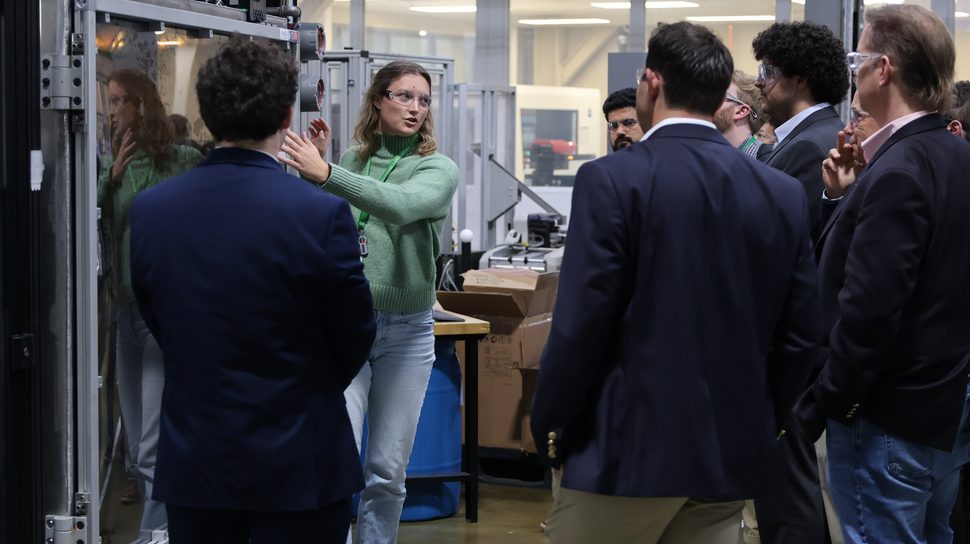
PM-HIP is a well-established process that uses heat and pressure to transform metal powder into dense, high-performance parts. These customized parts are well-suited for demanding applications in nuclear energy, renewable energy, oil and gas, aerospace and national security.
David Simms, director of supply chain strategy at X-energy, said the workshop provided an opportunity to learn about advanced manufacturing technologies that could shorten reactor delivery timelines, reduce costs and diversify the U.S. supply chain. “HIP technology is important for our industry because it enables a domestic source and the ability to deliver components faster to market.”
“PM-HIP presents a significant opportunity to strengthen the U.S. industrial base by providing a viable alternative to conventional casting and forging, particularly for large, complex components constrained by long lead times and limited domestic manufacturing capacity,” said Nag.
ORNL co-organized the event with the Electric Power Research Institute and the Metal Powder Industries Federation. A 23-member steering committee comprising representatives from industry and government helped determine topics of discussion and breakout sessions. The committee met on-site at MDF on March 20, 2025.
Workshop discussions drew on expertise from across the PM-HIP manufacturing process to address technical and economic barriers to broader adoption. More than 50 presentations and panel discussions examined technical advances and remaining challenges, incorporating perspectives from industry and other stakeholders across the manufacturing value chain.
Attendees included industry and institute representatives, ORNL staff members, academic participants, federal representatives and researchers from other national laboratories.
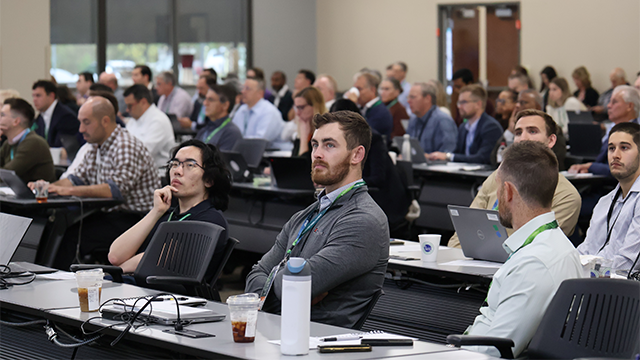
Building on momentum from the inaugural 2024 PM-HIP workshop at MDF, this year’s event examined progress in the technology and opportunities to expand domestic production to support U.S. energy and national security goals.
Feedback from the workshop will help ORNL and its partners evaluate future research priorities and potential collaborations.
The workshop was supported by DOE’s Advanced Materials and Manufacturing Technologies Office (AMMTO) and DOE’s Office of Nuclear Energy Advanced Materials and Manufacturing Technologies program.
The MDF, where this workshop was held, is supported by AMMTO and acts as a nationwide consortium of collaborators focused on innovating, inspiring and catalyzing the transformation of U.S. manufacturing.
UT-Battelle manages ORNL for DOE’s Office of Science, the single largest supporter of basic research in the physical sciences in the United States. The Office of Science is working to address some of the most pressing challenges of our time. For more information, please visit https://energy.gov/science.