MAPSTER is a lightweight software package that automatically searches deployed laptops for geospatial data and complies metadata (GPS coordinates, file size, etc.) at a central checkpoint. The checkpoint allows for an organization to see what geospatial data is being collected in the field by multiple assets. It can prioritize what geospatial data is sent back
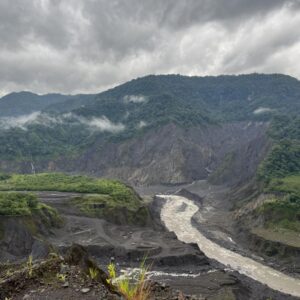
Click here to read a static version. The geology along Ecuador’s Coca River is moving in fast-forward. In a scientific field where natural wonders form over millennia, but natural disasters occur in minutes, speed is less than desirable. Over the last four years, the river and its surrounding area within the Amazon basin have experienced
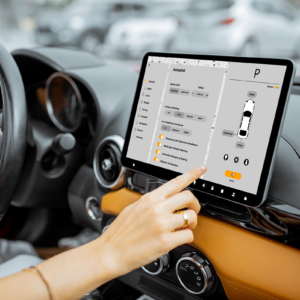
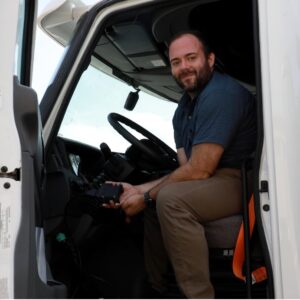
Modern automobiles are operated by small computers that communicate critical information via a broadcast-based network architecture called controller area network (CAN). Previous research has demonstrated risks due to inherent vulnerabilities within CAN architecture. While automotive cybersecurity is growing as a critical national security asset, manufacturers’ implementation of security controls is inconsistent and largely unregulated. Thus,
Summary Electrical utility substations are wired with intelligent electronic devices (IEDs), such as protective relays, power meters, and communication switches. Substation engineers commission these IEDs to assess the appropriate measurements for monitoring, control, protection, and communication applications. But the meters and protective relays could measure the phase voltages and currents on buses with different error
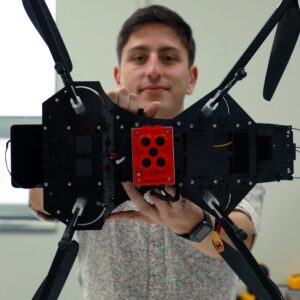
Jack Orebaugh, a forensic anthropology major at the University of Tennessee, Knoxville, has a big heart for families with missing loved ones. When someone disappears in an area of dense vegetation, search and recovery efforts can be difficult, especially when a missing person’s last location is unknown. Recognizing the agony of not knowing what happened to a family or friend, Orebaugh decided to use his internship at the Department of Energy’s Oak Ridge National Laboratory to find better ways to search for lost and deceased people using cameras and drones.
Vehicle cybersecurity professionals rely on techniques such as network penetration testing and simulation of malicious cyberattacks to gather data to create robust security tools designed to protect a vehicle from real-world malicious attacks. However, current attack simulations and penetration testing technologies focus on individual computers or systems instead of the entire vehicle as an insecure
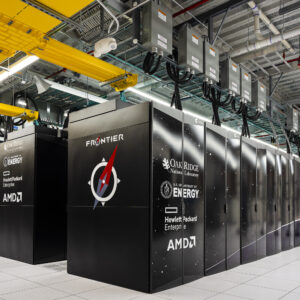
ORNL is home to the world's fastest exascale supercomputer, Frontier, which was built in part to facilitate energy-efficient and scalable AI-based algorithms and simulations.
As vehicles gain technological capabilities, car manufacturers are using an increasing number of computers and sensors to improve situational awareness and enhance the driving experience.
Mike Benson has spent the last 10 years using magnetic resonance imaging systems — much as you find in a hospital — to understand the fluid dynamics of flows around objects and even scaled replicas of cities. He aims to apply MRI scanning to
The Department of Energy’s Oak Ridge National Laboratory announced the establishment of the Center for AI Security Research, or CAISER, to address threats already present as governments and industries around the world adopt artificial intelligence and take advantage of the benefits it promises in data processing, operational efficiencies and decision-making.
The Department of Energy’s Oak Ridge National Laboratory hosted its Smoky Mountains Computational Science and Engineering Conference for the first time in person since the COVID pandemic broke in 2020. The conference, which celebrated its 20th consecutive year, took place at the Crowne Plaza Hotel in downtown Knoxville, Tenn., in late August.