
Nelson recognized with ANS Mishima Award for nuclear fuel research
Nelson was recognized for his technical accomplishments, leadership, mentoring and active role developing and maintaining U.S. nuclear fuels research.
Nelson was recognized for his technical accomplishments, leadership, mentoring and active role developing and maintaining U.S. nuclear fuels research.

Greenwood is being recognized for his contributions to nuclear operations and advanced reactor development.

ORNL researchers combined 3D printing and PM-HIP to make large metal parts faster, cheaper and with less waste. The process enables complex, high-performance components for nuclear, aerospace and energy applications while helping strengthen U.S. manufacturing and supply chains.
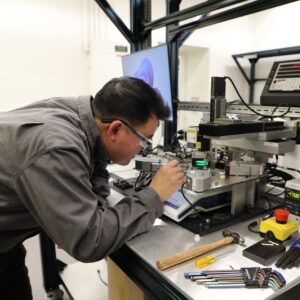
Tennessee Tech chemistry students are spending the summer at ORNL gaining hands-on experience in radiochemistry research while helping develop improved methods for separating the rare isotope promethium-147. The collaboration, supported by DOE’s RENEW initiative, is also aimed at strengthening the future nuclear science workforce by preparing students for careers at national laboratories and in isotope research.

Researchers at ORNL developed new experimental methods to measure how uranium-bearing molten salts conduct heat and flow, providing critical data for advancing molten salt reactor technologies. Using specialized tools developed at ORNL, the team generated unique thermal conductivity and viscosity data that will help improve reactor models, support licensing efforts, and expand the Molten Salt Thermal Properties Database.

An ORNL AI model can accurately predict river temperatures across the U.S., even in waterways without sensors. The system achieves about a 1.1°C median error and can estimate temperatures for all river reaches nationwide. Researchers say it could improve power plant cooling, energy reliability and environmental management.

A region rich in natural resources took centerstage recently at Oak Ridge National Laboratory’s third Appalachian Carbon Forum in Morgantown, West Virginia, where leaders in nuclear energy, critical materials and infrastructure exchanged ideas.

Researchers used the world’s fastest supercomputer for open science to train an artificial intelligence model that captures magnetic turbulence within a plasma in unprecedented detail. Results from the model could support research ranging from modeling a supernova to building the next generation of nuclear fusion reactors.

ORNL has named Joe Hoagland associate laboratory director for its Fusion and Fission Energy and Science Directorate, supporting its role in advancing the nation’s nuclear energy capabilities and the growth of the Oak Ridge Corridor as a nuclear industry hub. In this role, Hoagland will support the lab’s national missions and the growth of the nuclear and fusion energy sector.

Ross E. Blevins, a 98-year-old veteran and nuclear researcher, contributed to early nuclear science at Oak Ridge National Laboratory and later helped develop TVA’s first nuclear power plants. In 2026, he returned to ORNL to reflect on his remarkable career and experiences.

Rinkle Juneja, an R&D staff scientist at ORNL, has been recognized as an Early Career Distinguished Presenter by the Materials Research Society and was selected to represent ORNL on the “Materials Research at the U.S. DOE National Laboratories” panel at the MRS Fall Meeting.
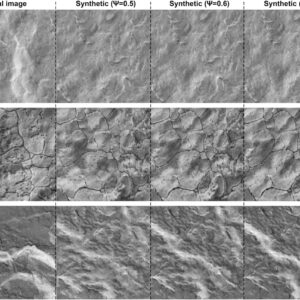
ORNL researchers developed a machine learning model that generates realistic tungsten microstructure images, helping fill gaps in costly experimental data. The approach supports virtual experiments to design more durable fusion reactor components and reduce maintenance costs.