As the U.S. reimagines its nuclear future, researchers at ORNL are experimenting with molten lead and next-generation materials to reinvent a classic reactor design for a new era of innovation. To evaluate the alloy’s performance in these conditions, researchers are testing AFA samples in eight small rabbit capsules encased in solid lead in ORNL’s High Flux Isotope Reactor.
Using neutrons at the Department of Energy’s Oak Ridge National Laboratory, researchers from The Ohio State University are pioneering the advancement of reliable welding techniques in outer space.
Leah Broussard, a research scientist in the Physics Division at ORNL, has received the inaugural DOE Distinguished Mentor Award for Workforce Development, recognizing scientists who guide and support the next generation of researchers.
It was the Navy that led Don Caverly to nuclear.It’s the variety − and the impact − of nuclear work that’s kept him in the field.“I never get bored here,” said Caverly, group leader for Radiochemical Engineering Development Center Hot Cell Operations in the Isotope Science and Enrichment Directorate’s Isotope Production and Manufacturing Division. “That’s a huge thing for me. If I don’t think I’m learning something, or if I get bored, that’s when I start looking for something else to do or making poor life choices. But here, there’s always something to do, always something to look forward to.”
A research agreement between ORNL and Louisiana State University will accelerate energy generation and critical materials manufacturing and enhance job growth in the fuel and chemical industries, particularly in the Gulf Coast region.
After more than 25 years of experience in condensed matter physics, as a student, researcher and in high-ranking executive roles at neutron scattering sources around the globe, Jon Taylor brings a wealth of experience and accomplishments to his new
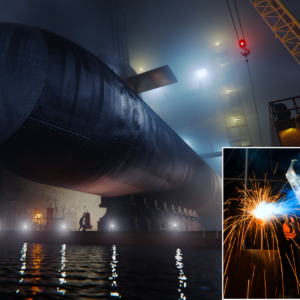
Researchers from ORNL, the U.S. Navy, Electric Boat and the University of Connecticut are using neutron scattering at the High Flux Isotope Reactor to investigate residual stresses that cause ductility dip cracking in copper-nickel welds. The study aims to better understand the mechanisms behind ductility dip cracking and develop approaches to mitigate its occurrence, resulting in safer vessels for the Navy.
Researchers from the University of Windsor are using neutrons at the Department of Energy’s Oak Ridge National Laboratory to better understand symptoms associated with E-cigarette/Vaping-Associated Lung Injury (EVALI).
As AI and advanced manufacturing continue to shape the nuclear industry, ORNL researcher Caleb Massey is studying how 3D-printed materials and new alloys perform in reactor environments.
Veterans of the U.S. Navy’s nuclear propulsion program are bringing their expertise to the Department of Energy’s High Flux Isotope Reactor at Oak Ridge National Laboratory, applying the same precision and discipline that powers the Navy’s fleets to America’s science, energy and security missions.
For more than 60 years, HFIR has produced neutron beams for the benefit of society, creating real-world impacts that span energy security, quantum computing, healthcare, national defense and advanced materials.