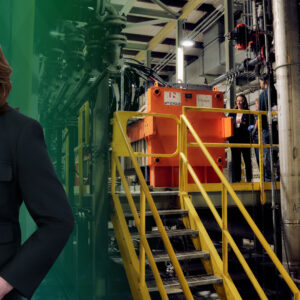
With support from the Department of Energy (DOE) national laboratories, including Oak Ridge National Laboratory (ORNL), Texas-based company Element3 has launched the first domestic lithium mining project in 50 years. This achievement is likely to have a big impact, turning the United States from a net importer of lithium to a country well on the
ORNL researchers are exploring how engineered bacterial spores could capture rare earth elements from acid mine drainage and other waste streams. The SpoREE project combines biology, AI and advanced analysis to develop reusable materials for recovering critical minerals.
Turning a new energy or manufacturing technology into a company can take years of research, specialized equipment and substantial investment. For nearly a decade, Innovation Crossroads, rooted at Oak Ridge National Laboratory, has given hard-tech entrepreneurs access to resources designed to help overcome those barriers.
ORNL researchers more than doubled the peak power of a low-cost salt water battery by using a bleach-producing side reaction. Developed with Coulomb Technology, the battery avoids critical materials and could support long-duration grid energy storage.
Click here for static version. What if one answer to the supply crisis isn’t buried in a mine shaft, but growing quietly in a field? For too long, the United States has relied on foreign sources for most of the raw materials powering its technological future, the essential minerals in every smartphone, battery pack and
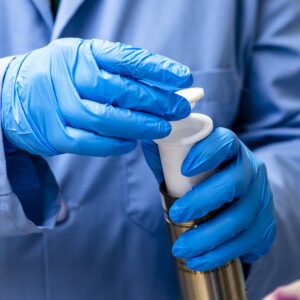
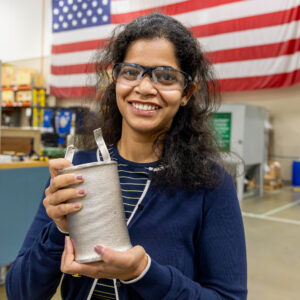
ORNL researchers have developed a hybrid manufacturing method that combines 3D printing and electroforming to create leak-free HIP cans for advanced nuclear reactor components. The approach could simplify production of complex metal parts, reduce costs and reliance on overseas manufacturing, and strengthen U.S. supply chains for nuclear energy and defense applications.
ORNL and KVA Stainless completed a DOE-funded study validating the performance of welded Grade 91 steel for use in high-temperature energy systems. The results will help KVA refine its advanced welding technology and support the development of durable materials for future fission and fusion reactors.
Researchers at ORNL and the University of Tennessee, Knoxville, demonstrated an AI-driven workflow that guided data collection in real time during a beamline experiment at Cornell University's CHESS facility. The approach allowed the AI to adjust measurements as data was collected, advancing autonomous scientific research and supporting DOE's Genesis Mission.
Six entrepreneurs have been selected for the next cohort of Innovation Crossroads, a Department of Energy Lab-Embedded Entrepreneurship Program node based at Oak Ridge National Laboratory. The program provides energy-related startup founders from across the nation with access to ORNL’s researchers, facilities and technical expertise, as well as connect them with experts, mentors and networks to accelerate their efforts to take their promising ideas to the marketplace.
Ahmed Arabi Hassen of ORNL has been named a Fellow of the American Society for Nondestructive Testing, recognizing his leadership and contributions to nondestructive evaluation and composite manufacturing. His work has advanced innovative manufacturing technologies while helping accelerate the adoption of advanced materials across industry.