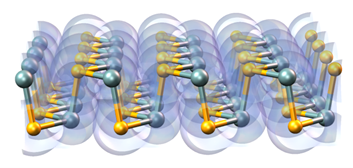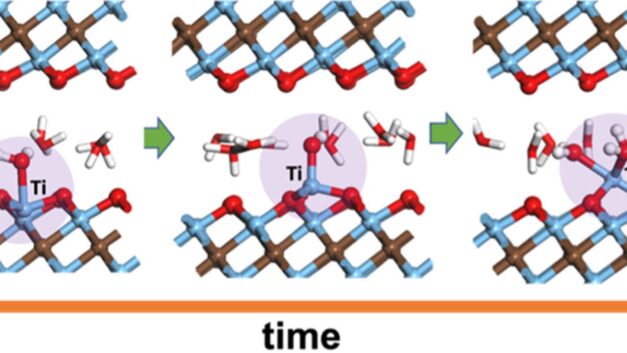
My research is focused on predicting and explaining the properties of materials using computer simulation, chiefly using atomistic and quantum-mechanics based methods. These methods use little or no experimental data, making them especially valuable for the study of new materials and devices, and for computing properties that are particularly difficult or expensive to access experimentally. Materials and molecules of interest include all systems of energy relevance (quantum materials, superconductors, structural materials, energy storage…). Many of these systems pose a challenge to established theory and simulation methods, limiting our ability to predict, understand, and optimize their properties. This motivates the development of new approaches, including those where all the approximations can in principle be tested, such as in the Quantum Monte Carlo approach. The ability to rapidly generate benchmark quality data with known and controllable errors is becoming critically important as artificial intelligence-based tools are applied to novel materials where existing datasets are small or experiments are particularly costly or challenging to perform.
I am the principal investigator for the Center for Predictive Simulation of Functional Materials. This Center develops of the open source QMCPACK code, the Quantum Monte Carlo methods in it, and the associated datasets and workflow tools to apply them to high impact and general scientific problems with full reproducibility. See https://github.com/QMCPACK/qmcpack . This code is also a readiness code for the next generation Discovery machine at OLCF. https://www.olcf.ornl.gov/caar/discovery-caar/
I have worked with nearly all quantum chemical and electronic structure methods. This ranges from contributions to the very popular VASP and Quantum ESPRESSO density functional theory based codes to developing new reactive classical potentials and, more recently, neural-network based interatomic potentials.
I am matrixed staff with the Center for Nanophase Materials Sciences. This user facility provides free access to staff and state-of-the-art equipment for a broad range of nanoscience research, including theory/modeling/simulation. See https://www.ornl.gov/center-for-nanophase-materials-sciences/ . Please contact me about potential user projects.
I sit on the NERSC User Group Executive Committee https://www.nersc.gov/users/nersc-user-group/nugex . Please do not hesitate to contact me or any other committee member with suggestions or concerns about the NERSC supercomputer center.
Success developing and applying the above methods has been recognized via Fellowship of the American Physical Society, an ACM Gordon Bell prize, an ORNL Director’s Award, and the DOE Secretary of Energy Achievement Award. To view my publications, including those applying the above methods to novel materials, I recommend using Google Scholar.
Links
Publications
News

February 2, 2026
6 MIN READ
Characterizing GPU Energy Usage in Exascale-Ready Portable Science Application