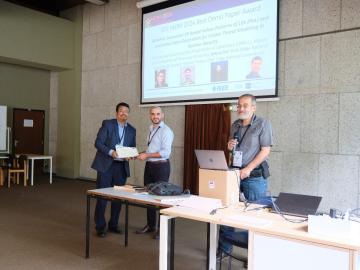
A team of researchers at ORNL are using virtual reality to understand normal and abnormal human behavior in a given location – specifically, a nuclear reactor. As people move around their lives, they tend to do similar activities in the same



A type of peat moss has surprised scientists with its climate resilience: Sphagnum divinum is actively speciating in response to hot, dry conditions.

In 1993 as data managers at ORNL began compiling observations from field experiments for the National Aeronautics and Space Administration, the information fit on compact discs and was mailed to users along with printed manuals.
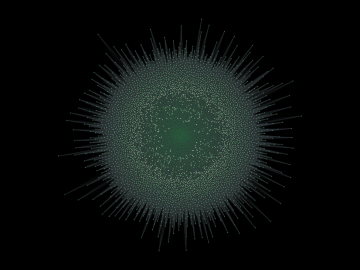
Using disinformation to create political instability and battlefield confusion dates back millennia. However, today’s disinformation actors use social media to amplify disinformation that users knowingly or, more often, unknowingly perpetuate.

A team led by the Department of Energy’s Oak Ridge National Laboratory has developed a utility-scale design and control system for a hybrid solar power plant that can operate with both direct and alternating current — providing more

Scientists at the Department of Energy’s Oak Ridge National Laboratory are leading a new project to ensure that the fastest supercomputers can keep up with big data from high energy physics research.

Over the past seven years, researchers in ORNL’s Geospatial Science and Human Security Division have mapped and characterized all structures within the United States and its territories to aid FEMA in its response to disasters.
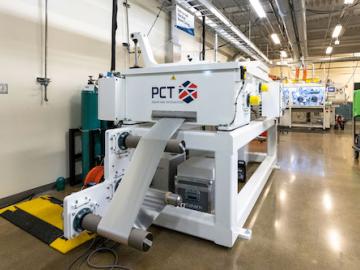
Researchers at the Department of Energy’s Oak Ridge National Laboratory and their technologies have received seven 2022 R&D 100 Awards, plus special recognition for a battery-related green technology product.
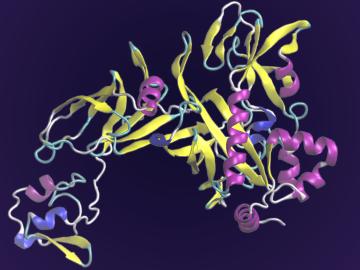
A team of scientists led by the Department of Energy’s Oak Ridge National Laboratory and the Georgia Institute of Technology is using supercomputing and revolutionary deep learning tools to predict the structures and roles of thousands of proteins with

A team of scientists led by ORNL’s Gautam Thakur has developed a new scientific method to screen human data annotators for bias, ensuring high-quality data inputs for machine learning tasks.