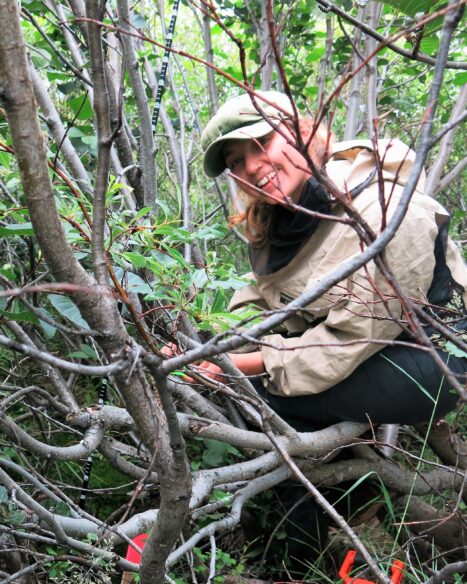
Arctic tundra ecosystems are severely nitrogen (N) limited, largely due to low inputs of N via fixation and slow decomposition rates. Traditionally, protein depolymerization has been considered the step regulating arctic N availability, with microbes believed to be chronically N limited, resulting in a tightly conserved, predominantly organic, N cycle. This paradigm has been increasingly challenged, with new evidence showing the importance of mineral N cycling and variability in microbial N limitation in the Arctic. Through N fixation, the expanding shrub Siberian alder (Alnus viridis ssp. fruticosa) could help relieve local N limitation, increasing N cycling rates and N availability. To better understand the N cycling steps regulating arctic N availability and the impact of alder, we estimated N pool sizes and used isotope pool dilution to estimate gross transformation rates under and away from alder canopies at five sites in arctic Alaska. Gross microbial N immobilization was dominated by amino acids and more sensitive to variability in the amino acid, rather than ammonium, pool. This, in addition to net amino acid immobilization but net zero ammonification, is consistent with protein depolymerization regulating N availability. However, gross ammonification rates were high and microbial N use efficiency relatively low, especially under alder, consistent with emerging evidence stressing the importance of a small but rapidly cycling mineral N pool. Our results suggest that microbial N limitation is not ubiquitous and that depolymerization regulates N availability despite the presence of significant mineralization rates at these sites. Organic and mineral N pool sizes and gross rates were all higher, and nitrogen use efficiency lower, under alder than away from alder, indicating a significant opening of the N cycle under alder. Continued alder expansion therefore has the potential to accelerate N cycling and mineralization, with large consequences for plant community dynamics and ecosystem carbon balance.