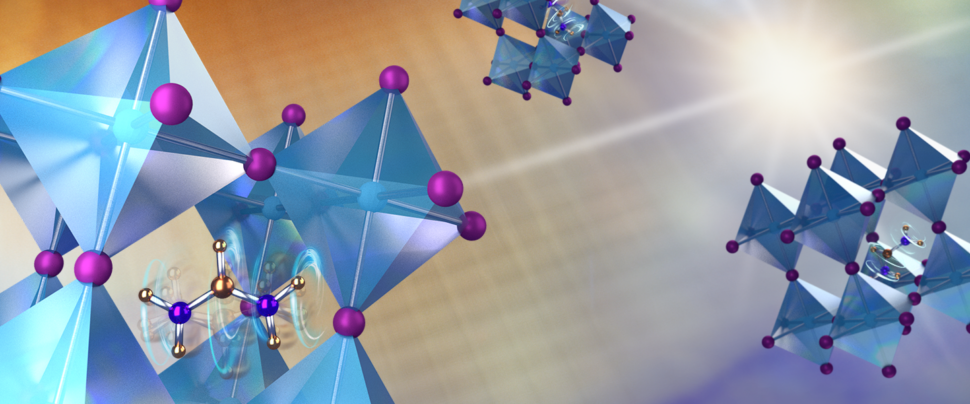
Scientists and users at Oak Ridge National Laboratory use neutron scattering (diffraction) to observe and understand how the atomic-level magnetism and structure of materials correlates to their properties, which can lead to the development of new functional materials with highly desirable structures and properties as well as a deeper understanding of biological processes.
At ORNL, research using neutron diffraction primarily focuses on six scientific themes:
Biological materials and systems
Chemistry, catalysis, and interfaces
Computing, modeling, and data analytics
Materials and engineering
Quantum materials
Soft matter and polymers
ORNL hosts 12 diffractometers—7 at the Spallation Neutron Source and 5 at the High Flux Isotope Reactor—which are operated and maintained by the Diffraction group. This group contains outstanding neutron scattering scientists with a wide range of scientific interests and expertise. The diffractometers are divided into three suites: powder diffraction instruments, single crystal instruments and advanced diffraction instruments. More details can be found by following the links to the individual instrument and scientist pages below.
Instruments
Single Crystal Diffraction Suite
CORELLI Detailed studies of disorder in crystalline materials
DEMAND Small unit-cell nuclear & magnetic structural studies
IMAGINE-X Atomic resolution structures in biology, chemistry and complex materials
MANDI Atomic level structures of proteins, macromolecules and DNA
Arianna Minelli – CORELLI Feng Ye – CORELLI Huibo Cao – CORELLI Yiqing Hao – DEMAND Yan Wu – DEMAND Chris Fancher – HIDRA Jeffrey Bunn – HIDRA Flora Meilleur – IMAGINE-X, MANDI Dean Myles – IMAGINE-X, MANDI Andrey Kovalevsky – IMAGINE-X, MANDI Cheng Li – NOMAD, POWGEN Joerg C. Neuefeind – NOMAD Jue Liu – NOMAD Clarina dela Cruz – POWDER Danielle Yahne – POWDER
Stuart Calder – POWDER Joe Paddison – POWDER Qiang Zhang – POWGEN Alicia Manjon Sanz – POWGEN Thomas Proffen – POWGEN Chris Ridley – SNAP Antonio M. dos Santos – SNAP Xiaoping Wang – TOPAZ Christina Hoffman – TOPAZ Ke An – VULCAN Jordan G Bogdan – VULCAN Yan Chen – VULCAN Dunji Yu – VULCAN Si Athena Chen – WAND2 Matthias Frontzek – WAND2