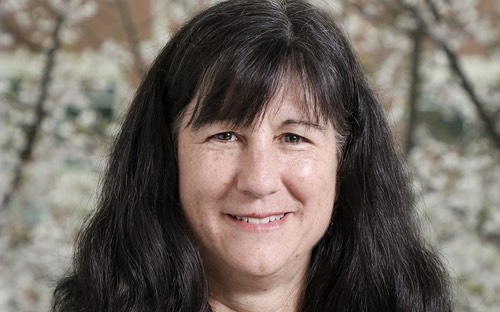
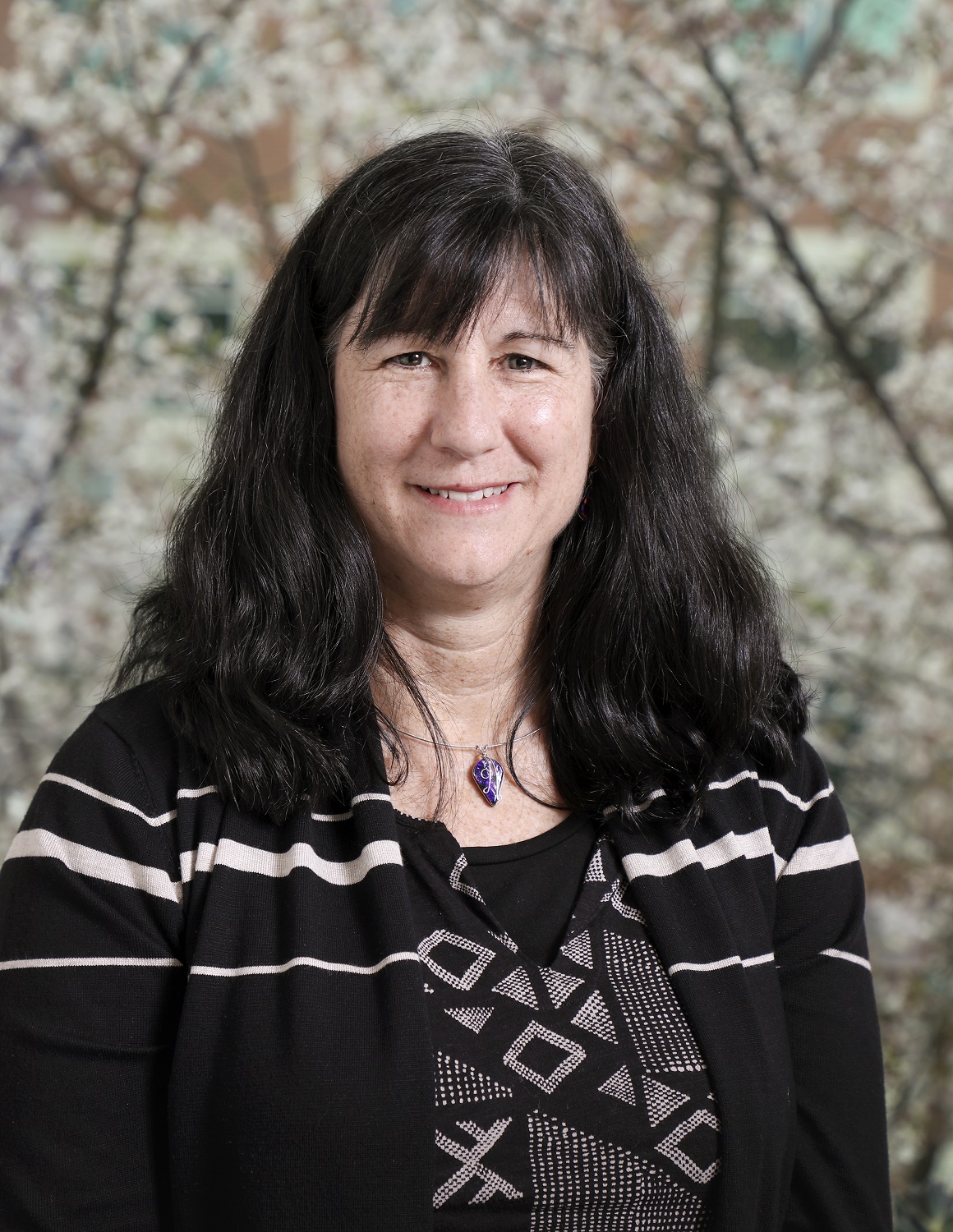
Variety is the spice of life for Claire Luttrell, who has used her engineering expertise to support a range of projects at ORNL from designing energy system components to providing systems for capturing and analyzing large data sets.
The researcher in the Electrical & Electronics Systems Research Division has worked on projects large and small, from lightweight materials for the Department of Defense to vessel components for the Spallation Neutron Source (SNS), a US Department of Energy (DOE) Office of Science user facility at Oak Ridge National Laboratory.
“Some of those projects even come around again, such as the vessels I helped design and analyze for SNS targets. The SNS recently came back and wanted some changes made to those systems,” Luttrell said.
Luttrell first became interested in science and engineering while spending time with her father, a mechanical engineer who worked on plant designs for Union Carbide in Texas and Tennessee. “I was the third girl in the family and by that time dad had given up on having a boy. I hung out a lot with him while he worked on his car and other things around the house. We were always close,” Luttrell said.
Her father encouraged her to go into electrical engineering, but Luttrell opted for mechanical engineering instead. She earned her bachelor’s and master’s degrees at the University of Tennessee. While in school, she worked as a co-op student at the K-25 Gaseous Diffusion Plant and the Y-12 National Security Complex. After graduation, she came to work at ORNL.
“The people I work with at the lab, and the ability to work on very different projects are a big motivator for me,” said Luttrell. “I’m with a good group of researchers who are comfortable with presenting their ideas, and we all work well together.”
One project she’s been involved in is design and analysis for the transmission lines that will conduct enough energy to heat plasma to the extreme high temperatures—150 million degrees Celsius—necessary for fusion energy as part of the ITER project. “The work is very precise as the piping must withstand extreme conditions,” she noted. The research made use of Luttrell’s expertise in both structural and thermal engineering.
She also worked on reactor fuel plates at ORNL in the 1990s, which later led to an advisory role with staff at the ORNL High Flux Isotope Reactor, also a DOE Office of Science user facility, on the satisfactory repair of a fuel plate element.
Away from the lab Luttrell enjoys photography and travel, and has taken several trips with a sister who runs a business hosting small groups of travelers on sailboat excursions. On those outings Luttrell has traveled to Greece, New Zealand, and French Polynesia, and her computer’s screensaver is full of photographs from the trips.
Luttrell recently took up a new hobby in a serious way: long-distance cycling. She trained six months for a 500-mile bike ride called RAGBRAI: The Register’s Annual Great Bicycle Ride Across Iowa. Luttrell and five ORNL colleagues spent a week on the ride traversing the state from west to east, with the cyclists dipping their rear tires in the Missouri River at the beginning and their front tires in the Mississippi River at the end. Along the way they camped and attended special events in host communities. “Iowa is more than just flatlands,” Luttrell noted. “We had some steep grades along the way, and it was a great trip.” Since the ride, the researcher has purchased a new bike and intends to continue cycling.
ORNL is managed by UT-Battelle for the Department of Energy’s Office of Science, the single largest supporter of basic research in the physical sciences in the United States. DOE’s Office of Science is working to address some of the most pressing challenges of our time. For more information, please visit http://energy.gov/science.