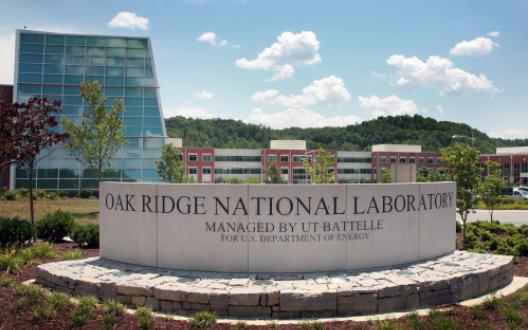
Some strains of mice aren’t susceptible to anthrax or other bacteria and viruses while others are, and a project shared by Oak Ridge and Los Alamos national laboratories may help to explain why. ORNL has decades of experience making mutated mice while Los Alamos researchers have been studying host-pathogen interactions using anthrax and other agents. So the collaboration is a natural, says Dabney Johnson, a genetics researcher in ORNL’s Life Sciences Division. “There are four or five host genes in mice that are known to have something to do with how susceptible mice are to anthrax,” Johnson said. The plan is for Johnson and colleagues to make mutations that might confer resistance to anthrax and then send mutated and normal cells to Los Alamos, where researchers hope to learn why the mutated cells aren’t susceptible. Genetically, mice are remarkably similar to humans, so this information could one day help develop treatments for anthrax and other diseases.