Vision
Leveraging state-of-the-art infrastructure and world-class technical expertise, the Mechanical Properties and Mechanics (MPM) group aims to drive ORNL’s strategic goals by delivering innovative contributions and exceptional value to the development of next-generation materials for critical applications
Mission
Coupling state-of-the-art experimental, analytical, and numerical analysis techniques, the mission of the MPM group is to provide world-renowned scientific leadership in understanding the correlation between processing, microstructure, mechanical behavior, and performance, thereby enabling the development of superior materials for energy and defense systems
R&D Scope
Our research and development activities encompass a comprehensive exploration of the mechanical behavior and properties of materials and structures.
Materials Development
Innovating and enhancing materials with superior strength, durability, and performance for applications in power generation, energy transformation, transmission, storage, and national defense.
Mechanics of Materials
Harnessing the fundamental principles of solid mechanics to engineer stress-relief mechanisms that enable significant improvements in material performance at relevant length scales and service conditions.
Advanced Characterization Techniques
Utilizing state-of-the-art experimental, analytical, and numerical methods to characterize the microstructure and mechanical behavior of materials over multiple length scales, strain rates, and controlled environmental conditions.
Correlation Studies
Establishing robust correlations between processing techniques, microstructural features, mechanical behavior, and the overall performance of materials.
Fundamental and Application-Oriented Research
Focusing on the development of next-generation materials tailored for strategic and critical applications, ensuring that our innovations meet the evolving needs of ORNL and our sponsors.
By addressing these core areas, our R&D efforts aim to push the boundaries of material science, contributing to the development of advanced energy systems and supporting ORNL’s mission to achieve scientific and technological excellence.
Core Competencies
Metals, ceramics, polymers, composites, biomaterials (natural and synthetic), and structured devices
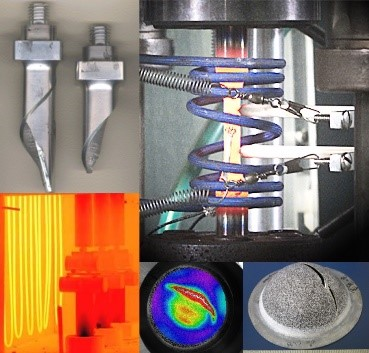
Tension, compression, shear, torsion, biaxial, and flexure
High vacuum, inert gases, and corrosive atmospheres
Infrared, resistance, and RF heating
Digital image correlation
Multiaxial, cyclic, and impact loading
Creep, fatigue, fracture, spiral notch, dynamic mechanical analysis, resonant ultrasound spectroscopy, and three-point bend
Lever-arm, electromechanical, servohydraulic, and electromagnetic testing platforms
Instrumented indentation (ambient and controlled atmosphere): in-situ SEM, temperatures to 500 °C, high-throughput screening, mechanical property mapping, micro-pillar compression, and micro-beam bending
Rationalization of mechanical behavior with microstructural and chemical characterization using SEM, EBSD, EDX, XPS, TEM, AFM, and XRD
Data analytics via clustering techniques
Length scales: 10-9 to 100 m
Strain rates: 10-10 to 1000 s-1
Temperatures: 20 to 2200 °C
Forces: 10-6 to 106 N
Pressures: 10-9 to 106 torr