This technology enables the conversion of polyethylene waste into liquid hydrocarbon products under mild conditions without external hydrogen, solvents, or metal catalysts. The process addresses limitations of conventional plastic recycling by producing liquid alkanes suitable for downstream use while avoiding complex feedstocks and high-severity operating conditions. By leveraging a robust reaction medium with intrinsic catalytic
This technology addresses limitations in producing biobased carbon materials using conventional batch-based, pressurized systems. It introduces a continuous-flow approach for forming uniform, submicron amorphous carbon materials while enabling real-time process observation. By replacing closed, batch reactors with a flow-based method, the technology improves process control, scalability, tunability of properties based and safety. The approach is
To meet the growing need for cost-effective industrial chemicals, Oak Ridge National Laboratory has developed a method to enable a cellulose-degrading microorganism to produce 2,3-butanediol (2,3-BDO), a valuable precursor for plastics, fuels, and other materials. This advancement allows direct conversion of plant biomass into 2,3-BDO, reducing reliance on fossil feedstocks and supporting biomanufacturing. Description 2,3-Butanediol
Oak Ridge National Laboratory has developed a neutral-ligand–based solvent extraction process for efficient rare earth element (REE) separation. This scalable method enhances selectivity while reducing processing steps, capital costs, and waste generation compared with conventional acid-based systems. The technology enables the recovery of critical REEs vital for electronics and defense applications, helping strengthen domestic supply
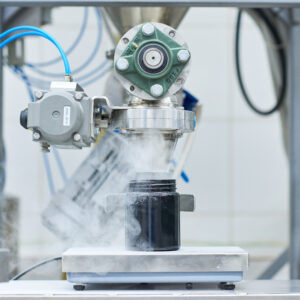
Efficient fueling for magnetically confined fusion power systems requires continuous recirculation of cryogenic fuel material. This technology introduces a method for returning excess solid extrusion back into a cryogenic extruder without the need for large-scale gas reprocessing. By simplifying the recirculation process and maintaining consistent pressure, the invention improves system efficiency and reduces overall fusion
Oak Ridge National Laboratory (ORNL) has developed a process to increase the availability of chlorine-37, an isotope critical for molten salt reactor fuels. This technology addresses supply limitations of chlorine-37 by enabling its recovery from common, low-cost chemical sources. The advancement supports nuclear energy applications by improving access to this scarce isotope, ultimately aiding the
Oak Ridge National Laboratory has developed a thermally stable, scalable organocatalyst for chemical recycling of diverse plastic waste streams. The catalyst enables selective breakdown of certain polymers, including those in mixed or contaminated waste, into high-purity chemical building blocks for reuse. This technology addresses current recycling limitations by providing an efficient, cost-effective solution for processing
Oak Ridge National Laboratory and Dartmouth College have developed a 3D printing method for manufacturing structured catalysts with improved resolution and performance. Designed to address key limitations in continuous flow reactors, this innovation enhances conversion efficiency for processes such as catalytic pyrolysis of waste into jet fuel. Description This invention introduces a 3D printing approach
We have developed thermophilic bacterial strains that can break down PET and consume ethylene glycol and TPA. This will help enable modern, petroleum-derived plastics to be converted into value-added chemicals. Contact To learn more about this technology, email [email protected] or call 865-574-1051.
The invention teaches a method for separating uranium and the transuranic actinides neptunium, plutonium, and americium from nitric acid solutions by co-crystallization upon lowering the temperature from 60 C to 20 C or lower. Fission products and curium remain in the mother liquor. The method provides for any degree of recovery of Np, Pu, and
Oak Ridge National Laboratory has developed an advanced spectroscopic screening method to evaluate the flotation of potential earth element (REEs) ores. This technique enables rapid, non-destructive assessment of collector adsorption on mineral surfaces, streamlining the discovery and optimization of floatation agents for REE. Description This invention introduces a high-throughput screening platform using surface-sensitive spectroscopic tools
Moisture management accounts for over 40% of the energy used by buildings. As such development of energy efficient and resilient dehumidification technologies are critical to decarbonize the building energy sector. Currently, desiccant materials such as silica gel and zeolite are widely used for moisture management. However, these desiccants need high temperature (>150 C) to regenerate,