Advancing Mechanistic Understanding of Earth’s Vital Ecosystems
Researchers in the Ecosystem Processes group at Oak Ridge National Laboratory advance a detailed, mechanistic understanding of Earth’s vital ecosystems and how they change over space and time. Ecosystems are dynamic, complex networks of interactions among plants, animals, microorganisms, and their physical environment, which collectively determine the flow of energy, nutrients, and water. By deeply exploring these relationships, researchers can uncover precisely how ecosystems respond to environmental shifts and identify critical processes that sustain ecosystem health and productivity.
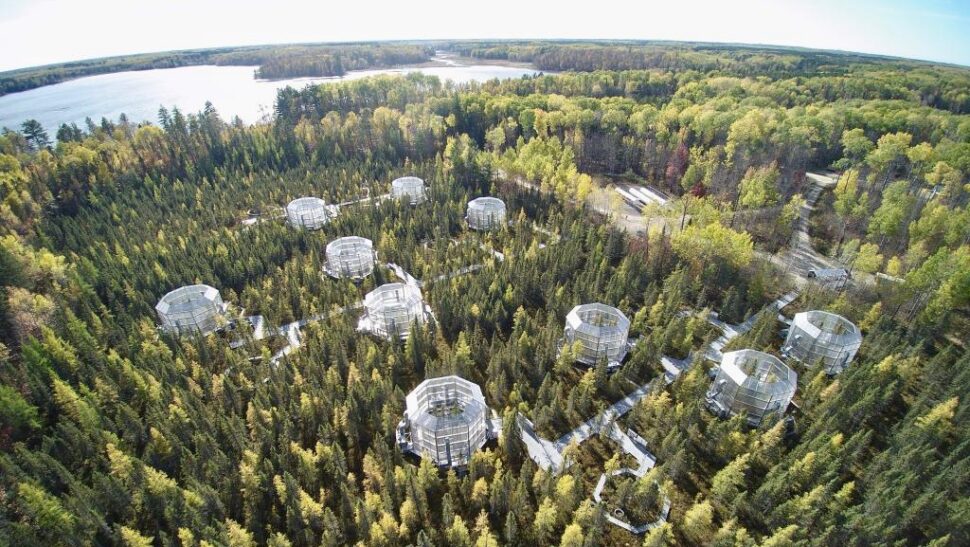
A distinguishing feature of the research is a commitment to whole-ecosystem approaches, combining large-scale experimental manipulations, near- and long-term ecological observations, and sophisticated mathematical modeling. Notably, the group’s ecosystem-scale experiments, such as the Spruce and Peatland Responses Under Changing Environments (SPRUCE) experiment, represent some of the most ambitious and detailed studies conducted globally. These large-scale manipulations have allowed researchers to systematically test hypotheses and measure ecosystem responses under precisely controlled environmental conditions, providing unprecedented insights into ecosystem resilience and vulnerability.
Data gathered from these extensive field experiments is integrated with advanced ecosystem modeling. By coupling experimental data with computational approaches, the group can simulate ecosystem processes at detailed spatial and temporal scales, transforming observations into predictive insights. This quantitative approach enables scientists to forecast how ecosystems will respond to future environmental scenarios, such as increased atmospheric carbon dioxide, altered precipitation patterns, rising temperatures, and changes in nutrient availability.

The team actively cultivates collaborative research efforts with scientific partners nationwide and internationally. These collaborations ensure that studies are comprehensive and incorporate varied expertise, ultimately enhancing the robustness and generalizability of scientific findings. Through these combined efforts, the group seeks a comprehensive, mechanistic understanding of interconnected carbon, water, and nutrient cycling processes within various ecosystems.
Research efforts span a broad range of ecological processes, including peatland responses to warming, ecosystem responses to increasing atmospheric CO2, dynamics of photosynthesis and solar-induced fluorescence, model complexity and process representation, and the link between structure and function. Collectively, these efforts aim to clarify how ecosystem structure directly influences function, providing foundational knowledge critical for managing and conserving ecosystems under environmental change.
Researchers








Publications
Sep, 2026
Journal
Soil fertility controls on tropical forest productivity and mortality: synthesis and roadmap
Tropical forests are highly diverse and productive ecosystems and store nearly 60% of vegetation biomass. Across the tropics, forests span large gradients of soil fertility, from vast regions situated on highly weathered, ancient geological formations to others on young, nutrient-rich landscapes. Tropical forest productivity, mortality, and biomass all vary systematically…
Aug, 2026
Journal
A primer on forest structure measurement with lidar for ecologists
Light detection and ranging (lidar) technology has fundamentally advanced the way we measure forest structure, facilitating new insights into ecological processes. Lidar for forest ecology applications is deployed on multiple types of platforms that operate from the ground, air, or space, and each has associated strengths and limitations. Ideally, the choice of what kind o…
Jul, 2026
Journal
Implementing belowground controls on nutrient uptake in ELMv2-SPRUCE improves representation of a boreal peatland ecosystem
Boreal peatlands store 13 %–32 % of the global soil carbon (C) stock, a service dependent on plant-mycorrhizal fungi associations. In these nutrient poor systems, ectomycorrhizal and ericoid mycorrhizal fungi supply up to >80 % of the nutrient requirements of their plant hosts, partly with mined nitrogen (N) and phosphorus (P) from soil organic matter that are otherwise in…
Contact
