Scientists in the Biodiversity and Ecosystem Health group at Oak Ridge National Laboratory address the intricate and interconnected challenges surrounding water and energy resources. These scientific challenges include the need to understand and predict environmental responses to energy production, develop scientifically sound technologies that can enhance energy security and minimize environmental impacts, and provide society and stakeholders the information and tools necessary to inform policy and decision-making.
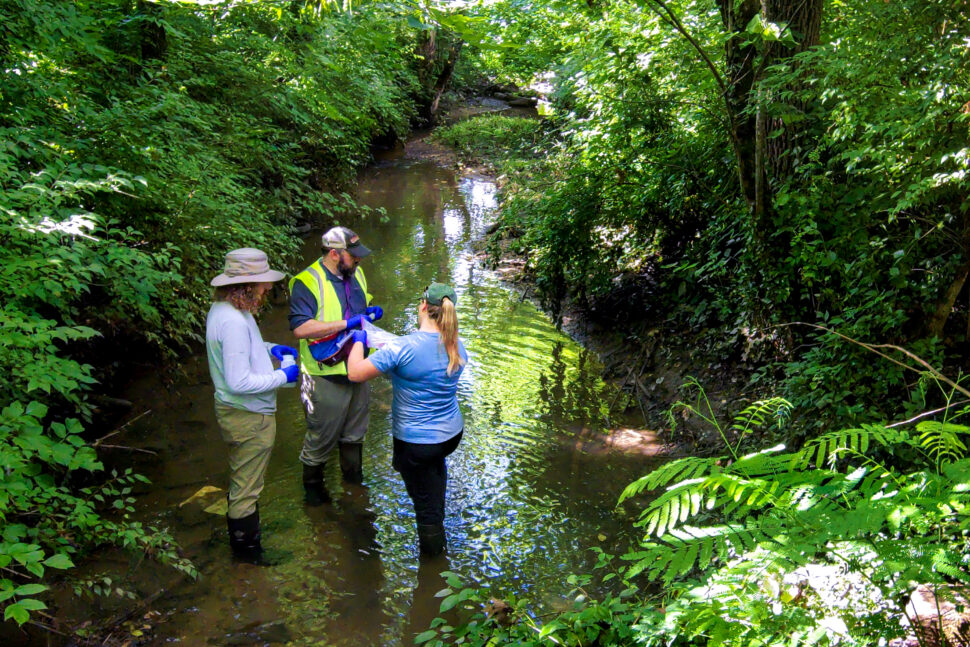
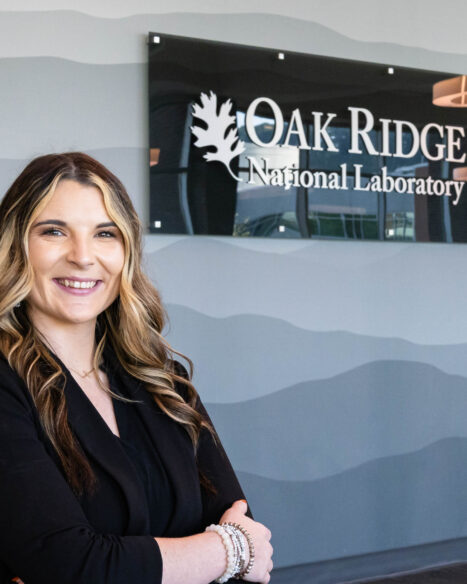
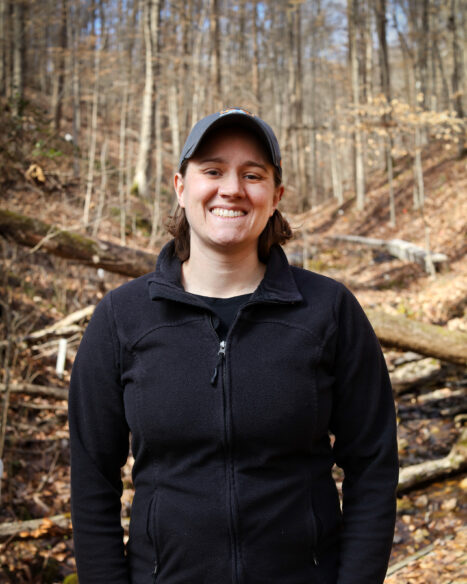
Scientists tackle complex challenges at the intersection of water, energy, and the environment, aiming to predict environmental impacts, develop new technologies, and provide essential data to inform policy and decision-making for a secure, resilient future. Credit: Carlos Jones/ORNL, U.S. Dept. of Energy
The team’s research explores these crucial scientific issues by providing in-depth knowledge, innovative technical solutions, and predictive capabilities that significantly advance understanding of ecological and environmental responses associated with various forms of energy production, including hydropower, fossil fuels, biofuels, and nuclear energy. The group also strives make accurate, actionable information and technical resources accessible to policymakers, stakeholders, and society at large.
One of the group’s primary objectives is to thoroughly understand and predict how different energy production strategies impact ecological systems. Researchers investigate complex interactions between energy generation processes and environmental health, assessing how these interactions affect biodiversity, water quality, and ecosystem services. The goal is to generate comprehensive insights that can inform environmental management practices and policy development, thereby promoting energy production while minimizing environmental disruption.
ORNL scientists are studying vital water systems at unprecedented levels of detail. The goal is to develop models that can help inform decision-making around water resources and land use. Credit: Genevieve Martin & Kase Clapp/ORNL, U.S. Dept. of Energy
With the aim of enhancing national energy security, the group actively develops scientifically robust technologies designed to mitigate ecological impacts. These innovations are created through rigorous scientific methods, incorporating interdisciplinary approaches that span ecology, hydrology, biology, and environmental engineering. The practical tools and technologies developed are geared towards boosting energy production while improving resource management, ecological restoration, and environmental preservation.
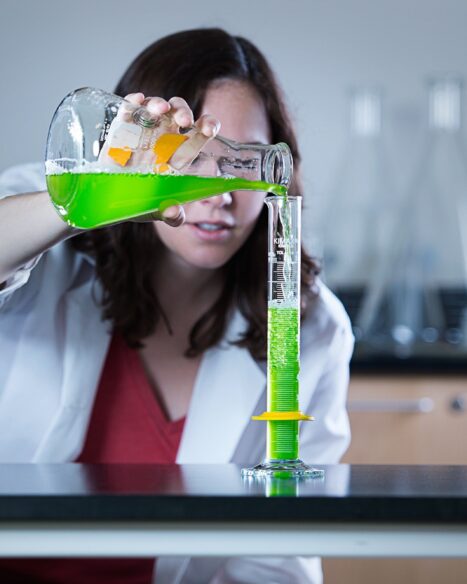
Central to the group’s research capabilities are specialized resources such as the 8,000 square foot Aquatic Ecology Laboratory, which facilitates controlled and precise experimental research in simulated aquatic environments. Additionally, researchers employ long-term ecological evaluations at various field sites, generating invaluable datasets that inform predictive ecological modeling. The creation and maintenance of comprehensive national geospatial databases and advanced ecological modeling tools further enhance the group’s ability to address water-energy resource challenges at local, regional, and national scales, supporting a balanced approach to energy development and environmental conservation.