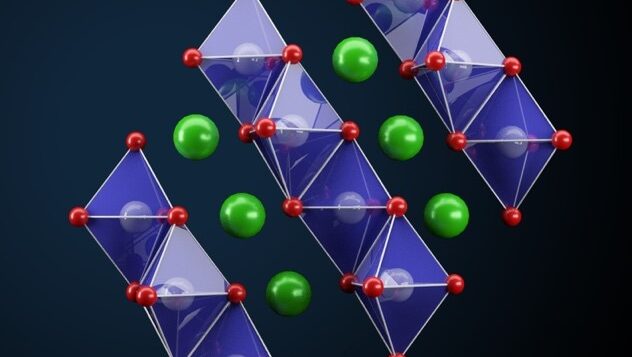
The groups in the Chemical Transformation Section perform research aimed at understanding and controlling chemical transformations at interfaces, study the reactivity of natural and synthetic systems and harness their findings to design and synthesize new materials.
Energy Storage and Conversion
Group Leader: Lei Cheng
Research functions as a bridge between fundamental materials discovery and understanding and use-inspired research. Key focus areas include integrating the science of interfaces (solid-solid, solid-liquid, and solid-gas), directed synthesis and processing of materials, and ion transport. These combined efforts are required to direct and control the mobility of ions, electrons, and solvents that mediate the performance and properties of the next generation of energy storage and conversion materials. As a cross-cut research activity, the group utilizes and develops advance characterization tools and techniques for probing energy storage materials and interfaces.
Research thrusts
- All solid-state batteries including materials discovery, design, transport, and processing
- Next-generation lithium-ion and beyond Li-ion chemistries (lithium metal, sodium, sulfur, etc.)
- Understanding and controlling electrochemical interfaces
- Fundamental electrochemical analysis and technique development
- Electrocatalysis for N2, CO2, H+, and O2 reduction
- Cost-competitive grid-scale chemistries and components for long-duration energy storage
- Applying advanced neutron, X-ray, scanning probe, electron microscopy, and spectroscopic methods to energy storage and conversion materials.
Geochemistry and Interfacial Science
Group Leader: Andrew Stack
Primarily funded by DOE’s Office of Basic Energy Sciences, this group conducts fundamental and applied research on fluid-solid interactions that control:
- Contaminant fate and transport in subsurface geologic environments
- Crystal nucleation and growth
- Heterogeneous reaction rates, mechanisms, and geochemical equilibria in general
Our principal research projects include “Atomic- to Pore-Scale Geochemical Processes;” and “Factors Controlling Stability of Hydrated Amorphous Material Formed from Solution at Interfaces.” In these and a number of smaller applied projects, the group integrates modeling with a wide array of experimental and analytical approaches to quantify the properties of interfacial and pore-confined fluids, reaction rates and mechanisms at fluid-solid interfaces, and transport of solvents and solutes through porous media at nano to macroscopic length scales.
The group is pioneering the application of neutron and synchrotron-based X-ray scattering and spectroscopies to quantify interfacial and pore-scale fluid-solid interactions. These results are interpreted using atomic- to meso-scale simulations where we probe reaction mechanisms using rare event theories and determine role of fluid transport in porous media using computational fluid dynamics.
Chemical Dynamics
Interim Group Leader: Ben Doughty
This group develops, implements, and deploys state-of-the-art spectroscopy and microscopy instruments designed to probe temporal and chemical changes in complex reactive systems and extreme environments. These experimental techniques provide unique insight into the fundamental chemistry that enables important technologies such as the separation of critical materials, quantum technologies, and non-equilibrium matter.
This insight has broad applicability to research across ORNL that addresses the nation’s most pressing energy challenges. This group supports efforts to measure and understand the chemical mechanistic events underlying transient phenomena and stimuli responsive matter that is central to the development of next-generation energy efficient technologies.
The group specializes in the development and use of experimental techniques designed to measure molecular characteristics in the context of ultrafast reaction dynamics and phenomenological kinetics as they relate to the mechanisms broadly underlying chemical transformations and energy science.
Surface Chemistry and Catalysis
Group Leader: Zili Wu
This group seeks to further our understanding of surface chemistry and catalytic reaction pathways, allowing scientists to design and synthesize new, highly selective metal, metal oxide, and supported metal catalysts.
Contact
Vanda Glezakou
Distinguished Scientist & Section Head
[email protected]
Recent News