Center for Radiation Protection Knowledge

Providing Expertise in Radiation Protection and Dosimetry
The Center for Radiation Protection Knowledge (CRPK) is a nationally and internationally recognized team of radiation protection and dosimetry experts at Oak Ridge National Laboratory (ORNL). CRPK is responsible for supporting the development and application of radiation dosimetry and risk assessment methodologies that are based on the best available scientific information.
For decades, CRPK has developed and applied biokinetic and dosimetric models for estimation of doses to tissues of the body arising from external radiation fields or intakes of radionuclides. The models and databases derived from these models have been widely used by federal agencies as well as national and international scientific bodies such as the National Council on Radiation Protection and Measurements (NCRP), the International Commission on Radiological Protection (ICRP) and the International Atomic Energy Agency (IAEA).

Specific capabilities of CRPK include:
Computational dosimetry using stylized, voxel and/or mesh anthropomorphic phantoms
Dose reconstruction and radiological assessment from a variety of source terms
Biokinetic modeling of the transport of different elements in the human body
Radiation dosimetry using spectral and dose measuring instruments
Technical evaluation of radiological protection standards
Other radiation protection research
Compilation and evaluation of radionuclide decay data and the construction of environmental source terms;
Learn More
Program History
Established in 2010, the Center for Radiation Protection Knowledge (CRPK) evolved from ORNL’s long-standing Dosimetry Research Program. The center was created through a memorandum of understanding (MOU) among several federal agencies: the Department of Energy, Department of Defense, Environmental Protection Agency, Nuclear Regulatory Commission, and the Occupational Safety and Health Administration. The Department of Health and Human Services joined as a signatory during the 2015 renewal, followed later by the Department of Homeland Security.

eith Eckerman and Rich Leggett of ORNL’s Environmental Sciences Division led the effort to establish the CRPK, with the goal of preserving national expertise in radiation dosimetry, the science of assessing radiation doses to people. The MOU remains a key mechanism for ensuring that U.S. radiation protection programs are based on the best available scientific information and that this technical knowledge is maintained across federal agencies.
Today, CRPK continues to advance ORNL’s 70-year history of excellence in developing and applying radiation protection models and methods used worldwide.
ORNL Dosimetry Research Program
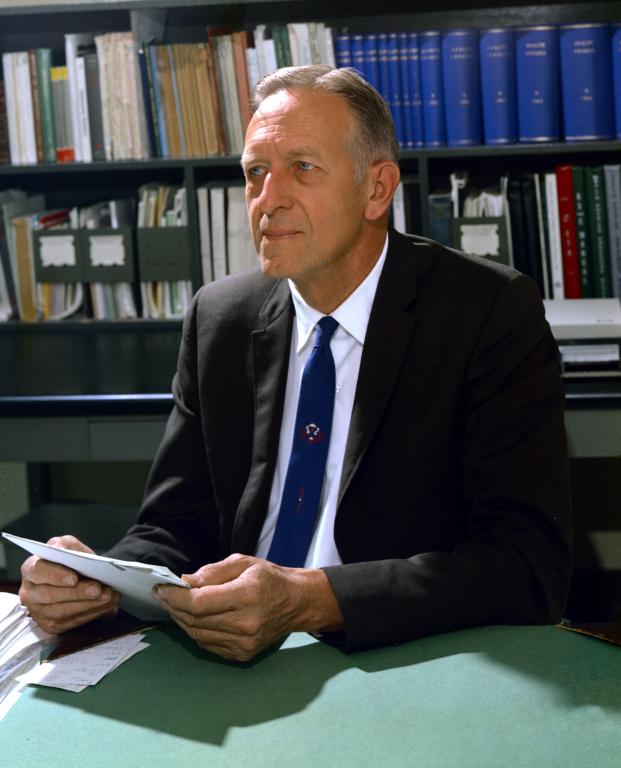
he Dosimetry Research Program at ORNL began in the 1950s under K. Z. Morgan, one of the early leaders in radiation protection. Morgan served as the Director of ORNL’s Health Physics Division and was an early recipient of the Gold Medal for Radiation Protection, awarded by the Royal Swedish Academy of Sciences in 1962. From 1979 to 2013, the program was led by Keith Eckerman, who earned the same honor in 2012.
The program developed the models and data needed to estimate how much radiation people receive from various sources and to set safe exposure limits. Many of these models became international standards, and are used by organizations around the world, such as the International Commission on Radiological Protection (ICRP).
The program has traditionally served as a key resource for storing and updating computer-based dosimetry and biokinetic models, which are essential tools for understanding how radiation interacts with the human body.
Models and Data Developed by ORNL
Estimating radiation doses to human tissues requires detailed biokinetic and dosimetric models. These models help scientists understand how radionuclides move through the body and how radiation energy is absorbed by tissues.
Biokinetic models describe how radioactive materials behave inside the body over time: how they are distributed, retained, and excreted after entering through inhalation, ingestion, wounds, or injection.
Dosimetric models describe how radiation energy travels through the body and deposits in various tissues. For radionuclides that are taken into the body, these models calculate how much energy is absorbed by specific organs. They are also used to estimate doses from external radiation sources, such as medical imaging devices or environmental exposure.
CRPK is a major international source for both biokinetic and dosimetric models that form the foundation of radiation protection standards around the world.
Dosimetric Model Development
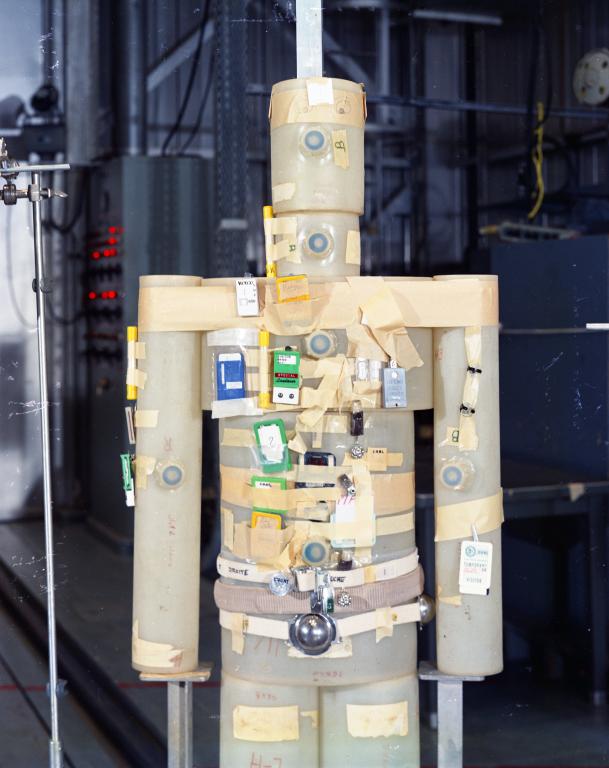
In the 1960s, ORNL developed its first anatomical phantom: a computational model that represents the approximate size, shape, and position of human organs and tissues. This model made it possible to calculate radiation doses to specific body parts for both men and women.

For early computer-based simulations, ORNL scientists used combinations of regular geometric shapes such as ellipsoids and cylinders to represent the body and its organs. This approach allowed for Monte Carlo calculations, a statistical method used to model cross-irradiation of tissues.
The Medical Internal Radiation Dose (MIRD) Committee, representing the nuclear medicine community, adopted ORNL’s phantom to improve the accuracy of dose estimates. The ICRP later incorporated the same framework into a series of guidance reports on worker radiation exposure (ICRP Publications 30 and 68).
In the late 1970s and 1980s, ORNL expanded its phantom series to represent children at different ages — from infants through adolescents — and later developed a dedicated adult female phantom. These models were used by the ICRP to refine dose estimates for members of the public (ICRP Publications 56, 67, 69, 71, and 72).
More recent ICRP reports (Publications 133 and 155) and MIRD Pamphlet No. 28 continue to incorporate and build on ORNL and CRPK’s dosimetric model contributions.

Biokinetic Model Development
ORNL’s biokinetic models have evolved considerably over the years, reflecting major advances in biology, physiology, and computing. These models describe how radionuclides behave within the human body, including how they move through organs, are retained in tissues, and are eventually excreted.
Early biokinetic models, developed from the 1950s through the early 1980s, relied on simple mathematical functions that described how elements were retained and eliminated based on data from human and animal studies. These early models typically represented a reference adult, without accounting for differences by age or sex.
By the early 1980s, ORNL researchers began creating age-specific biokinetic models to better represent the behavior of radionuclides in children. Because limited biological data existed for younger populations, scientists adopted a new physiological systems approach that modeled how biological processes change as humans grow. This innovation made it possible to estimate radiation doses for people of all ages more accurately.
Since then, ORNL has developed two main types of physiologically based biokinetic models:
- System-level models, which describe basic physiological processes such as blood circulation or the movement of material through the digestive system.
- Element-specific models, which describe how individual chemical elements behave within the body.
One foundational example of a basic physiological model is ORNL’s dynamic blood flow model, which uses age- and sex-specific parameters to describe how blood — and therefore radionuclides — circulates through tissues. This model incorporates data on cardiac output, blood perfusion rates, and tissue blood volumes, gathered from extensive literature reviews.
The blood flow model allows researchers to track how a radioactive material moves immediately after entering the bloodstream. It has been applied to estimate doses for short-lived medical radionuclides and to develop element-specific models for substances whose distribution depends largely on blood flow, such as potassium, cesium, and radon.
An example of a physiologically-based, element specific biokinetic model is the age-specific biokinetic model for lead, developed by ORNL to describe how lead moves through and is retained in the human body. This model incorporates extensive data on the time-dependent distribution and excretion of lead and has been used in several important applications:
- The ICRP uses it to calculate radiation doses from radioactive isotopes of lead.
- The EPA applies it to assess potential chemical toxicity in children.
- The State of California uses it to establish occupational exposure standards for lead.
The ICRP has now adopted ORNL’s element-specific models for many elements across the periodic table. CRPK leads ongoing efforts to develop and refine these systemic models for occupational and environmental exposure assessments, published in the ICRP’s Occupational Intake of Radionuclides and Public Intake of Radionuclides series.
Beyond radiation safety, these models have been used in nutrition research, toxicology, and even forensic science. In one notable criminal case, ORNL’s biokinetic model for polonium was used to estimate the amount of polonium-210 involved in the poisoning of a former Russian spy.
Nuclear Decay Data Evaluation
In the early 1970s, ORNL scientists began compiling decay data for radionuclides used in nuclear medicine. This work was part of a long-term collaboration with the MIRD Committee, a group focused on improving dose calculations for medical applications.
A radionuclide’s decay data describe key physical properties: its half-life, the types of radiation it emits (such as alpha particles, beta particles, or gamma rays), and the energy and frequency of those emissions. These details are essential for calculating accurate dose estimates and ensuring safe use of radioactive materials.
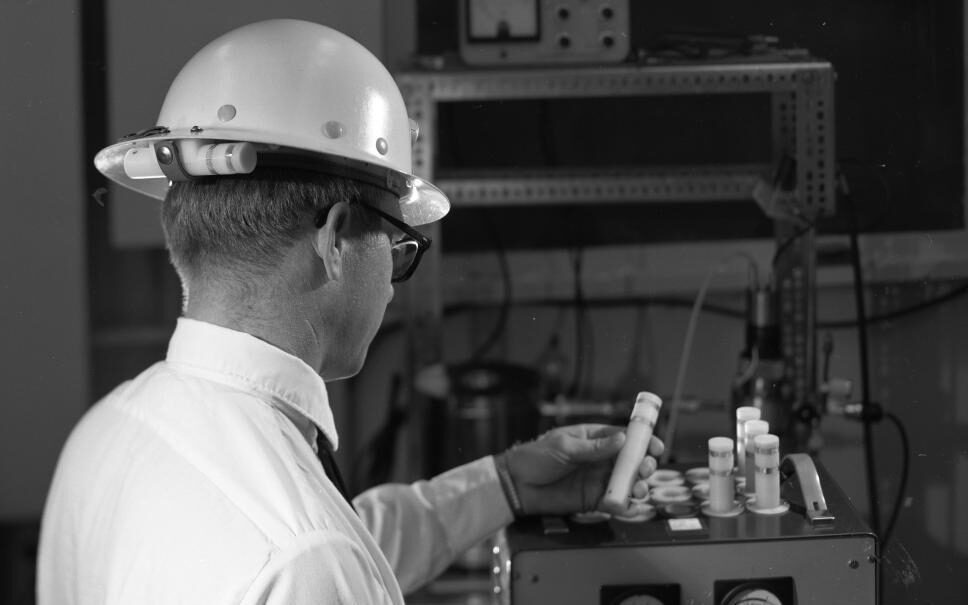
Between the mid-1970s and early 1980s, ORNL expanded this effort, compiling decay data for more than 800 radionuclides important to occupational and environmental exposure studies. The work culminated in ICRP Publication 38 (1983), which became an international reference for radiation safety.
In the 2000s, ORNL led the development of ICRP Publication 107 (2008), an updated and expanded database that includes 1,252 radionuclides. This work modernized decay data for current research and applications, supporting both medical and industrial radiation practices.
Compilation of Human Anatomical and Physiological Data
From the mid-1960s to the mid-1970s, ORNL led an effort through the ICRP to define the anatomical and physiological features of a “Reference Man.” This model represented a typical adult male and provided a consistent international basis for developing biokinetic and dosimetric models. The work helped standardize radiation protection assessments and allowed researchers worldwide to compare dose estimates using a common framework.
Building on that foundation, ORNL coordinated a second major ICRP initiative from the early 1990s to the early 2000s to establish a “Reference Family.” This new framework included anatomical and physiological data for males and females across a range of ages — from infants to adults — and enabled the creation of age-specific models that more accurately reflected how interacts with the human body throughout different stages of life, improving dose estimates for the public.
Contributions to National and International Committees
Members of the CRPK team and the Dosimetry Research Team have been actively involved with national and international organizations, including the National Council on Radiation Protection and Measurements and the International Commission on Radiological Protection (ICRP) — two of the world’s most influential authorities in this field — and ORNL is recognized as the lead organization for development of the ICRP’s biokinetic models for systemic (absorbed) radionuclides for workers and members of the public.
ORNL researchers have served on multiple ICRP task groups, as well as Committee 2 (Dosimetry), Committee 4 (Applications), and the Main Commission, which oversees the organization’s overall guidance. Through these roles, ORNL has led or contributed to numerous ICRP reports that define global best practices for radiation safety, including documents on:
- Occupational exposure limits for radionuclides
- Compilations of nuclear decay data
- Reference anatomical and physiological features of the human body
- Biokinetic models for understanding how radionuclides move through the body
This leadership ensures that radiation protection standards around the world continue to be based on sound science and reliable data.

Caleigh Samuels
Radiation Dosimetry Lead
Caleigh Samuels s the Radiation Dosimetry Lead in the Center for Radiation Protection Knowledge at Oak Ridge National Laboratory. Her research in radiation dosimetry includes element-specific biokinetic model development, Monte Carlo applications in dosimetric and detector response modeling, development of radiological risk assessment tools, and dose reconstruction for internal emitters. Current focuses are on formulating models and methods to estimate organ doses from internal emitters for epidemiological studies of radiation workers, developing radiogenic cancer risk coefficients for public exposures, and simulating public and worker radiation doses associated with the detonation of nuclear explosive devices.
Samuels received her Ph.D in Nuclear Engineering and MS in Medical Physics from Georgia Institute of Technology, and her BS in Physics from Radford University. She is currently a member of ICRP Task Group 95 on Internal Dose Coefficients and of NCRP SC 6-13 on Methods and Models for Estimating Organ Doses from Intakes of Radium. She has been collaborating on the Million Person Study for over four years.

Richard Leggett
Distinguished Scientist
is a research scientist in the Environmental Sciences Division at Oak Ridge National Laboratory. His main research interest is in physiological systems modeling, with primary applications to the biokinetics and dosimetry of radionuclides and radiation risk analysis.
He was a member of Committee 2 of the International Commission on Radiological Protection (ICRP) from 2009-2021 and is currently a member of the ICRP Task Group on Internal Dosimetry (INDOS). His physiological systems models of the human circulation, skeleton, and gastrointestinal transfer and his systemic biokinetic models for many elements are used by the ICRP as dosimetry and bioassay models. He is the author of ICRP Publication 70, Basic Anatomical and Physiological Data for Use in Radiological Protection: The Skeleton, and co-author of several other ICRP reports.

Scott O Schwahn
Senior Technical Program Associate
Scott O. Schwahn has served the scientific community as a health physicist (radiation safety professional) for over 30 years. He is the Senior Technical Program Associate in the Nuclear & Radiological Protection Division. Schwahn has worked largely for Department of Energy (DOE) prime contractors at high-energy accelerator facilities. For five years, he was a DOE employee, serving as the Performance Evaluation Program Administrator for the DOE Laboratory Accreditation Program for external dosimetry.
Having been a member of the Health Physics Society for 35 years, he has served in leadership roles continuously since 1997 including service as president of three chapters and one technical section, chair of several committees, task forces, and technical groups, and three years as a director. He was honored with the Society’s Elda E. Anderson Award and was elected as a Fellow of the Society. He is an Associate Editor for the peer-reviewed journal Health Physics and has served as a United States delegate to the International Radiation Protection Association since 2012. He is a member of the Oak Ridge Institute for Science and Education Distinguished Scientists Advisory Board.
Schwahn has been Certified by the American Board of Health Physics since 1995 and has served on its Part II Panel of Examiners. He served as Treasurer for the American Academy of Health Physics and was the 2021 President for the Academy.
Amber Harshman
Environmental Dose Assessment Specialist
Amber Harshman is an Environmental Dose Assessment Specialist and senior technical staff member in the Environmental Protection Services Division at Oak Ridge National Laboratory. Her primary responsibilities include modeling and calculating radiation doses for the public and the environment from exposure to radiological discharges originating from operations and research activities conducted on the Oak Ridge Reservation for a variety of environmental pathways.
Prior to joining ORNL, she worked in nuclear power as a Health Physicist at Dresden Nuclear Power Plant, where she managed the internal and external dosimetry programs as well as the radiation protection instrumentation program for the site. She has a Ph.D. in Radiological Health Sciences from Colorado State University, and she is a Board-Certified Health Physicist and a Registered Radiation Protection Technologist.

Derek Jokisch
Director, Center for Radiation Protection Knowledge / Joint Faculty Appointee
Derek Jokisch is professor of Physics and Chair of the Department of Physics and Engineering at Francis Marion University in Florence, South Carolina where he has been on faculty since 1999. Since 2014 he has held a Joint Faculty Appointment with Center for Radiation Protection Knowledge (CRPK) at Oak Ridge National Laboratory and currently serves as its director.
Jokisch earned his bachelor’s degree in nuclear engineering from the University of Illinois and his master’s and doctoral degrees in nuclear engineering sciences from the University of Florida. He serves on dosimetry committees for both the International Commission on Radiological Protection and National Council on Radiation Protection and Measurements. From 2016 to 2024, he served on the US Scientific Review Group for the Department of Energy’s Russian Health Studies Program. Jokisch is a past recipient of the Elda Anderson Award from the Health Physics Society and the J. Lorin Mason Distinguished Professor Award at Francis Marion University.

Nicole Martinez
Joint Faculty Appointee
Nicole Martinez is a professor in the Department of Environmental Engineering and Earth Sciences at Clemson University and is a Joint Faculty Appointee within the Center for Radiation Protection Knowledge at Oak Ridge National Laboratory.
Her first professional position was as an officer in the U.S. Navy where she served just under four years, first as a nuclear power instructor and later a radiation health officer. She then worked for 2 years in industry before attending graduate school at Colorado State University where she specialized in health physics and radioecology.
Martinez’s current research focuses on dosimetric modeling and the behavior and effects of radiological contaminants in the environment for applications ranging from risk assessment to biosensing. In addition, she is interested in non-technical issues relevant to the field such as the roles of ethics, art, and culture in science and engineering. She is a Certified Health Physicist, on the Main Commission of the International Commission on Radiological Protection, and a member of the National Council on Radiation Protection and Measurements.

Ken Veinot
Y-12, Health Physicist
Ken Veinot is the senior Health Physicist at the Y-12 National Security Complex in Oak Ridge, TN where he has supported the internal and external dosimetry programs, instrumentation, and field operations organizations for more than 20 years.
His health physics interests include neutral and charged particle dosimetry and detection, computational dosimetry, radiation shielding, and operational radiation protection. He received his Masters of Science in Health Physics and Doctorate in Nuclear Engineering from the Georgia Institute of Technology and is certified by the American Board of Health Physics.
In addition to serving on numerous national and international scientific committees and standards working groups, he is the author or co-author of more than 30 papers in the peer reviewed scientific literature and multiple book chapters relating to health physics. He has been a lead assessor with the U.S. Department of Energy Laboratory Accreditation Program for over 20 years.
Downloads
Rad Toolbox v. 3.0.0 (5/1/2014)
This toolbox provides ready access to data of interest in radiation protection of workers and members of the public. This package was developed for the U.S. Nuclear Regulatory Commission and is documented in ORNL/TM-2004/27. The software runs on a PC under Windows 98/NT/2000/XP to provide access to the data through a single GUI. The data include dose coefficients for intakes of radionuclides, exposure to radionuclides distributed in the environment, and for exposures to photon and neutron radiation fields. Other supportive data include interaction coefficients for alpha, electron, photon and neutron radiations, nuclear decay data, biological and physiological data, and supplemental information on various topics. The ORNL TM report is included in the download. During the installation elect to ignore any messages regarding file updates. Click here to view the NRC Rad Toolbox webpage.
Download Rad Toolbox: RadToolbox3_Setup.zip (26,850,924 bytes)
DCAL System v. 8.4 (11/1/2006)
DCAL is a comprehensive software system for the calculation of tissue dose and subsequent health risk from intakes of radionuclides or exposure to radionuclides present in environmental media. DCAL was developed for the U.S. Environmental Protection Agency and is documented in ORNL/TM-2001/190. The software runs on a PC under Windows 98/NT/2000/XP. The system includes extensive libraries of biokinetic and dosimetric data and models representing the current state of the art. DCAL maybe used either in an interactive mode or in a batch mode and is intended for experienced users with knowledge of computational dosimetry.
Download DCAL System: DCAL01_setup.zip (7,393,436 bytes)
ICRP38 v. 1.0 (3/25/2003)
This package installs the nuclear decay data of ICRP Publication 38 and the three Windows-based codes. The code WinChain assembles the decay chain and provides guidance regarding the truncation of the chain. RadSum provide a brief summary of the emitted radiation for the user supplied radionuclides. The DexRax utility extracts from the master files, the decay data for user specified radionuclides.
Download ICRP38: setup38.zip (2,490,268 bytes)
WinAct v. 1.0 (8/25/2002)
This package is the ORNL numerical solver (Windows version) for the coupled set of differential equations describing the kinetics of a radionuclide in the body. Several example input files are provided as a guide in using the package.
Download WinAct: setup_act.zip (436,267 bytes)
FGR13CD v. 2.1.13 (3/18/2002)
The CD supplement to Federal Guidance Report No. 13 includes a viewer of the tabulated risk coefficients and the age-specific dose coefficients calculated during the course of preparing FGR 13. The CD contents are available on the EPA website for download.
BioMod v. 1.0 (6/29/2000)
This is a Windows help file detailing the age-specific biokinetic models and elemental data used in the calculations of the risk coefficients of Federal Guidance Report 13.
Download BioMod: setup_bio.zip (383,040 bytes)
DCFPAK v. 1.0 (3/29/2000)
The dose coefficient files and source code (FORTRAN) illustrating how to use the use the data files within an assessment code. This package is documented in ORNL/TM-13347. The dose coefficients for inhalation and ingestion intakes are those of ICRP Publication 30. The coefficients for external irradiation are from FGR-12. The download module, setup_DCF will install the files, source code, and executable. The code is a console application and hence runs under either DOS on Windows.
Download DCFPAK: setup_dcf.zip (1,018,070 bytes)
DFACTS v. 1.0 (11/18/1994)
These MS-DOS codes look up the dose coefficient from intakes of radionuclides from Federal Guidance Report 11 (ICRP Publication 30) and those for external exposure are from Federal Guidance Report 12.
Download DFACTS: setup_df.zip (896,835 bytes)
2025
Bellamy M, Samuels C, Dewji S, Leggett R., Hiller M, Venoit K, Manger RP, Ryman JC, Easterly CE, Hertel NE, Stewart DJ, Eckerman KF. External exposure to radionuclides in air, water and soil. Federal Guidance Report 15.
Leggett R, Samuels C, Pawel D, Jokisch D, Martinez N, Hertel N, Bellamy M, Easterly C, Anderson M, Hiller M, Dewji S, Ward R, Eckerman K. Cancer risk coefficients for environmental exposure to radionuclides. Federal Guidance Report 16 Review Draft.
Dawson RJ, Huesa-Berral C, Carter LM, Choi C, Shin B, Bobic M, Cogno N, Withrow JD, Jokisch DW, Bertolet A, Paganetti H, Bolch WE, Dosimetrically coupled multiscale tetrahedral models of human liver vasculature: implications for radiopharmaceutical dosimetry of both organ blood and parenchyma. Physics in Medicine and Biology.
Jokisch DW. Specific absorbed fractions for reference individuals for the current and next general recommendations. Proceedings of the ICRP 2023 Symposium. Ann. ICRP.
Paquet F, Bailey MR, Berkovskyy V, Blanchardon E, Davesne E, Gregoratto D, Leggett RW, Ratia G, Samuels C, Smith T. (in press) Dose Coefficients for Intakes of Radionuclides by Members of the Public: Part 2. Ann. ICRP
Paquet F, Bailey MR, Leggett RW, Smith T, Blanchardon E, Giussani A, Marsh JW, Ratia G, Samuels C, Gregoratto D, Berkovski V, Jokisch D (in press). Dose Coefficients for Intakes of Radionuclides by Members of the Public: Part 1. ICRP Publication 158. Ann. ICRP
Martinez NE, Jokisch DW, Mumma M, Tolmachev SY, Avtandilashvili M, Tabatadze G, Leggett R, Samuels C, Golden A, Howard S, Dauer L, Boice Jr JD. (in press). Archival records housed at USTUR support radium dial worker dosimetry. J. Radiol. Prot. DOI: 10.1088/1361-6498/ad8bcf
Samuels CE, Leggett RW. (2025) 2025 Review and Revision of Federal Guidance Report 15, ORNL/SPR-2025/3803. Oak Ridge National Laboratory (ORNL), Oak Ridge, TN (United States).
Samuels C, Leggett R. (2025) Evaluation of 10 CFR 835 Appendix A & C Derived Air Concentrations. [White paper] Oak Ridge National Laboratory (ORNL).
2024
Tolmachev SY, Martinez FT, Linson JE, Brockman JD, Thomas ET, Avtandilashvili M, Tabatadze G, Leggett RW, Samuels C, Martinez NE, Jokisch DW, Boice Jr JD, Dauer LT. (2024). Distribution of plutonium and radium in the human heart. J. Radiol. Prot. DOI: 10.1088/1361-6498/ad9ebb.
Leggett R, Samuels C, Martinez N, Avtandilashvili M, Tolmachev S, Jokisch D. (2024) Development of Age- and Sex-Specific Biokinetic Models for Workers. Final Report. [White paper]
Dauer LT, Mumma MT, Lima JC, Cohen SS, Andresen D, Bahadori AA, Bellamy M, Bierman D, Blattnig S, French B, Giunta E, Held K, Hertel N, Keohane L, Leggett R, Lipworth L, Miller KB, Norman R, Samuels C, Thomas KS, Tolmachev S, Walsh L, Boice Jr JD (2024). A Million Person Study innovation: evaluating cognitive impairment and other morbidity outcomes from chronic radiation exposure through linkages with the Centers for Medicaid and Medicare Services Assessment and Claims Data. Radiat. Res. 202 (6): 847-861. DOI: 10.1667/RADE-23-00186.1
Leggett RW, Samuels CE (2024) Biokinetic Modeling of Radionuclide Uptake and Retention by the Fetus [White paper] Oak Ridge National Laboratory (ORNL)
Leggett RW, Samuels CE (2024). Reference Gastrointestinal Absorption Fractions for Radionuclides Ingested in Soil. ORNL/TM-2024/3264. Oak Ridge National Laboratory (ORNL), Oak Ridge, TN (United States). DOI:10.2172/2301649.
2023
Jokisch DW, Bolch WE, Schwarz BC, Martinez NE, Eckerman KF, Kim K, Griffin KT, Godwin WJ, Lee C. (2023). Specific absorbed fractions for reference paediatric individuals. ICRP Publication 155.Ann. ICRP. 52(4)
Samuels C, Leggett R. (2023) Reassessment of Surface Contamination Limits for Low-Energy Electron Emitters. [White paper]. Oak Ridge National Laboratory (ORNL)
Leggett R, Samuels C. (2023). Biokinetic and Dosimetric Models Used in DOE STD-1196-2022 Derived Concentration Technical Standard. DOE HDBK-1244-2023. U.S. Department of Energy. Washington, DC (United States).
Samuels C, Leggett R (2023). Dose reconstruction for plutonium-239 intakes at the Rocky Flats Plant. Int. J. Radiat. Biol. 99 1841-1852. DOI: 10.1080/09553002.2023.2241896
Garnier-Laplace J, Martinez NE, Copplestone D, Schneider T, Mayall A, Larsson CM. (2023). Protection of the environment from exposure to ionising radiation: why and how evolution is timely for the ICRP system. Ann. ICRP 52(S1):26-32. DOI: 10.54320/GGBK4567
Martinez NE, Canoba A, Donaher SE, Garnier-Laplace J, Kinase S, Mayall A, Stark K, Whicker J. (2023). An Introduction to Ecosystem Services for Radiological Protection. Ann. ICRP 52(S1):240-248. DOI: 10.54320/TORO1291
Milder CM, Howard SC, Ellis ED, Golden AP, Cohen SS, Mumma MT, Leggett RW, French B, Zablotska LB, Boice Jr. JD (2023) Third mortality follow-up of the Mallinckrodt uranium processing workers, 1942-2019. Int. J. Radiat. Biol. 100 161-175. DOI: 10.1080/09553002.2023.2267640
Samuels C, Marsh J, Leggett R (2023). An age- and sex-specific biokinetic model for radon. J. Radiol. Prot. 43 041502. DOI: 10.1088/1361-6498/acfb19
Zablotska LB, Richardson DB, Golden A, Pasqual E, Smith B, Rage E, Demers PA, Do M, Fenske N, Deffner V, Kreuzer M, Samet J, Bertke S, Kelly-Reif K, Schubauer-Berigan MK, Tomasek L, Wiggins C, Laurier D, Apostoaei I, Thomas BA, Simon SL, Hoffman FO, Boice Jr JD, Dauer LT, Howard SC, Cohen SS, Mumma MT, Ellis ED, Eckerman KF, Leggett RW, Pawel DJ (2023). The epidemiology of lung cancer following radiation exposure. Int. J. Radiat. Biol. 99 569-580. DOI: 10.1080/09553002.2022.2110321
Boice Jr. JD, Cohen SS, Mumma MT, Golden AP, Howard SC, Girardi DJ, Ellis ED, Bellamy MB, Dauer LT, Eckerman KF, Leggett RW (2023). Mortality among Tennessee Eastman Corporation (TEC) uranium processing workers, 1943–2019. Int. J. Radiat. Biol. 99 208-228. DOI: 10.1080/09553002.2022.2078003
Samuels C, Ansari A, Finklea L, Hertel N (2023). Measurable radiation levels around individuals externally contaminated by nuclear fallout. Radiation Protection Dosimetry 199 1310-1323. DOI: 10.1093/rpd/ncad182
Choi C, Shin B, Yeom YS, Kim CH, Bolch WE, Jokisch DW, Han H, Lee C, Chung BS. (2023). Development of respiratory tract organs for ICRP pediatric mesh reference computational phantoms. Health Physics. 125(6):454-445.
Kesner AL, Carter LM, Ramos JCO, Lafontaine D, Olguinn EA, Brown JL, President B, Jokisch DW, Fisher DR, Bolch WE. (2023). MIRD pamphlet no.28, part 1: MIRDcalc – a software tool for medical internal radiation dosimetry. Journal of Nuclear Medicine. 64(7):1117-1124; DOI:10.2967/jnumed.122.264225.
Carter LM, Ramos JCO, Olguin EA, Brown JL, Lafontaine D, Jokisch DW, Bolch WE, Kesner AL. (2023). MIRD pamphlet no.28, part 2: comparative evaluation of MIRDcalc dosimetry software across a compendium of diagnostic radiopharmaceuticals. Journal of Nuclear Medicine. 64(8):1295-1303; DOI:10.2967/jnumed.122.264230.
Carter LM, Bellamy MB, Choi C, Kim CH, Bolch WE, Jokisch DW, Kesner AL. (2023). Influence of body posture on internal organ dosimetry: radiocesium exposure modeling using novel posture-dependent mesh computational phantoms. Health Physics. 125(2):137-142; DOI: 10.1097/HP. 0000000000001701.
2022
Martinez NE, Van Bladel L, Sovik A, Balogh L, Benoit J, Dorling S, Gambino J, Natsuhori M, Pentreath RJ, Peremans K, Randall E, Roy C, Tanaka I, Davila A. (2022) Radiological Protection for Veterinary Practice. ICRP Publication 153. Ann. ICRP 51(4):1-95. DOI: 10.1177/01466453221142702
Corredor C, Eckerman K, Favret D, Jokisch D, Leggett R, Martinez N, Samuels C, Wallo III A. (2022)Derived Concentration Technical Standard. DOE-STD-1196-2022. U.S. Department of Energy. Washington, DC (United States).
Dolislager FG, Hipogrosso CM, Asano EA, Manning KL, Stewart DJ, Noto KA, Samuels CE, Galloway LD, Armstrong AQ (2022). Air Exchange Rate Impact on Activity Equilibrium Factors and Inhalation Fractional Equilibrium Factors for Rn, Xe, Kr, Ar, Ne, and Their Progeny in Vapor Intrusion, Risk, and Dose Models. ORNL/TM-2022/2807. Oak Ridge National Laboratory (ORNL), Oak Ridge, TN (United States).
Leggett RW, Tolmachev SY, Avtandilashvili M, Eckerman KF, Grogan HA, Sgouros G, Woloschak GE, Samuels C, Boice Jr JD (2022). Methods of improving brain dose estimates for internally deposited radionuclides. J. Radiol. Prot. 42 033001. DOI: 10.1088/1361-6498/ac7e02
Dauer LT, Bouville A, Toohey RE, Boice Jr. JD, Beck HL, Eckerman KF, Hagemeyer D, Leggett RW, Mumma MT, Napier B, Pryor KH, Rosenstein M, Schauer DA, Sherbini S, Stram DO, Thompson JL, Till JE, Yoder RC, Zeitlin C (2022). Dosimetry and uncertainty approaches for the million person study of low-dose radiation health effects: overview of the recommendations in NCRP Report No. 178. J. Radiol. Prot. 98 600-609. DOI: 10.1080/09553002.2018.1536299
Leggett RW, Eckerman KF, Bellamy M. (2022). MPS dose reconstruction for internal emitters: some site-specific issues and approaches. J. Radiol. Prot. 98 631-643. DOI: 10.1080/09553002.2018.1558302
Leggett RW, Tolmachev SY, Boice Jr. JD (2022). Potential improvements in brain dose estimates for internal emitters. J. Radiol. Prot. 98 644-656. DOI: 10.1080/09553002.2018.1554923
Golden AP, Ellis ED, Cohen SS, Mumma MT, Leggett RW, Wallace PW, Girardi D, Watkins JP, Shore RE, Boice JD (2022). Updated mortality analysis of the Mallinckrodt uranium processing workers, 1942–2012. J. Radiol. Prot. 98 701-721. DOI: 10.1080/09553002.2019.1569773
Boice Jr. JD, Cohen SS, Mumma MT, Golden AP, Howard SC, Girardi DJ, Ellis ED, Bellamy MB, Dauer LT, Samuels C, Eckerman KF, Leggett RW (2022). Mortality among workers at the Los Alamos National Laboratory, 1943–2017. J. Radiol. Prot. 98 722-749. DOI: 10.1080/09553002.2021.1917784
Griffin KT, Eckerman KF, Manger RP, Jokisch DW, Bolch WE, Hertel NE. (2022). Specific absorbed fractions for spontaneous fission neutron emitters in the ICRP reference pediatric voxel phantom series. Health Physics 123(4):278-286; DOI: 10.1097/HP.0000000000001594.
Choi C, Shin B, Yoom YS, Nguyen TT, Han H, Kim S, Son G, Moon S, Kim H, Kim CH, Bolch WE, Jokisch DW, Lee C, Chung BS. (2022). Development of alimentary tract organs for ICRP pediatric mesh-type reference computational phantoms. J. Radiol. Prot. 42:031508; DOI: 10.1088/1361-6498/ac8683.
Martinez NE, Jokisch DW, Dauer LT, Eckerman KF, Goans RE, Brockman JD, Tolmachev SY, Avtandilashvili M, Mumma MT, Boice Jr. JD, Leggett RW (2022) Radium dial workers: back to the future. J. Radiol. Prot. 98 750-768 DOI: 10.1080/09553002.2021.1917785
Boice Jr. JD, Quinn B, Al-Nabulsi I, Ansari A, Blake PK, Blattnig SR, Caffrey EA, Cohen SS, Golden AP, Held KD, Jokisch DW, Leggett RW, Mumma MT, Samuels C, Till JE, Tolmachev SY, Yoder RC, Zhou JY, Dauer LT (2022). A million persons, a million dreams: a vision for a national center of radiation epidemiology and biology. J. Radiol. Prot. 98 795-821 DOI: 10.1080/09553002.2021.1988183
Subramanian S, He B, Frey E, Jokisch DW, Bolch W, Poethko T, Hennekes H, Cleton A, Johanssen S, Sgouros G. (2022). Improved accuracy of S-value based dosimetry: a guide to transition from Cristy-Eckerman to ICRP adult phantoms. European Journal of Nuclear Medicine and Molecular Imaging Physics https://doi.org/10.1186/s40658-022-00485-9; 2022.
Paquet F, Leggett RW, Blanchardon E, Bailey MR, Gregoratto D, Smith T, Ratia G, Davesne E, Berkovski V, Harrison JD (2022) Occupational Intakes of Radionuclides: Part 5. ICRP Publication 151. Ann. ICRP 51 (1–2)
Leggett RW, Samuels C (2022). Basis for the ICRP’s updated biokinetic model for systemic astatine. J. Radiol. Prot. 42 021502 DOI: 10.1088/1361-6498/ac48e2
2021
Samuels C, Leggett R (2021). A biokinetic model for systemic sodium. J. Radiol. Prot. 41, 1045. DOI: 10.1088/1361-6498/ac1499
Martinez NE. (2021). Ethics and values surrounding the radiation protection of animals. Health Physics 121:58-63 DOI: 10.1097/HP.0000000000001410
Martinez N, Easterly CE, Eckerman KF, Hiller M, Jokisch D, Samuels C, Ward R, Leggett RW (2021). Quality Assurance Plan for Federal Guidance Report 16. ORNL/TM-2021/2008. Oak Ridge National Laboratory (ORNL), Oak Ridge, TN (United States).
Schwarz BC, Godwin WJ, Wayson MB, Dewji SA, Jokisch DW, Lee C, Bolch WE. (2021). Specific absorbed fractions for a revised series of the UF/NCI pediatric reference phantoms: internal photon sources. Physics in Medicine and Biology 66(3):035006 doi:10.1088/1361-6560/abc708