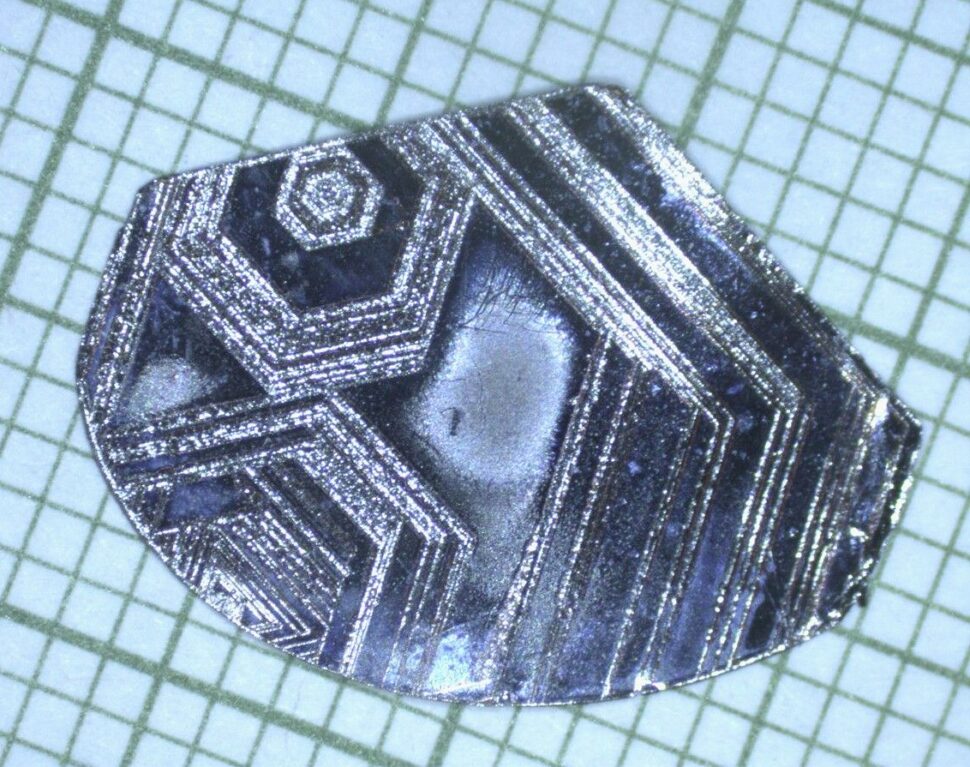
Capability Overview
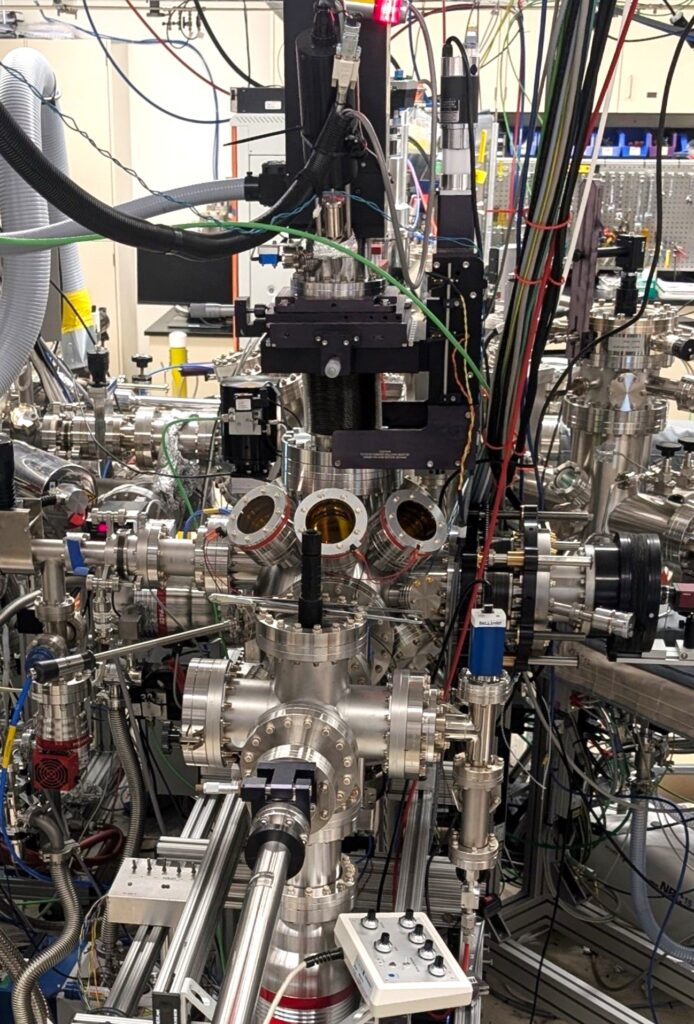
The ability to synthesize materials is a critical element of ORNL’s materials research. High-quality samples of individual materials are grown as single crystals and thin films, and multiple materials are combined in designer heterostructures. These samples allow the study and understanding of intrinsic properties, surfaces and interfaces while providing platforms for materials development to tailor behaviors toward specific scientific or technological applications.
Equipment & Facilities
Growth and characterization capabilities for bulk crystals
Flux – salt and metal fluxes for crystal growth from reactive and inert melts
Chemical transport – Sublimation, vapor transport, liquid transport, and self-selected vapor transport growths with customized temperature gradients
Floating zone – Containerless crystal growth from a melt under vacuum, inert, or reactive atmospheres, including high pressure
Bridgman – Directional solidification in a temperature gradient for congruently melting compounds
Characterization – X-ray diffraction, thermal analysis, scanning electron microscopy with energy dispersive spectroscopy and cryogenic and magnetic field dependent transport, thermal expansion, heat capacity and magnetization measurements.
Growth and characterization capabilities for films and heterostructures
Molecular beam epitaxy (MBE) – the gold standard of thin-film growth for precise fabrication of epitaxial heterostructures of semiconductors, metals and superconductors
Pulsed laser deposition (PLD) – a versatile technique for discovery of new materials and fabrication of epitaxial complex oxide thin films and heterostructures
In situ characterization – integrated atomic level surface structure using RHEED and STM, and elemental composition and electronic structure using XPS and spin resolved ARPES
Post-growth characterization – X-ray diffraction, electronic transport measurements and magnetic property measurements
Contact
Dr. Michael McGuire is a distinguished R&D researcher and group leader at ORNL, specializing in correlated electron materials and magnetism. He holds a Ph.D. in Physics from Cornell University and an M.S. and B.S. from the University of Mississippi. Dr. McGuire has received the prestigious Eugene P. Wigner Fellowship during his tenure at ORNL, highlighting his significant contributions to materials science. His current research focuses on layered transition metal compounds, anisotropic magnets, and topological materials, utilizing advanced techniques in crystallography and solid-state chemistry. For more information on collaborations, Dr. McGuire at [email protected].