Engineering Microbes for America’s Industrial Future
Scientists in the Microbial Engineering Group modify microorganisms to address challenges in energy production, industrial manufacturing, and U.S. competitiveness in the biotechnology sector. Their research focuses on understanding how microbes function and applying that knowledge to improve biological systems for a range of practical uses across the chemicals and materials sectors.
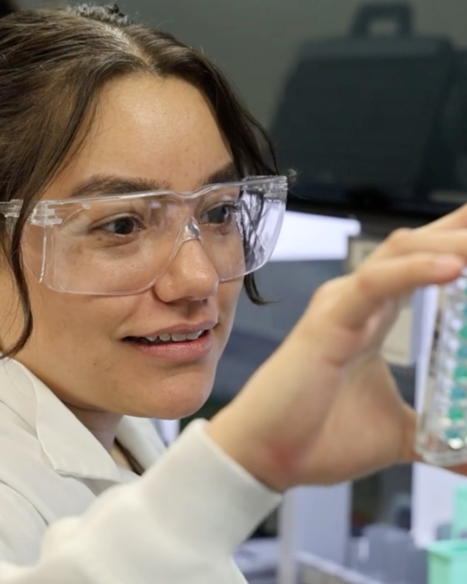
Researchers study microbes that exhibit unique metabolic characteristics, that could be harnessed for advancing biotechnologies for various applications, such as producing high value chemicals and materials. Credit: Carlos Jones, ORNL/U.S. Dept. of Energy
The group studies both well-established and emerging microbial platforms, using advanced genetic, analytical, and computational experimental approaches to identify traits that can be enhanced for industrial applications. Researchers design and engineer microorganisms to improve performance characteristics such as productivity, yield, resilience, and the ability to utilize diverse feedstocks. These efforts support the development of biological processes that can contribute to domestic manufacturing and industrial chemical production from various abundant feedstocks such as plant biomass and waste polymers.
A key area of expertise within the group is the development of enabling genetic and metabolic engineering tools, with a particular emphasis on non-model microorganisms with unique capabilities well-suited to industrial environments, such as heat-tolerance, but for which researchers have historically lacked robust genetic toolkits. By expanding the ability to engineer these organisms, new opportunities for fundamental understanding and biotechnological applications are enabled that may not have been achievable with traditional model systems.
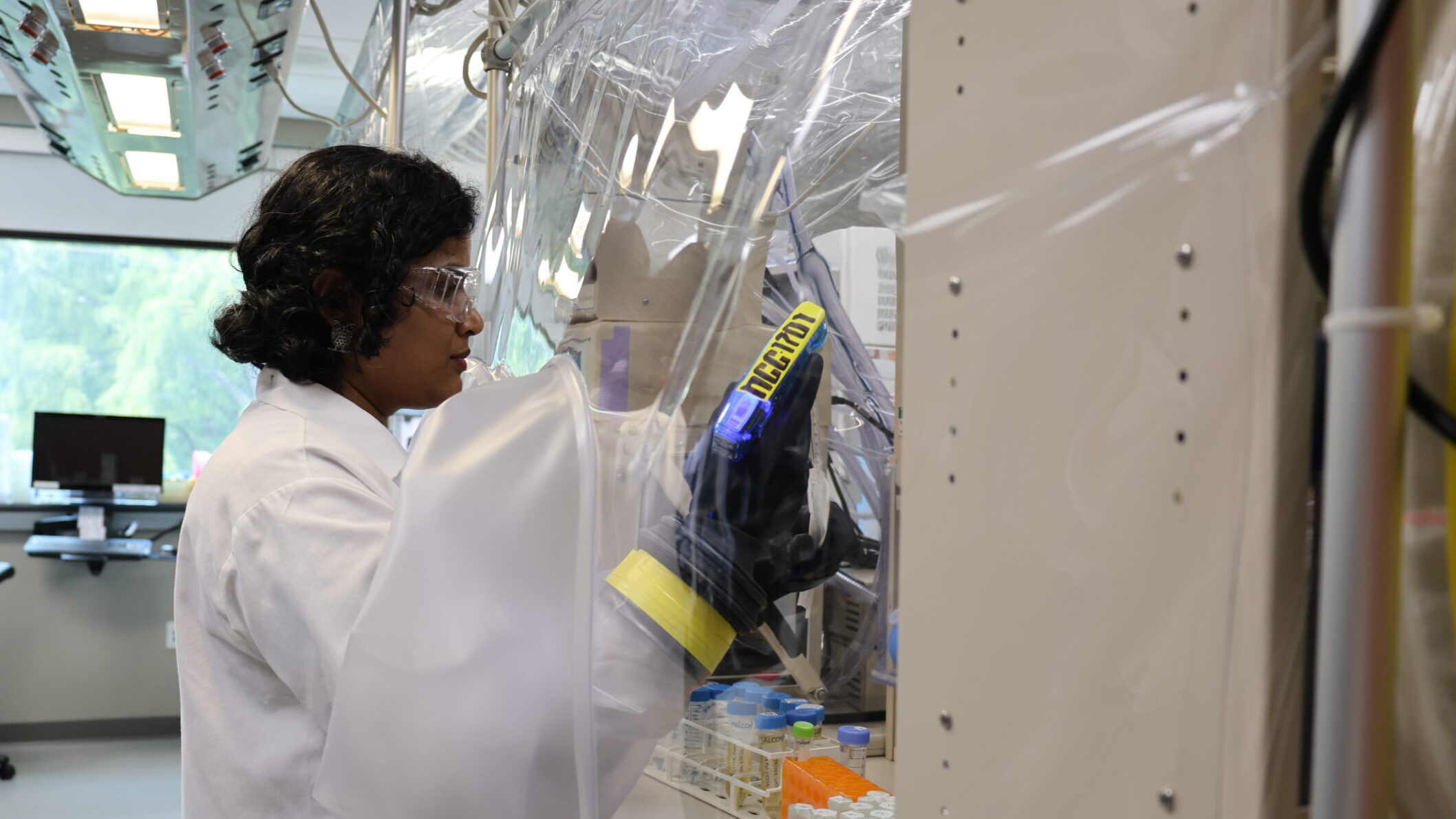
Nandhini Ashok uses tSAGE, or Thermostable Serine Recombinase Assisted Genome Engineering, which enables the rapid development of biotechnologies for high-temperature manufacturing. Credit: Carolyn Kimball, ORNL/U.S. Dept. of Energy
The tools, methods, and microbial strains developed by the group are made available through a combination of collaborative research partnerships, licensing agreements, and open-science initiatives. This approach helps accelerate scientific discovery while supporting technology translation and commercialization. The resulting capabilities are used by researchers across the national laboratory, academic, and industry sectors who are working to advance manufacturing and related technologies.
Through these activities, the Microbial Engineering Group contributes to both fundamental scientific understanding and the development of practical solutions for industrial needs. Its work supports innovation across multiple sectors, helping strengthen U.S. manufacturing capabilities and enhancing the nation’s economic competitiveness in a rapidly evolving global technology landscape.