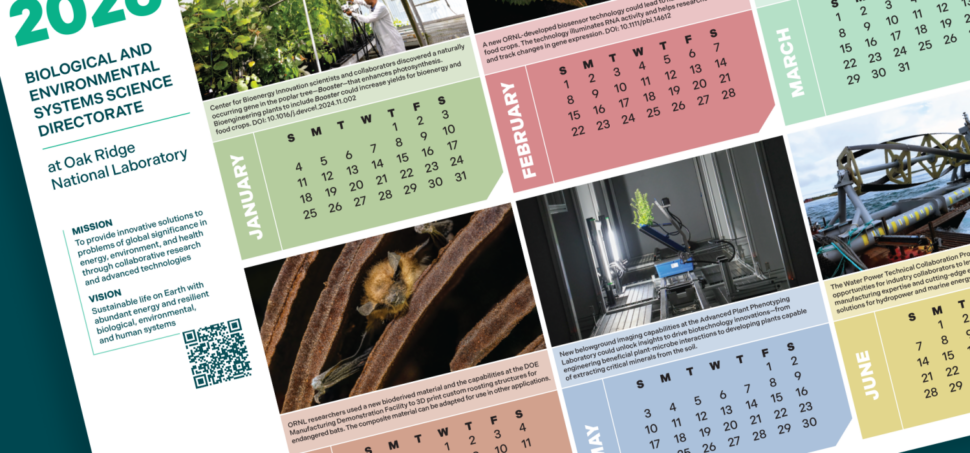
BESSD 2026 Calendar
The Biological and Environmental Systems Science Directorate 2026 calendar is now available. It highlights 12 examples of research from BESSD. You can download a printable version of the poster here.
For more information on the scientific research and publications featured each month, visit the links below.

January
Center for Bioenergy Innovation scientists and collaborators discovered a naturally occurring gene — Booster — in the poplar tree that enhances photosynthesis, helping plants grow taller and stronger. The gene contains DNA from two organisms associated with the tree and from a protein known as Rubisco that is essential to photosynthesis. Bioengineering plants to include Booster could increase yields for food and bioenergy crops — a step forward for agricultural and energy innovation.

February
ORNL scientists developed a biosensor technology that lets researchers visualize and track RNA activity in living plants — in real time. The innovation, which uses a molecular splicing technique and a fluorescent marker protein to illuminate RNA, could help researchers detect and track changes in gene expression, accelerating development of hardier bioenergy and food crops.

March
ORNL’s Biological Monitoring and Abatement Program marked 40 years of helping steward Department of Energy lands. The program’s long-term scientific data continues to inform innovations in waterway monitoring and strategies for environmental restoration, reinforcing ORNL’s role in delivering science for real-world impact.
April
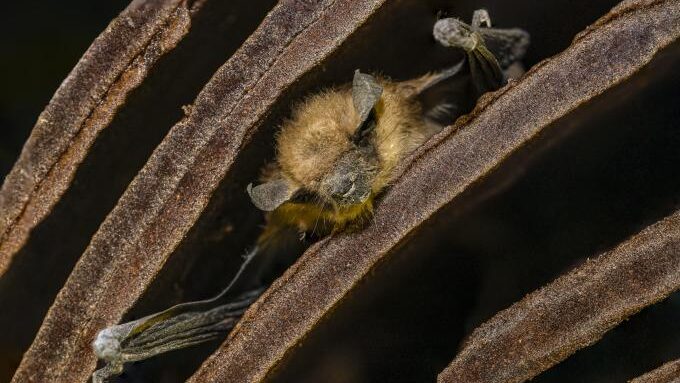
ORNL researchers used a new bio-derived material and the capabilities at the DOE Manufacturing Demonstration Facility to 3D-print custom roosting structures for endangered bats. The composite material can be adapted for use in other applications.
May
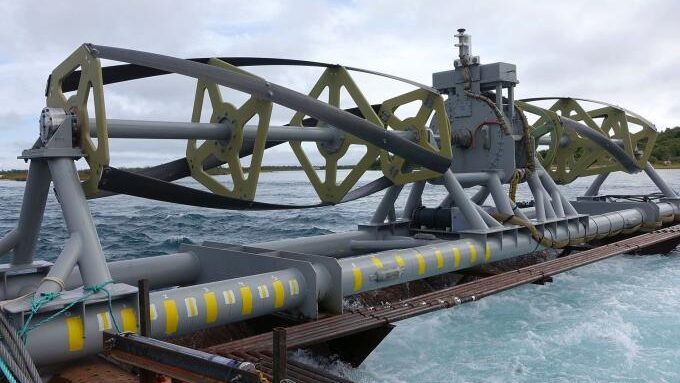
ORNL scientists working with the Department of Energy’s Water Power Technologies Office expanded the Hydropower Technical Collaboration Program to include marine energy applications. Now focused on projects for hydropower, pumped storage hydropower, and marine energy, the program creates new opportunities for industry collaborators to benefit from the lab’s world-class advanced manufacturing expertise and cutting-edge equipment as they explore new solutions for water power innovation.
June
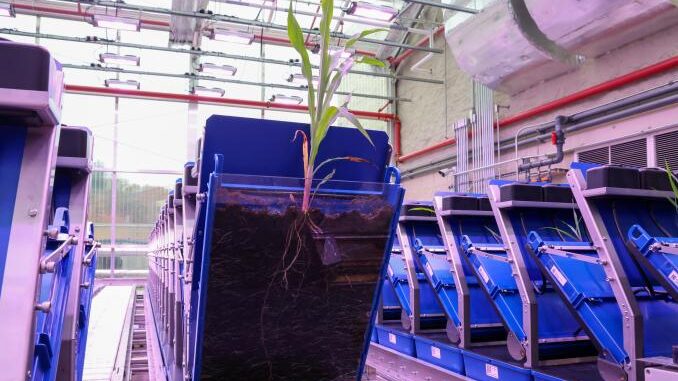
New belowground imaging capabilities at the Advanced Plant Phenotyping Laboratory are driving the future of bioenergy and biotechnology innovation. By visualizing root systems and tracking water movement through soil layers, scientists can bioengineer hardier crops, understand beneficial plant-microbe interactions, and explore how plants might extract critical minerals from the ground.

July
ORNL scientists developed a new analytical framework to systematically characterize compounds released by plant roots into their surrounding environment. The work yielded an abundance of data that could guide the development of higher-yielding, stress-resistant varieties of crops and help researchers engineer microbes that aid in crop resilience.
August
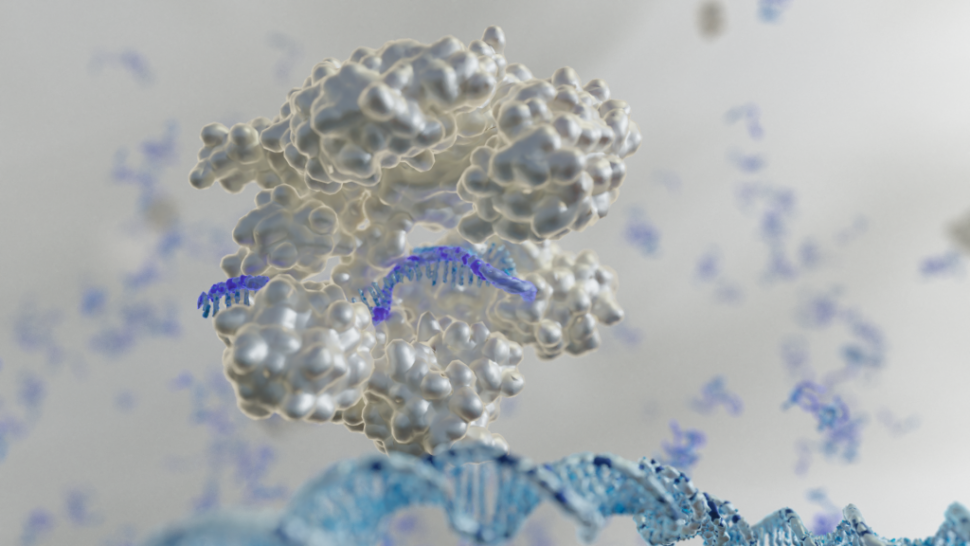
ORNL scientists developed a faster, more comprehensive way to influence microbial traits for biotechnology. The team found that partial suppression of certain genes yielded big benefits in modifying the stress response of wild microbes, accelerating scientists’ ability to augment microbes to produce fuels, chemicals, and materials.

September
As part of the multi-laboratory Orchestrated Platform for Autonomous Laboratories (OPAL) initiative, ORNL scientists are doing their part to make self-driving science a reality. By creating a network of intelligent, interconnected research platforms the team seeks to reduce the time from discovery to real-world application – accelerating breakthroughs across biology, biotechnology, and energy science. ORNL’s contribution to the research involves using the unique capabilities at the Advanced Plant Phenotyping Laboratory to develop plants that can “mine” rare earth elements critical for energy technologies.
October
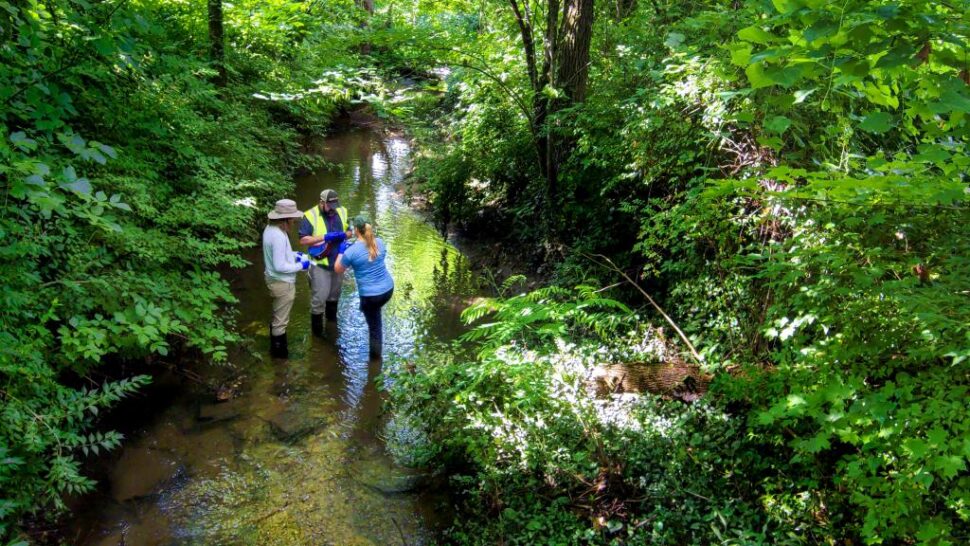
As part of the Watershed Dynamics and Evolution (WaDE) Science Focus Area, ORNL scientists are studying vital water systems to develop more accurate models of watershed function. The research can help policymakers and water resource managers make more informed decisions about water quality and availability for energy production and other uses.
November
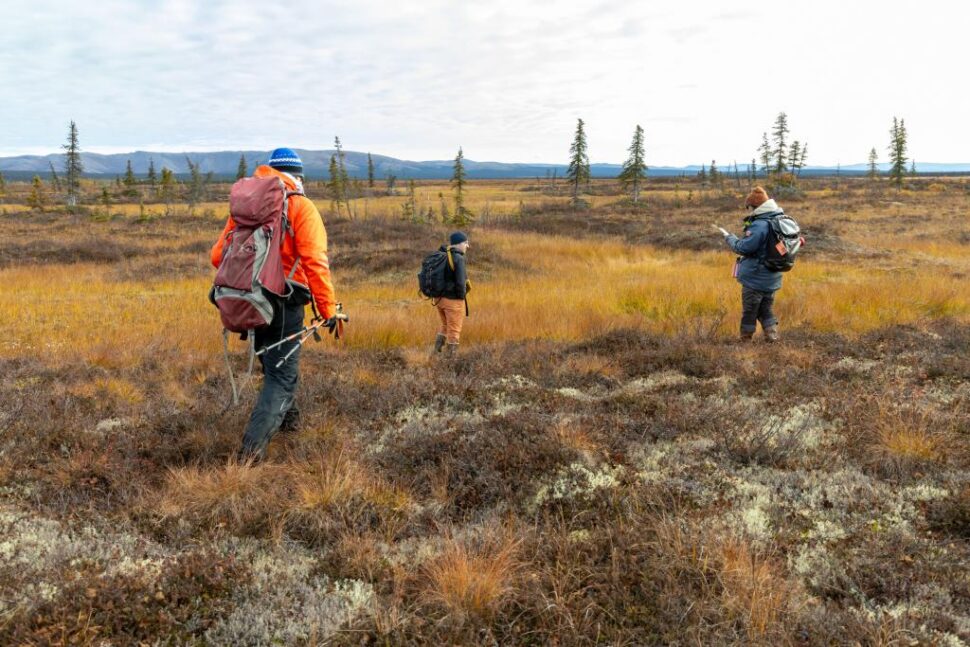
As part of the Next-Generation Ecosystem Experiments in the Arctic project, ORNL scientists combine observations, artificial intelligence, and model simulations to predict the timing and consequences of permafrost thaw and degradation for energy infrastructure and ecosystems in Alaska.

December
ORNL scientists are improving predictive capabilities that assess the risk of disturbances such as long-term flooding that can impact populations and energy infrastructure. Insights from these models are important to planners focused on protecting the multitude of refineries, pipelines, and ports along the Southeast coast and across the nation.