Advanced Readout, AI, and Data Acquisition
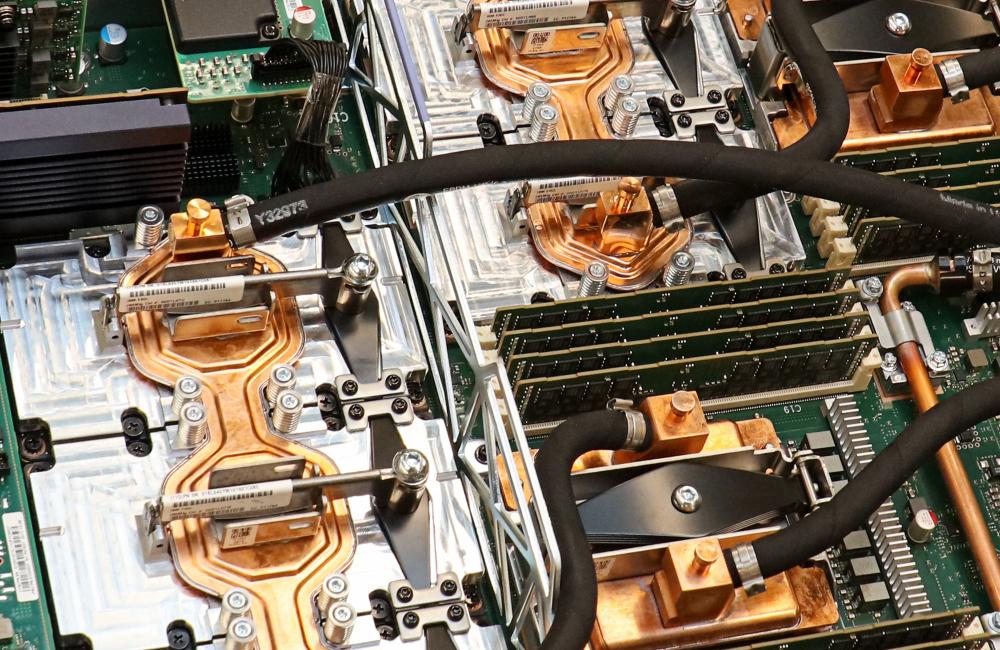
Modern detectors need to do more than sense—they need to process data. ORNL is developing advanced front-end electronics, streaming readout systems, and AI-enabled approaches that help manage large data volumes, improve signal selection, and accelerate the path from measurement to insight.
Detector Materials And Enabling Technologies
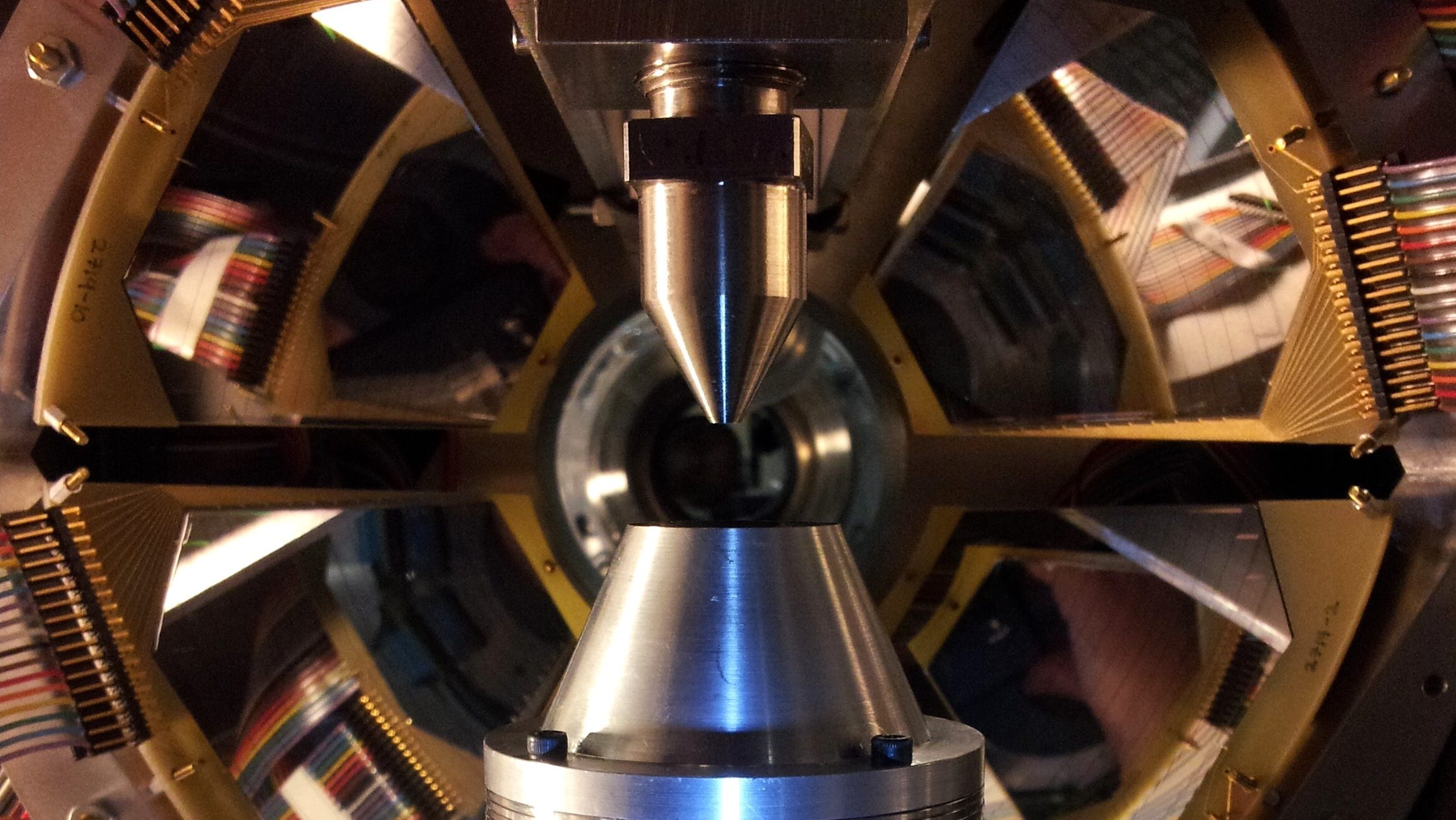
Detector performance starts with the materials of the sensor itself. ORNL’s materials research spans germanium, silicon, scintillators, neutron and gamma-ray systems, along with related enabling technologies that improve sensitivity, timing, resolution, and scalability across many types of experiments.

Quantum Detectors
Quantum sensing uses the physics mechanisms of entanglement, back-action evasion, and superposition to develop systems that reach sensitivities beyond standard classical approaches. ORNL is building capabilities that combine quantum optics, spin defects, cryogenic measurement, nanophotonics, muon/neutron detector expertise, and high-performance computing.

Detector Simulations
ORNL develops particle tracking code that integrates electromagnetic interactions and photon transport on high-performance computing platforms. High fidelity detector response is provided connecting measured signals back to the underlying physics.

Computing, Data Expertise, and AI
ORNL’s detector capabilities are closely coupled with the lab’s global leadership in high-performance computing, AI, and data management. Advanced data systems, analysis methods, and AI-enabled tools help researchers handle complex signals and extract more value from each experiment. ORNL is developing premiere AI methods and tools to enhance sensing and decision making.
The benefits of these advancements are not limited to their original applications.
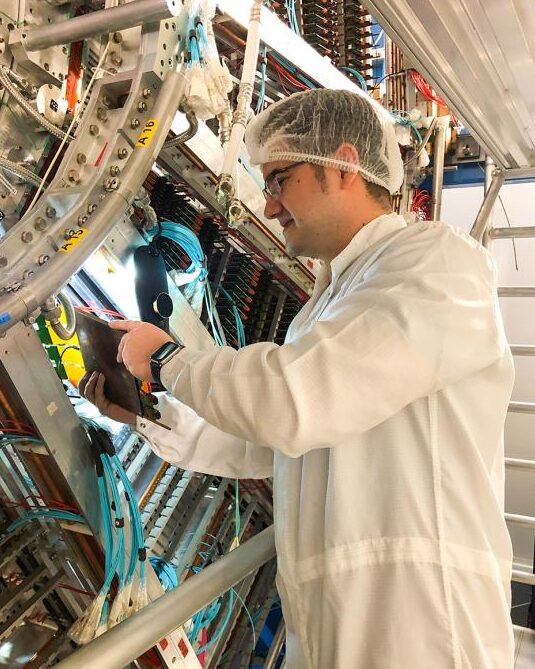
The high-rate capability, tracking precision, sensor granularity, readout speed and radiation resistance of the current generation of silicon detectors resulting from ORNL science has led to their widespread adoption, particularly in collider experiments (like STAR, ALICE, sPHENIX, and the future EIC experiment, ePIC), for which ORNL has been leading efforts in readout and data acquisition systems. Similarly, ORNL’sPhoton Digital Converter devices are being developed and characterized with future use cases in nuclear security, medical imaging, fundamental high energy and nuclear physics, and space-based instruments.
Broad capabilities in semiconductor radiation detectors developed at ORNL also span high-energy physics, neutron science, electron microscopy, and gamma-ray imaging. ORNL is also pioneering the use of Timepix4 hybrid pixel detectors for high-resolution neutron beam imaging at the SNS. Another Timepix4 application is NEUROPIX, which is developing a new kind of artificial intelligence for scientific detectors based on spiking neural networks (SNNs), a computing approach inspired by how the human brain processes information. By emulating these natural neural processes, NEUROPIX aims to create detector systems that can recognize patterns, filter noise, and make rapid decisions using far less power and with much lower delay than traditional electronics.