Biomass Insights for Energy and the Broader Bioeconomy
Scientists in the Bioresource Science and Engineering group at Oak Ridge National Laboratory play a pivotal role in advancing the nation’s bioenergy sector through targeted research, technological innovation, and comprehensive systems analysis. The group’s primary mission centers around bolstering domestic energy production by exploring and improving bioenergy systems that efficiently harness biological resources to generate energy, materials, and valuable bioproducts.

Researchers in this group focus extensively on generating foundational scientific data and rigorous analytical insights necessary to inform critical decisions by policymakers, industry leaders, and other stakeholders. By developing and applying sophisticated models and analytical tools, the group ensures that the data produced is actionable, accurate, and relevant for strategic planning and resource management.
One of the group’s core research strengths is geospatial mapping of bioenergy resources. Utilizing advanced geospatial techniques, researchers meticulously identify, quantify, and analyze existing and potential bioenergy sources across the nation and down to the county level. This detailed mapping is essential for pinpointing the energy crops and other feedstocks that are optimal for bioenergy production in each region, informing strategic development and facilitating infrastructure planning that maximizes resource efficiency and economic prosperity.
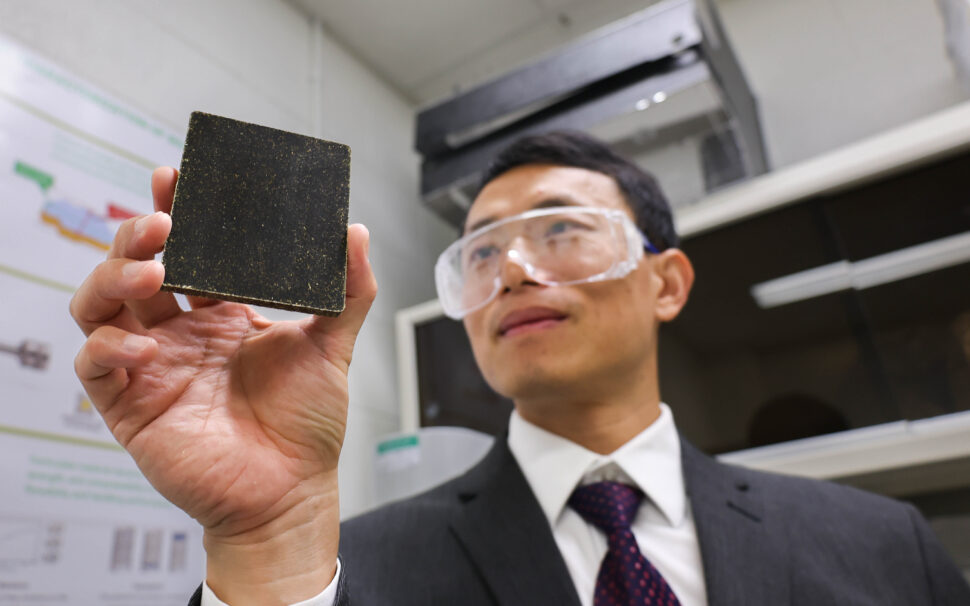
In addition to resource mapping, the group actively engages in developing and refining early-stage technologies critical to enhancing energy security. These innovative technologies aim to increase the efficiency of bioenergy conversion processes, contributing significantly to reducing reliance on imported energy sources. Researchers explore a wide variety of novel technological pathways—from biomass conversion methodologies to improved energy crop genetics and production techniques—to expand the bioeconomy.
Through interdisciplinary collaboration and leveraging state-of-the-art facilities and expertise, the group’s work not only supports immediate industry needs but also positions the United States as a leader in bioenergy innovation, fostering long-term energy independence and economic growth. By continuously pushing the boundaries of bioenergy research and development, the group significantly contributes to a robust, diversified and secure domestic energy landscape.
Researchers










Publications
Sep, 2026
Journal
Development of a coupled experimental–computational approach for engineering optimization of spout-fluidized bed particle coating systems
The design of spout-fluidized bed (SFB) coating systems for nuclear particle fuels typically relies on trial-and-error processes, comprising iterative and time-consuming coating deposition experiments and post-deposition characterization. At an engineering scale, this approach to guided SFB system design is inefficient, highlighting the need for streamlined experimental me…
Sep, 2026
Journal
Life cycle analysis of dedicated energy crops for fuel production in the United States
Dedicated energy crops are promising feedstocks to make biofuels including jet fuels. This study applies life cycle analysis (LCA) to estimate direct well-to-wake (WTW) greenhouse gas (GHG) emissions (g CO2e/MJ) for jet fuel derived from five energy crops—biomass sorghum, miscanthus, switchgrass, poplar, and willow—via Fischer–Tropsch-to-Jet (FTJ) and Ethanol-to-Jet (ETJ)…
Aug, 2026
Journal
Stakeholder engagement to address agribusiness concerns and opportunities: the circular carbon bioeconomy example
Effective stakeholder engagement in decisions about complex systems involving sustainable agribusiness requires substantial time and resources by both the managers involved in a supply chain and their stakeholders. Therefore, it is important to understand how to design and implement business strategies that integrate stakeholder perspectives as the project develops. The ob…
Contact
