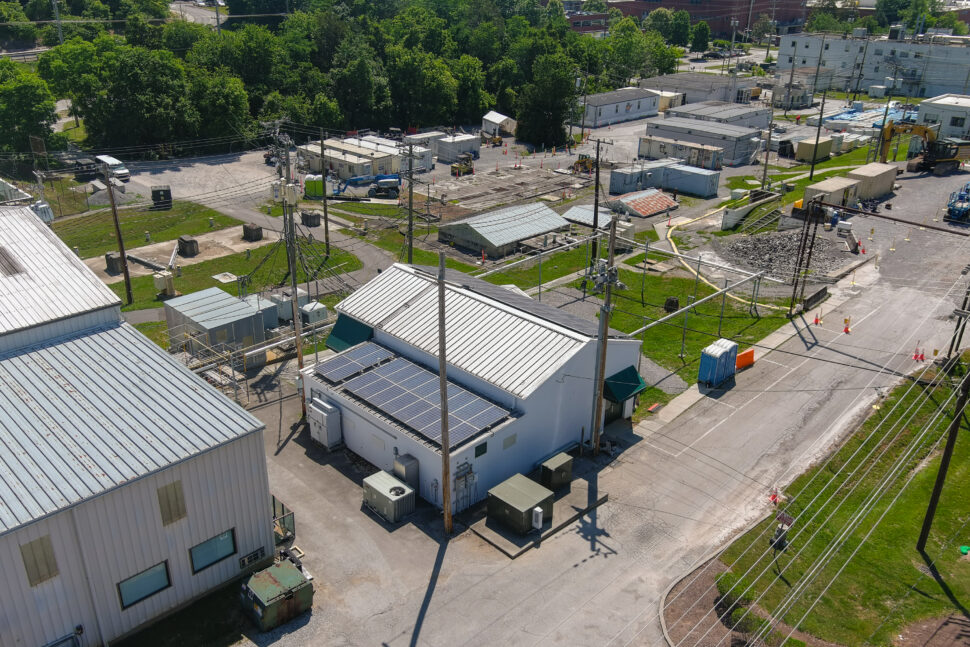
ORNL’s historical role in the origins of World War II nuclear science supplied it with a utility-scale electricity infrastructure that now serves as a real-world proving ground for future grid modernization. A portion of the ORNL grid serves as a power distribution field testing site where innovations developed and tested in the lab, by either GRID-C or its industry and utility partners, can scale up through field validation.
The distribution field test site incorporates real energy generation and loads for realistic demonstration of grid sensors, hardware, software, and protection approaches that tackle real-world challenges such as incorporating large loads and improving power quality at the grid edge. This enables technologies to transition smoothly and safely to utility systems for faster deployment of resilient, reliable, autonomous, and secure grid solutions.
Uniqueness and capabilities
The site offers rare access to field validation for complex integrated system platforms incorporating automation and advanced controls, communications and decision-making capabilities for enhanced infrastructure reliability.
Integrated power distribution can switch from 480V/240Vac grid to installed distributed energy resources (DER) or a commercial test platform.
Evaluation of bidirectional power flow and optimization use cases, with real source/load conditions.
Technology resources
Real time simulator for controlling sensor voltage, current, and high-speed amplifiers
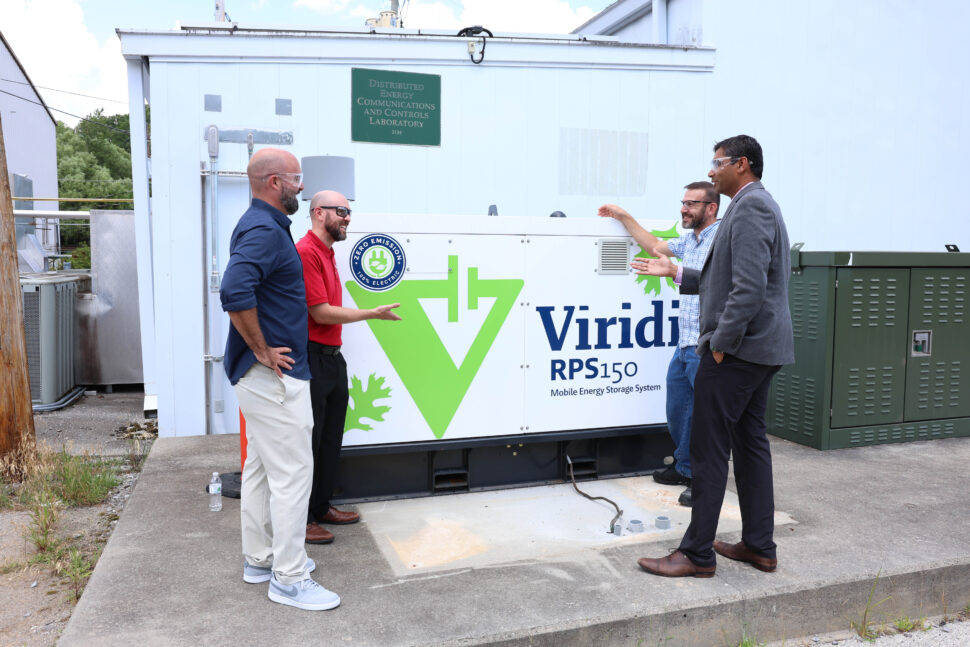
Grid connection to distributed energy resources: 50kW roadside array, 13kW rooftop array, energy storage at nominal 150kWh 600V
Load banks: 500kW resistive and 375kVar inductive load banks
Energy storage: 150kWh, 600V
Electronic load bank
For more information about the Hybrid AC/DC Lab, contact Joao Pinto.