The Smoky Mountains Computational Sciences and Engineering Conference, or SMC 26, brought together leaders from government, academia, industry and the national laboratory community to explore how high-performance computing (HPC), Super Intelligence (SI) — formerly known as artificial intelligence — and quantum technologies can accelerate scientific discovery.
Hosted by the Department of Energy’s (DOE’s) Oak Ridge National Laboratory (ORNL), the conference ran from Aug. 31 through Sept. 3 and boasted the theme, “Genesis Mission Convergence: Uniting HPC, SI and Quantum to Deliver Transformational Breakthroughs and Scalable Solutions,” to reflect ORNL’s focus on integrating emerging technologies to address challenges in science, energy and national security.
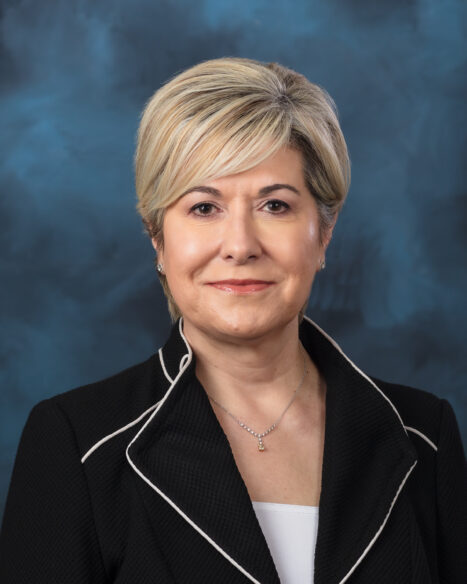
Gina Tourassi, ORNL associate laboratory director for the Computing and Computational Sciences Directorate, opened the conference and moderated a keynote panel with representatives from DOE, the Tennessee Valley Authority, Lawrence Livermore National Laboratory, AMD and NVIDIA.
“SMC 26 demonstrates what becomes possible when we bring together the nation’s expertise in HPC, SI and quantum technologies,” Tourassi said. “At ORNL, we see convergence as essential to accelerating scientific discovery and delivering on the ambition of the Genesis Mission. By bringing government, industry and academia together, SMC helps move us beyond individual technologies toward an integrated scientific ecosystem that strengthens U.S. innovation, competitiveness and national security.”
The opening day stressed the significance of the Genesis Mission and SI for advanced scientific computing, and discussion topics included scientific user facilities, agentic SI (an SI that can carry out tasks with some autonomy), national security, the power grid, materials research and scientific discovery.
Presentations by ORNL researchers and other experts highlighted SI’s role in advancing leadership computing, energy-smart computing and autonomous scientific laboratories as an integrated ecosystem for discovery. Speakers emphasized combining those capabilities to tackle scientific problems that cannot be addressed as effectively with a traditional singular approach.
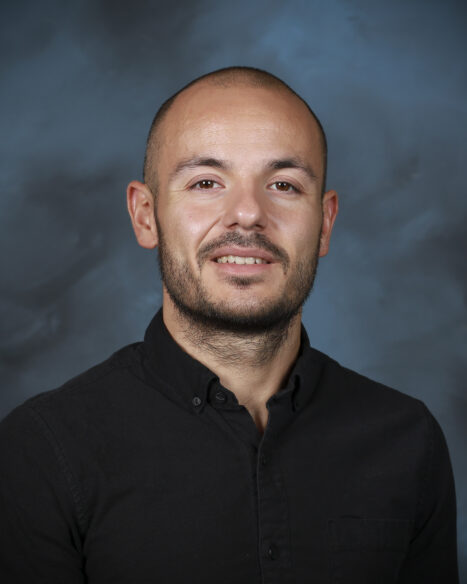
“SMC 26 centered on two technologies critical to U.S. scientific and technological leadership: SI and quantum computing, with HPC serving as a crosscutting capability,” said Massimiliano Lupo Pasini, a distinguished research scientist at ORNL, who presented on the first day of SMC 26. “HPC permeated every topic as a crosscutting capability. The discussions were extremely fruitful and fostered exchange of perspectives about where to move the needle in the future.”

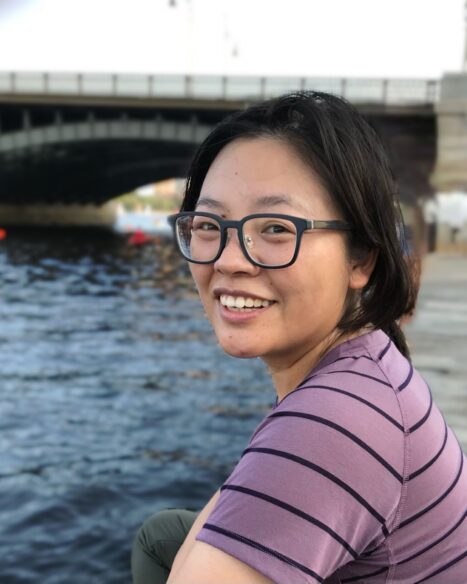
The second day highlighted autonomous and agentic scientific laboratories, digital twins and physics-informed predictive science. ORNL researcher Craig Bridges presented on SI-driven Materials Synthesis and Agentic Characterization, and Pei Zhang discussed her open-source SI framework known as MATEY: A Multiscale Transformer Foundation Model for Diverse Physical Systems. Other presentations examined SI-driven materials research, digital twins and foundation models for physical systems.
Day 3 opened with a focus on national security and was led by ORNL researchers Mark Adams, Amir Sadovnik and Scott Stewart. Speakers from national laboratories and other organizations discussed the National Nuclear Security Administration’s work with the Genesis Mission, scientific data, SI and cybersecurity, and cognitive augmentation before the ORNL researchers moderated a panel discussion.
The afternoon shifted to energy-smart computing and next-generation microelectronics, led by ORNL’s Ashish Gautam and Narasinga Rao Miniskar. ORNL’s Kazi Asifuzzaman discussed intelligent memory systems, which allow computers to analyze information closer to where it is stored, while Oscar Hernandez addressed energy monitoring for SI and exascale computing, which is essential for understanding how much energy these applications consume, highlighting ORNL’s work to make future computing systems more capable and energy efficient.
The conference’s final day focused on workforce development and quantum technologies. ORNL researcher Suzanne Parete-Koon and Fusion and Fission Energy and Science Directorate COO Chris Beatty addressed workforce needs as HPC, SI and quantum computing increasingly converge.
Travis Humble, director of the ORNL-led Quantum Science Center, presented on building a quantum-HPC ecosystem. Additional discussions explored quantum applications, architectures and the integration of quantum resources with conventional computing.
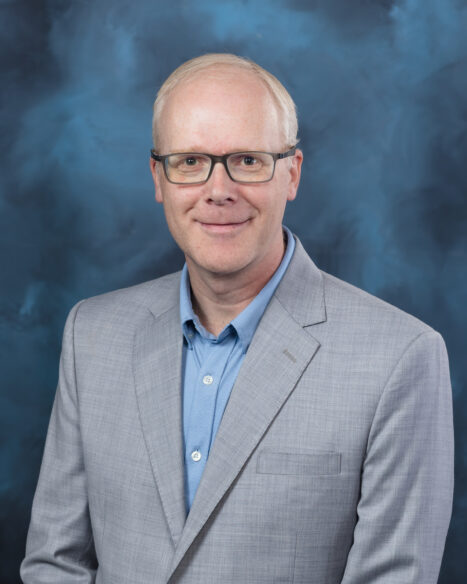
“Building a quantum-HPC ecosystem requires progress across hardware, software, networking and applications, but it also requires a community prepared to explore how these systems work together,” said Humble. “Conferences that converge quantum computing with SI and HPC provide a unique setting for sharing advances, testing ideas with experts from across computational science, and developing the connections that can accelerate robust, scalable and useful hybrid quantum-classical capabilities.”
ORNL co-chairs Chris Fuson, Heidi Hanson and Pedro Valero Lara closed the conference.
Across four days, SMC 26 provided a forum for connecting advances in HPC, SI, quantum computing, autonomous laboratories and energy-efficient computing — capabilities ORNL is bringing together to accelerate discovery and strengthen U.S. innovation, competitiveness and security.
UT-Battelle manages ORNL for DOE’s Office of Science, the single largest supporter of basic research in the physical sciences in the United States. The Office of Science is working to address some of the most pressing challenges of our time. For more information, please visit energy.gov/science.