Additive Manufacturing
Advancing manufacturing from discovery to industrial production.
Additive manufacturing, or 3D printing, builds parts layer by layer from a digital design. It gives manufacturers new ways to produce complex and specialized parts, reduces the need for some traditional tooling, and makes certain components closer to where they are needed. These capabilities can make production more flexible and reduce reliance on hard-to-source parts and suppliers.
For additive manufacturing to become a dependable production tool, manufacturers need confidence that materials, processes, and equipment will consistently deliver the required quality, speed, and cost. Proving that performance at industrial scale can be expensive and technically difficult.

Oak Ridge National Laboratory helps solve this challenge across the manufacturing process—from materials and part design to production, inspection, automation, and scale-up. Researchers improve technologies and test them under production-relevant conditions, generating the knowledge and performance data manufacturers need to evaluate their use. ORNL applies this research to manufacturing challenges in energy, transportation, aerospace, defense, and other industries.
Materials and Processes
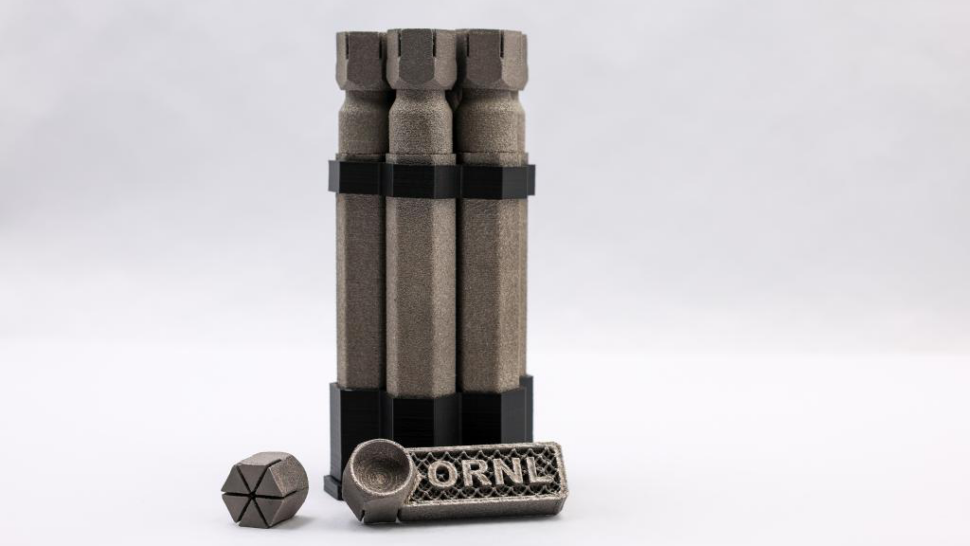
The performance of a 3D-printed part depends on both the material being used and how it is processed. ORNL studies metals, polymers, composites, ceramics, and other materials to understand how manufacturing processes affect the properties and performance of finished components. This research identifies combinations of materials and processes can reliably produce parts for demanding applications.
In focus: An electron-beam process enabled researchers to overcome the metal’s brittleness and produce complex, defect-free components for demanding applications.
Digital Manufacturing and Automation
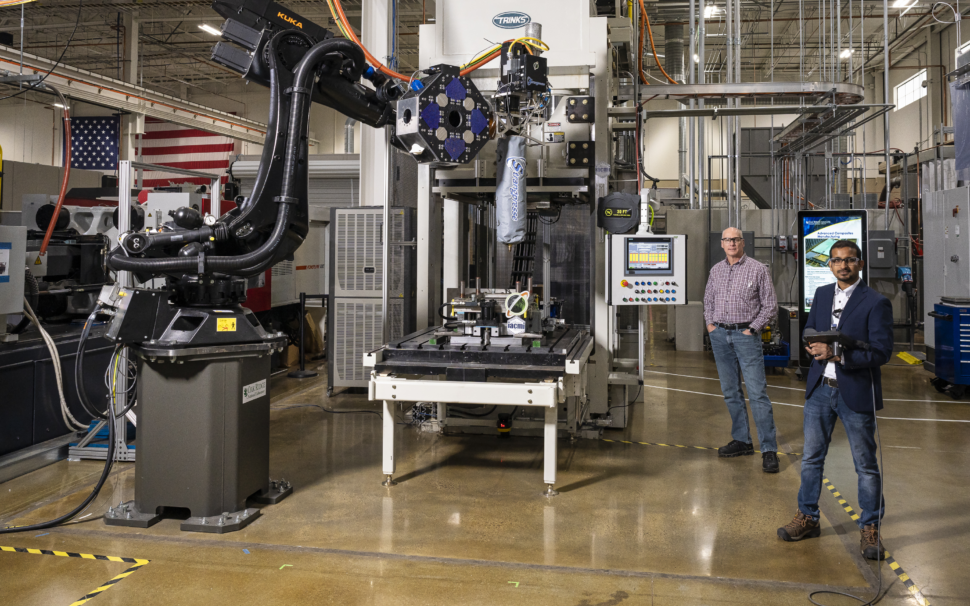
Manufacturers need to detect problems during production, not just after a part is finished. ORNL combines sensing, computational modeling, data analytics, artificial intelligence, automation, and process control to monitor production, and respond to problems as they occur. These capabilities can improve consistency, streamline inspection, and provide better information about how a part was produced.
In focus: ORNL’s Simurgh software uses artificial intelligence and physics-based modeling to detect flaws with fewer X-ray scans, cutting inspection time by more than 90% in some applications.
Large-Scale Additive Manufacturing Systems
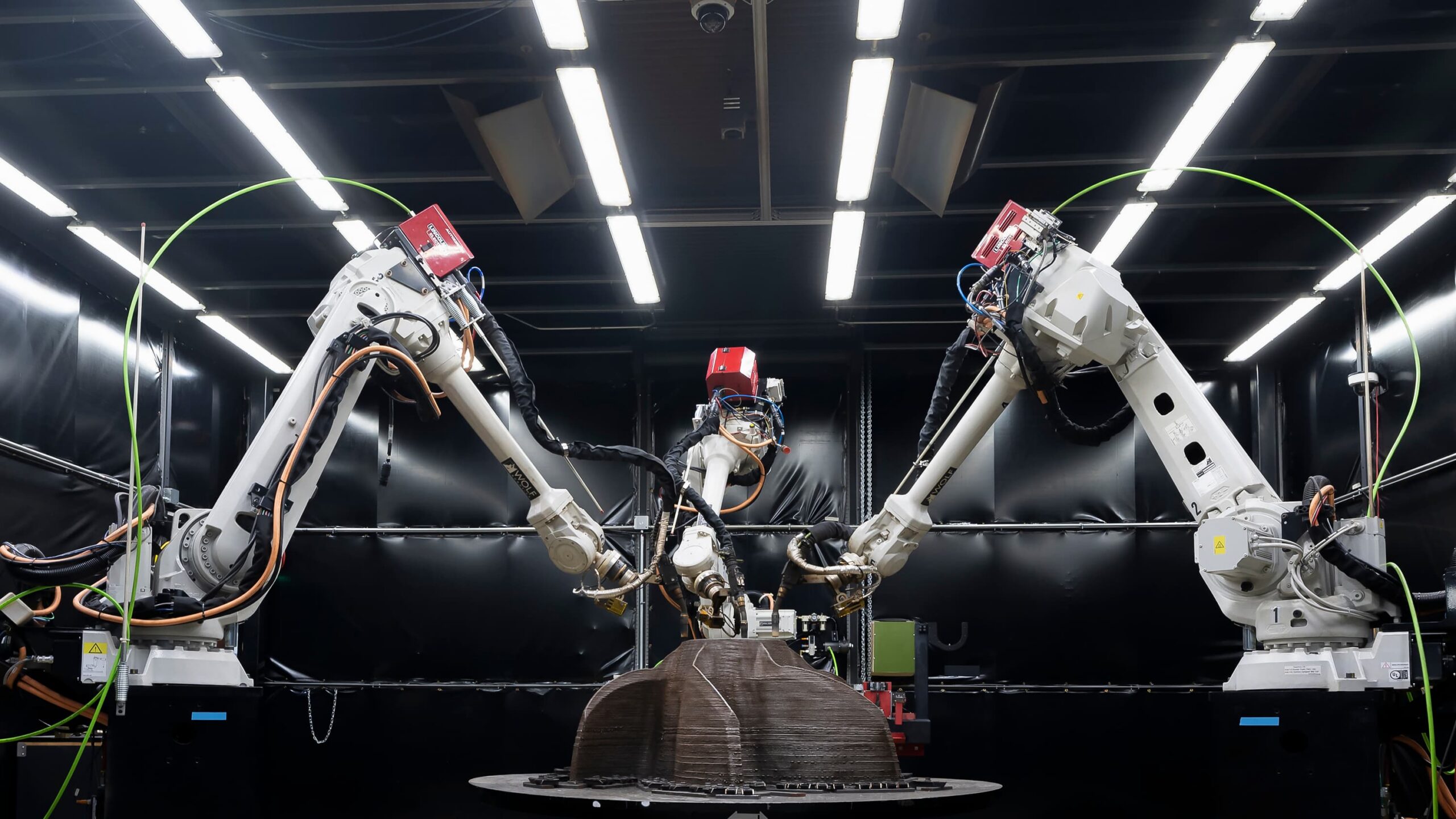
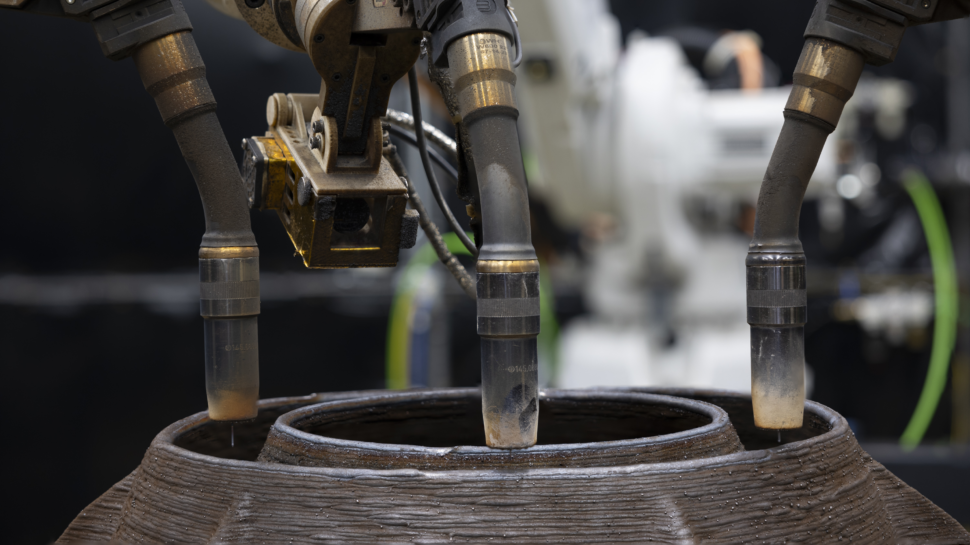
Some industrial parts, tools, and structures that are too large for conventional 3D printing systems. ORNL develops large-scale additive manufacturing systems that combine specialized equipment and robotics to produce larger and more complex components, These systems can expand U.S. manufacturing options for products such as tooling, castings, forgings, and replacement parts that may otherwise be difficult or time-consuming to produce.
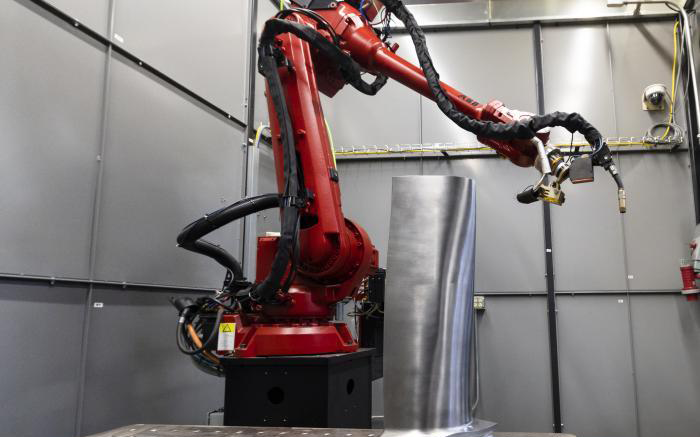
In focus: ORNL used robotic wire arc additive manufacturing to produce a metal steam turbine blade in 12 hours, demonstrating a new approach to making large parts traditionally produced through casting and forging.

Scaling Additive Manufacturing for Industry
ORNL works with manufacturers to take emerging additive manufacturing technologies beyond laboratory demonstrations and evaluate them in production-relevant settings. Researchers address practical barriers such as cost, production speed, quality, equipment performance, and integration with existing operations. Industry collaborations help determine where new materials, processes, and systems are ready for manufacturing and where further development is needed.
In focus: A partnership with Lincoln Electric helped turn ORNL research into a commercial manufacturing capability for producing large, specialized metal parts with shorter lead times.