Scientific Achievement
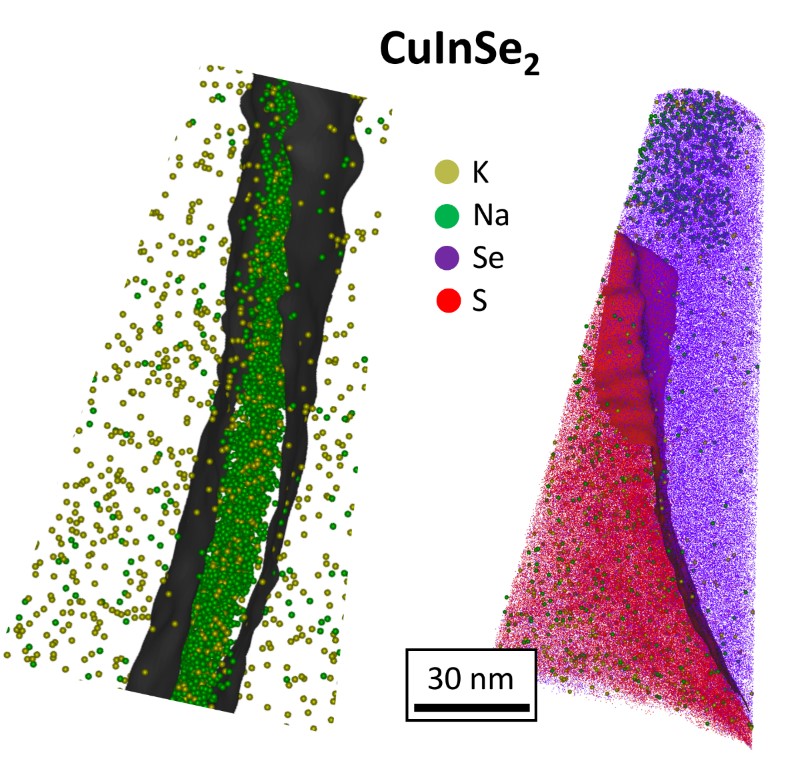
K substitution for Cu in bulk CuInSe2 and at the CuInSe2-CdS window interface directly reduces unwanted defects and improves solar cell performance.
Significance and Impact
Atom probe tomography (APT) reveals composition-property relationships within carefully fabricated CIS solar cells with controlled K integration to better understand efficiency enhancing mechanisms of KF post-deposition treatments.
Research Details
– A combination of APT and device efficiency measurements reveal the efficiency enhancing mechanisms of K incorporation within CI(G)S. – Decomposition of KInSe2 in ambient air was observed for the first time.
– Decomposition of KInSe2 in ambient air was observed for the first time.
C.P. Muzzillo, J.D. Poplawsky, H.M. Tong, and T. Anderson, “Revealing the beneficial role of K in grain interiors, grain boundaries, and at the buffer interface for highly efficient CuInSe2 solar cells,” Prog Photovolt.Res. Appl. 1-10 (2018). DOI: 10.1002/pip.3022
Related Researchers