|
I am an ecosystem ecologist who uses a variety of field and laboratory
techniques to understand and predict how ecosystems are shaped by
climatic change. Specifically, I work at the root-soil interface to
investigate how atmospheric and climatic change alters belowground
carbon and nutrient cycling. The ultimate goal of my research program
is to improve our ability to predict ecosystem responses to
environmental change and thus better inform policy decisions.
My research is generally focused on answering two questions: (1) How
does environmental change alter the balance among nutrient limitation,
ecosystem production, and carbon partitioning? (2) How do fine-root
production and mortality affect soil carbon storage and nutrient
cycling throughout the soil profile? My research questions broadly
encompass ecosystems ranging from temperate forests to boreal peatlands to arctic tundra.
Read on for specifics about on-going and completed projects.
|
|
*The Roots in Models project began with
an idea submitted in a DOE Early Career application in 2012, and became
part of the ORNL Terrestrial Ecosystem Sciences Science Focus Area in
2015 (2009 - 2018).
|
|
Fine-Root Ecology Database (FRED)
To
address the need for a centralized root trait database, we have
compiled the Fine-Root Ecology Database (FRED) from published
literature and unpublished data. FRED
1.0 houses more than 70,000 observations of root traits and their
associated site, vegetation, edaphic, and climatic conditions from
across the globe. The more than 300 root traits currently housed in
FRED 1.0 are described in detail here. Data collection is ongoing and will continue for the foreseeable future, and we welcome the submission of data that you are willing to make freely available to the broader scientific community with unrestricted access!
Publications:
Iversen
CM, McCormack ML, Powell AS, Blackwood CB, Freschet GT, Kattge J,
Roumet C, Stover DB, Soudzilovskaia NA, Valverde-Barrantes OJ, van
Bodegom PM, Violle C. 2017. Viewpoints: A global Fine-Root Ecology Database to address belowground challenges in plant ecology. New Phytologist 215: 15-26.
McCormack
ML, Guo D, Iversen CM, Chen W, Eissenstat DM, Fernandez CW, Li L,
Ma C, Ma Z, Poorter H, Reich PB, Zadworny M, Zanne A. 2017. Viewpoints:
Building a better foundation: Improving root-trait measurements to understand and model plant and ecosystem processes. New Phytologist 215: 27-37.
Related Publications:
McCormack ML, Iversen CM, Eissenstat DM. 2016. Moving forward with fine-root definitions and research. New Phytologist 212: 313.
McCormack ML, Dickie IA, Eissenstat DM, Fahey TJ, Fernandez CW, Guo D,
Helmisaari H-S, Hobbie EA, Iversen CM, Jackson RB, Leppalammi-Kujansuu
J, Norby RJ, Phillips RP, Pregitzer KS, Pritchard SG, Rewald B,
Zadworny M. 2015. Redefining fine roots improves understanding of below-ground contributions to terrestrial biosphere processes (Tansley Review). New Phytologist 207: 505-518.
Norby RJ, Iversen CM. 2017. Introduction to a Virtual Issue on root traits. New Phytologist 215: 5-8.
Warren, JM, Hanson PJ, Iversen CM, Kumar J, Walker AP, Wullschleger SD. 2015. Root structural and functional dynamics in terrestrial biosphere models – Evaluation and recommendations (Tansley Review). New Phytologist 205: 59-78.
Xu Y, Wang D, Iversen CM, Walker A, Warren J. 2017. Building a virtual ecosystem dynamic model for root research. Environmental Modelling & Software 89: 97-105.
Data set:
Iversen
CM, Powell AS, McCormack ML, Blackwood CB, Freschet GT, Kattge J,
Roumet C, Stover DB, Soudzilovskaia NA, Valverde-Barrantes OJ, van
Bodegom PM, Violle C. 2016. Fine-Root
Ecology Database (FRED): A Global Collection of Root Trait Data with
Coincident Site, Vegetation, Edaphic, and Climatic Data, Version 1.
Carbon Dioxide Information Analysis Center, Oak Ridge National
Laboratory, U.S. Department of Energy, Oak Ridge, Tennessee, U.S.A.
|
|
|
|
 |
Fine-root and fungal dynamics at SPRUCE: 2012 - on-going
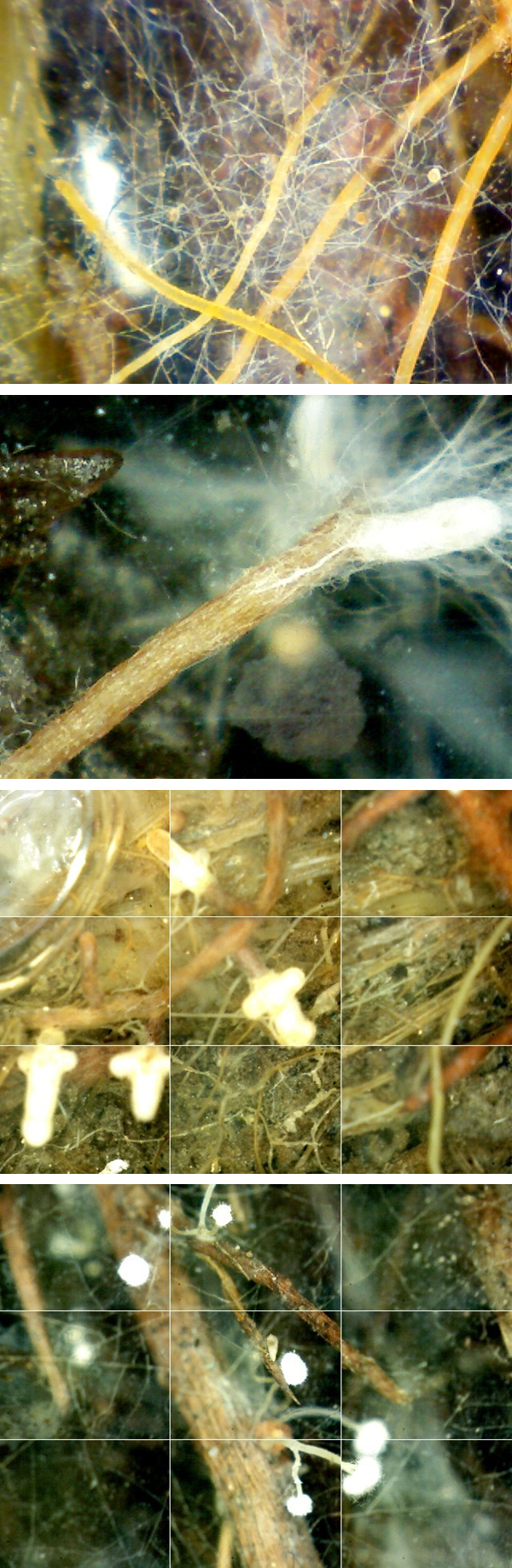
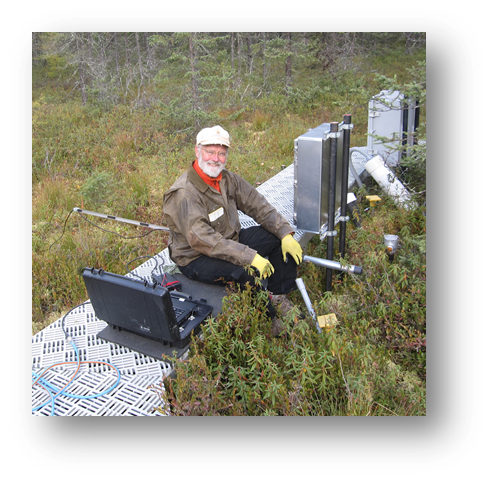
Manual minirhizotrons were installed in each SPRUCE
experimental plot in fall, 2012 to track the
responses of
fine-root dynamics to warming and elevated [CO2].
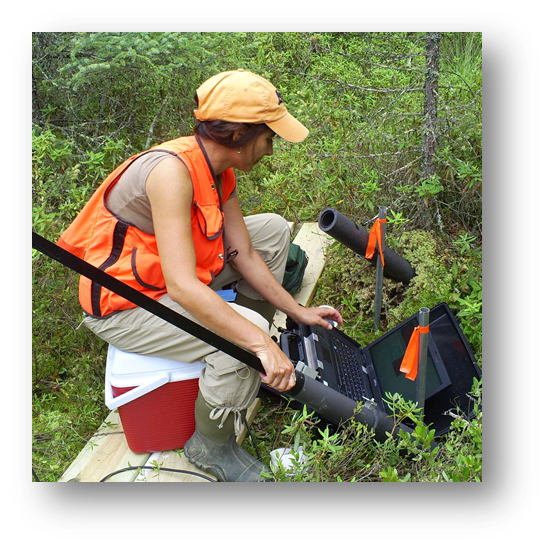
Prototypes of newly-developed automated minirhizotrons from RhizoSystems, LLC
are being tested in each SPRUCE experimental plot. They will allow us
to track changes in root dynamics, as well as fungal hyphae, at a much
greater resolution.
People:
John Latimer, Joanne Childs, Colleen Iversen
|
|
 |
Plant-available nutrients at SPRUCE: 2013 - on-going
We deployed WECSA ion-exchange resins across hummock-hollow
microtopography in two locations in each SPRUCE experimental plot. Resins are
retrieved every 28 days during the growing season to assess plant-available NH4-N, NO3-N, and PO4 throughout the peat profile, and to track changes in plant-available nutrients in response to warming and elevated [CO2].
People:
John Latimer, Joanne Childs, Deanne Brice, Holly Vander Stel, Sarah Bellaire, Colleen Iversen
Publication:
Iversen CM, Childs
J, Norby RJ, Ontl TA, Kolka RK, Brice DJ, McFarlane KJ, Hanson PJ.
2017. Fine-root growth in a forested bog is seasonally dynamic, but
shallowly distributed in nutrient-poor peat. Plant and Soil, DOI: 10.1007/s11104-017-3231-z.
Data set:
Iversen CM, Latimer J, Burnham A, Brice DJ, Childs J, Vander Stel HM. 2017. SPRUCE plant-available nutrients assessed with ion-exchange resins in experimental plots, beginning in 2013.
Carbon Dioxide Information Analysis Center, Oak Ridge National
Laboratory, U.S. Department of Energy, Oak Ridge, Tennessee, U.S.A.
|
|
 |
Root ingrowth at SPRUCE:
2014 - on-going
Given the difficulty of distinguishing
between living and dead roots in the anaerobic bog, root
ingrowth cores constructed of rigid polypropylene tubes and filled with
commercial peat from a nearby bog are being
used to capture newly-grown roots. Ingrowth cores are harvested
seasonally from paired hummock-hollow microtopography in two locations
in each SPRUCE plot.
Spruce,
larch, and shrub roots are removed from 10-cm depth increments and analyzed by root functional class for
mass, morphology, and chemistry.
People:
Avni Malhotra, Joanne Childs, Deanne Brice, Holly Vander Stel, Sarah Bellaire, Colleen Iversen
|
|
 |
Initial root, peat characteristics at SPRUCE:
2012
Initial root biomass depth distribution (along with peat characteristics and chemsitry) was determined
prior to initiation of SPRUCE experimental
treatments by taking 3-m deep soil cores in hummock-hollow
microtopography in each experimental plot in August, 2012.
Cores were sectioned into 10-cm or larger increments, and spruce,
larch, and shrub roots were removed.
Publications:
Iversen CM, Childs
J, Norby RJ, Ontl TA, Kolka RK, Brice DJ, McFarlane KJ, Hanson PJ.
2017. Fine-root growth in a forested bog is seasonally dynamic, but
shallowly distributed in nutrient-poor peat. Plant and Soil, DOI: 10.1007/s11104-017-3231-z.
Hobbie EA, Chen J, Hanson PJ, Iversen CM, McFarlane KJ, Thorp NR, Hofmockel KS. 2017. Long-term carbon and nitrogen dynamics at SPRUCE revealed through stable isotopes in peat profiles. Biogeosciences 14: 2481.
Tfaily MM, Cooper WT, Kostka J, Chanton PR, Schadt CW, Hanson
PJ, Iversen CM, Chanton JP. 2014. Organic matter transformation in the
peat column at Marcell Experimental Forest: Humification and vertical
stratification. Journal of Geophysical Research: Biogeosciences 119:
661-675.
Data set:
Iversen CM, Hanson PJ, Brice DJ,
Phillips JR, McFarlane KJ, Hobbie EA, Kolka RK. 2014. SPRUCE Peat Physical and Chemical Characteristics from Experimental
Plot Cores, 2012. Carbon Dioxide Information Analysis Center, Oak
Ridge National Laboratory, U.S. Department of Energy, OakRidge, TN, USA.
|
|
 |
Fine-root growth in a forested bog: 2011 - 2012
We aimed to determine how the amount and
timing of fine-root growth in a forested, ombrotrophic bog varied
across gradients of vegetation density, peat microtopography, and
changes in environmental conditions across the growing season and
throughout the peat profile.
Publication:
Iversen CM, Childs
J, Norby RJ, Ontl TA, Kolka RK, Brice DJ, McFarlane KJ, Hanson PJ.
2017. Fine-root growth in a forested bog is seasonally dynamic, but
shallowly distributed in nutrient-poor peat. Plant and Soil, DOI: 10.1007/s11104-017-3231-z.
Related Publications:
Griffiths NA, Hanson PJ, Ricciuto DM,
Iversen CM, Jensen AM, Malhotra A, McFarlane KJ, Norby RJ, Sargsyan K,
Sebestyen SD, Shi X, Walker AP, Ward EJ, Warren JM, Weston DJ. 2017.
Temporal and spatial variation in peatland carbon cycling and
implications for interpreting responses of an ecosystem-scale warming
experiment. Soil Science Society of America Journal, accepted.
Iversen CM. 2014. Using root form to improve our understanding of root function. New Phytologist 203: 707-709.
Data set:
Iversen CM, Childs J, Norby RJ, Garrett A, Martin A, Spence J, Ontl TA, Burnham A, Latimer J, 2017. SPRUCE
S1 bog fine-root production and standing crop assessed with
minirhizotrons in the Southern and Northern ends of the S1 bog.
Carbon Dioxide Information Analysis Center, Oak Ridge National
Laboratory, U.S. Department of Energy, Oak Ridge, Tennessee, U.S.A.
|
|
|

|
Advancing the use of minirhizotrons in wetlands
Together
with an international group of experts, we developed a consensus on,
and a methodological framework for, the appropriate installation and
use of minirhizotrons in wetlands.
Publication:
Iversen CM, Murphy MT, Allen ME, Childs J, Eissenstat DM, Lilleskov EA, Sarjala TM, Sloan VL, Sullivan PF (2012). Advancing the use of minirhizotrons in wetlands. Plant and Soil 352: 23-39.
Press:
See an ORNL press release on this paper, and associated news coverage at knoxnews.com and sciencedaily.com.
|
|
|
*The
goal of the NGEE Arctic
experiment (PI: Stan Wullschleger) is to understand how the thawing of
permafrost - and associated changes in landscapes, hydrology, soil, and
plants
- affects feedbacks to the climate system. Phase I was focused on a
gradient of
polygonal tundra in Barrow, AK (2011 - 2015), while Phase 2 (2015 -
2018) builds upon work conducted in Phase 1 by establishing a more
southerly site
characterized by transitional ecosystems, warm, discontinuous
permafrost,
higher annual precipitation, and well-defined watersheds with strong
topographic gradients.
|
Phase 2 - Discontinuous permafrost, Seward Peninsula, Alaska
|

|
Capturing the variation in Arctic plant functional traits
One of the major questions we address in Phase 2 is: How will warming and
permafrost thaw will affect above- and belowground plant functional
traits, and what are the consequences for Arctic ecosystem carbon,
energy, water, and nutrient fluxes?
This work is being conducted across
gradients of polygonal tundra in Barrow, AK, as well as in more
southerly tundra sites near Nome, AK, on the Seward Peninsula.
People:
Verity Salmon, Amy Breen, Eugenie Euskirchen, Bill Riley, Alistair
Rogers, Shawn Serbin, Sanna Sevanto, Peter Thornton, Holly Vander Stel, Stan
Wullschleger, Chonggang Xu, Colleen Iversen
Related Publications:
Koven C, Kueppers L, Iversen CM, Reich P, Thornton PE. 2016. Expanding the use of plant trait observations and ecological theory in Earth system models: DOE Workshop Report.
A summary report from the Terrestrial Ecosystem Science (TES) and Earth
System Modeling (ESM) Workshop on Trait Methods for Representing
Ecosystem Change; Rockville, MD, 18-19 November 2015. Report Date: May 31, 2016.
Kueppers LM, Iversen CM, Koven CD. 2016. Expanding the use of plant trait observations in Earth system models. Eos 97 (DOI:10.1029/2016EO049947).
Data sets:
Iversen CM, Breen A, Salmon V, Vander Stel H, Wullschleger S. 2017. NGEE
Arctic Plant Traits: Vegetation Plot Locations, Ecotypes, and Photos,
Kougarok Road Mile Marker 64, Seward Peninsula, Alaska, 2016. Next
Generation Ecosystem Experiments Arctic Data Collection, Carbon Dioxide
Information Analysis Center, Oak Ridge National Laboratory, Oak Ridge,
Tennessee, USA.
Iversen CM, Salmon V, Breen A, Vander Stel H, Wullschleger S. 2017. NGEE Arctic Plant Traits: Soil Temperature and Moisture, Kougarok Road Mile Marker 64, Seward Peninsula, Alaska, beginning 2016.
Next Generation Ecosystem Experiments Arctic Data Collection, Carbon
Dioxide Information Analysis Center, Oak Ridge National Laboratory, Oak
Ridge, Tennessee, USA.
Salmon V, Iversen CM, Breen A, Childs J, Vander Stel H, Wullschleger S. 2017. NGEE Arctic Plant Traits: Soil Nutrient Availability, Kougarok Road Mile Marker 64, Seward Peninsula, Alaska, beginning 2016.
Next Generation Ecosystem Experiments Arctic Data Collection, Carbon
Dioxide Information Analysis Center, Oak Ridge National Laboratory, Oak
Ridge, Tennessee, USA.
|
|
Phase 1 - Permafrost polygonal tundra, Barrow, Alaska
|
|
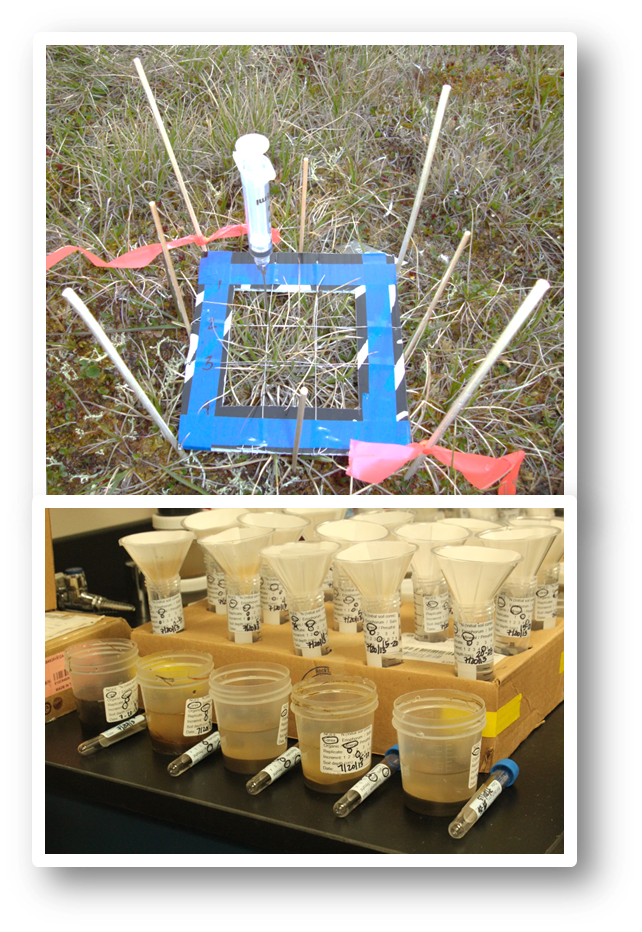
Differentiating Arctic PFTs based on root nitrogen acquisition: on-going research
In July, 2013, we injected a 15N
tracer into the rooting zone at three targeted depth intervals (organic
layer, mineral soil, and the permafrost boundary) in order to
characterize nitrogen acquisition for species representing three
important plant functional types (PFTs) on the Barrow Ecological
Observatory near Barrow, AK. The amount of nitrogen acquired from different depths
throughout the soil profile is being used to refine definitions of PFTs
in arctic models.
Publication:
Zhu Q, Iversen CM, Riley WJ, Slette IJ, Vander Stel HM. 2017. Root traits explain observed tundra vegetation nitrogen uptake patterns: Implications for trait-based land models. Journal of Geophysical Research: Biogeosciences 121: 3101-3112.
Related Publication:
Wullschleger SD, Epstein HE, Box EO, Euskirchen ES, Goswami S, Iversen
CM, Kattge J, Norby RJ, van Bodegom PM, Xu X. 2014. Plant functional
types in Earth System Models: Past experiences and future directions
for application of dynamic vegetation models in high-latitude
ecosystems. Annals of Botany 114: 1-16.
Press:
Root traits and nutrient competition approach explain NGEE-Arctic observations
Tracking
nitrogen in Arctic plants - Prevailing nutrient uptake models do not
fit Arctic plants
|
|
|
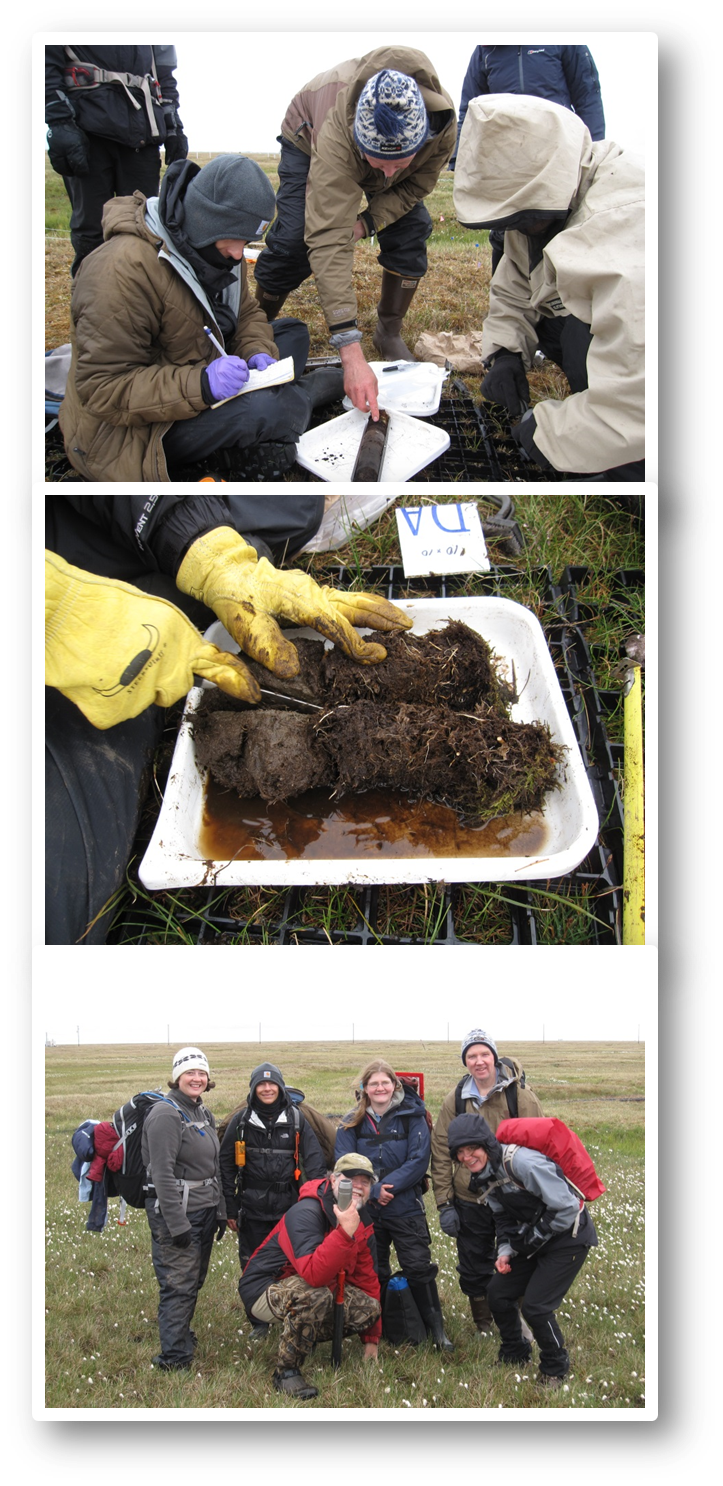
Carbon and nutrient release from an organic-rich active layer across a gradient of polygonal tundra: on-going research
Using
soil cores collected in summer, 2012 in Barrow, AK, we simulated future
temperatures in a soil incubation study to investigate the effects of
warming on soil carbon and nutrient mineralization throughout the soil
profile.
Publications:
Heikoop JM, Throckmorton HM, Newman BD, Perkins
GB, Iversen CM, Roy Chowdhury T, Romanovsky V, Graham
DE, Norby RJ, Wilson CJ, and Wullschleger SD. 2015. Isotopic identification of soil and permafrost nitrate sources in an Arctic tundra ecosystem. Journal of Geophysical Research: Biogeosciences 120: 1000-1017.
Schaedel C, Bader MKF, Schuur
EAG, Bracho R, Capek P, De-Baets S, Diakova K, Ernakovich J,
Estop-Aragones C, Graham DE, Hartley IP, Iversen CM, Kane E,
Knoblauch C, Lupascu M, Natali S, Norby RJ, O’Donnell JA, Roy Chowdhury
T, Šantrůčkova H, Shaver G, Sloan VL, Treat CC, Turetsky MR, Waldrop M,
Wickland KP. 2016. Potential carbon emissions dominated by carbon dioxide from thawed permafrost soils. Nature Climate Change 6: 950-953.
Treat CC, Natali SM, Ernakovich J,
Iversen CM, Lupascu M, McGuire AD, Norby RJ, Chowdhury TR, Richter A,
Santruckova H, Schaedel C, Schuur EAG, Sloan VL, Turetsy MR, Waldrop
MP. 2015. A pan-Arctic synthesis of CH4 and CO2 production from anoxic soil incubations. Global Change Biology 21: 2787-2803.
Data set:
Iversen CM,
Vander Stel HM, Norby RJ, Sloan VL, Childs J, Brice DJ, Keller JK, Jong
A, Ladd MP, Wullschleger SD. 2015. Active Layer Soil Carbon and
Nutrient Mineralization, Barrow, Alaska, 2012. Next Generation Ecosystem
Experiments Arctic Data Collection, Carbon Dioxide Information Analysis
Center, Oak Ridge National Laboratory, Oak Ridge, Tennessee, USA.
|
|

|
Plant community dynamics across a gradient of polygonal tundra: on-going research
In
2012 and 2013, we
investigated the relationships among plant community composition,
above- and belowground biomass and nitrogen content, and edaphic and
environmental conditions, and how these relationships changed across a
gradient of
polygonal tundra in Barrow, AK.
Publications:
Kumar J, Collier N, Bisht G, Mills RT, Thornton PE, Iversen CM, Romanovsky V. 2016. Modeling the spatio-temporal variability in subsurface thermal regimes across a low-relief polygonal tundra landscape. The Cryosphere 10: 2241-2274.
Langford Z, Kumar J, Hoffman FM, Norby RJ, Wullschleger SD, Sloan VL, Iversen CM. 2016. Mapping Arctic plant functional type distributions in the Barrow Environmental Observatory using WorldView-2 and LiDAR datasets. Remote Sensing 8: 733.
Walker DA, Breen AL, Druckenmiller LA, Wirth LW, Fisher
W, Raynolds MK, Šibik J, Walker MD, Hennekens S, Boggs K, Boucher T,
Buchhorn M, Bultmann H, Cooper DJ, Daniels FJA, Davidson SJ, Ebersole
JJ, Elmendorf SC, Epstein HE, Gould WA, Hollister RD, Iversen CM,
Jorgenson MT, Kade A, Lee MT, MacKenzie WH, Peet RK, Peirce JL,
Schickhoff U, Sloan VL, Talbot SS, Tweedie CE, Villarreal S, Webber PJ,
Zona D. 2016. The Alaska Arctic Vegetation Archive (AVA-AK). Phytocoenologia 46: 221-229.
Data sets:
Sloan VL, Brooks JD, Wood SJ, Liebig JA, Siegrist J, Iversen CM,
Norby RJ. 2014. Plant community composition and vegetation height,
Barrow, Alaska, Ver. 1. Next Generation Ecosystem Experiments Arctic
Data Collection, Carbon Dioxide Information Analysis Center, Oak Ridge
National Laboratory, Oak Ridge, Tennessee, USA.
Sloan VL, Liebig JA, Hahn MS, Curtis JB, Brooks JD, Rogers A, Iversen CM,
Norby RJ. 2014. Soil temperature, soil moisture and thaw depth, Barrow,
Alaska, Ver. 1. Next Generation Ecosystem Experiments Arctic Data
Collection, Carbon Dioxide Information Analysis Center, Oak Ridge
National Laboratory, Oak Ridge, Tennessee, USA.
Sloan VL, Iversen CM, Liebig
JA, Curtis JB, Hahn MS, Siegrist J, Norby RJ. 2014. Plant Available
Nutrients, Barrow, Alaska Ver. 1. Next Generation Ecosystem Experiments
Arctic Data Collection, Carbon Dioxide Information Analysis Center, Oak
Ridge National Laboratory, Oak Ridge,Tennessee, USA.
|
|

|
The unseen iceberg:
Plant roots in arctic tundra
Plant
roots play a critical role in ecosystem function in arctic tundra, but
root dynamics in these ecosystems are poorly understood. We synthesized available literature on tundra
roots, including their distribution, dynamics, and contribution to
ecosystem carbon and nutrient fluxes, and we highlighted key aspects of
their representation in terrestrial biosphere models.
Publication:
Iversen CM,
Sloan VL, Sullivan PF, Euskirchen ES, McGuire AD, Norby RJ, Walker AP,
Warren JM, Wullschleger SD. 2015. The unseen iceberg: Plant roots in
arctic tundra (Tansley Review). New Phytologist 205: 34-58.
Data set:
Iversen CM, Sloan
VL, Sullivan PF, Euskirchen ES, McGuire AD, Norby RJ, Walker AP, Warren
JM, Wullschleger SD. 2014. Plant Root Characteristics and Dynamics in
Arctic Tundra Ecosystems, 1960 - 2012. Next Generation Ecosystem
Experiments Arctic Data Collection, Carbon Dioxide Information Analysis
Center, Oak Ridge National Laboratory, Oak Ridge, Tennessee, USA.
|
|
Partitioning in Trees and Soils (PiTS)
|
|
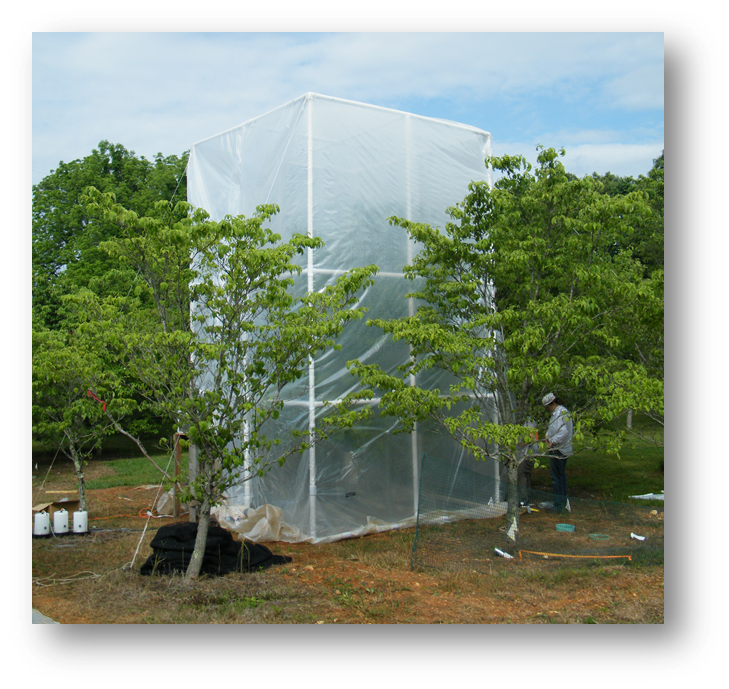
Carbon partitioning in a dogwood stand
Our
objective was to improve the carbon partitioning routines in existing
ecosystem models, and test the models using short-term, comprehensive
field measurements of processes related to carbon partitioning from
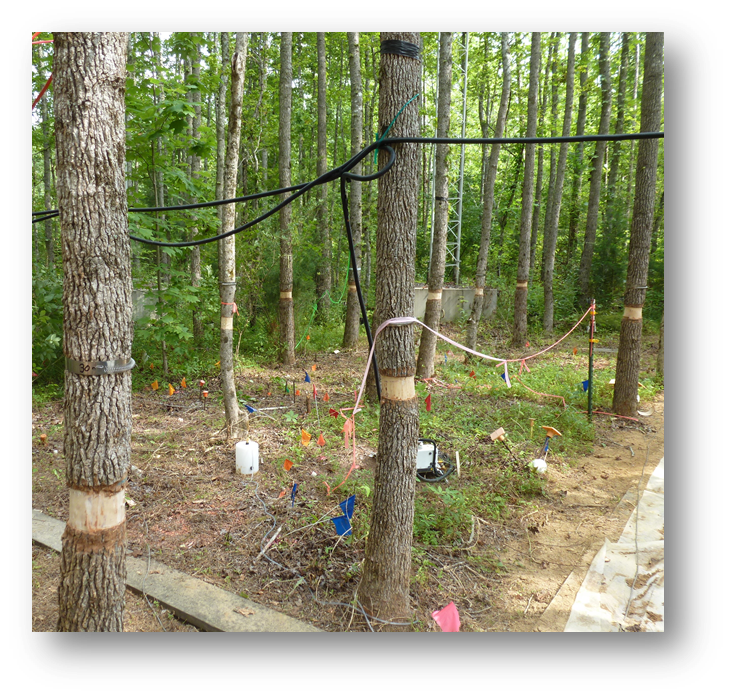
leaves to roots and roots to soil. We fumigated individual dogwood trees with 13C-enriched CO2, and compared carbon partitioning, above- and belowground, in shaded and unshaded trees.
People:
Jeff Warren, Deanne Brice, Joanne Childs, Colleen Iversen, Rich Norby
|
|
|
|
Belowground carbon partitioning in historical FACE experiment: on-going research
In summer 2011, we returned to the site of a historical Free-Air CO2-enrichment
(FACE) experiment in a sweetgum plantation. We girdled one-half of the
trees in each treatment plot with goals of determining the effects of
tree carbon inputs on soil carbon and nutrient cycling, and quantifying
the size of belowground carbon storage pools.
Publication:
Lynch
DJ, Matamala R, Iversen CM, Norby
RJ, Gonzalez-Meler MA. 2013. Stored carbon partly fuels fine-root respiration
but is not used for production of new fine roots. New Phytologist 199:
420-430.
See news coverage of our excellent student interns on a local TV station.
|
|
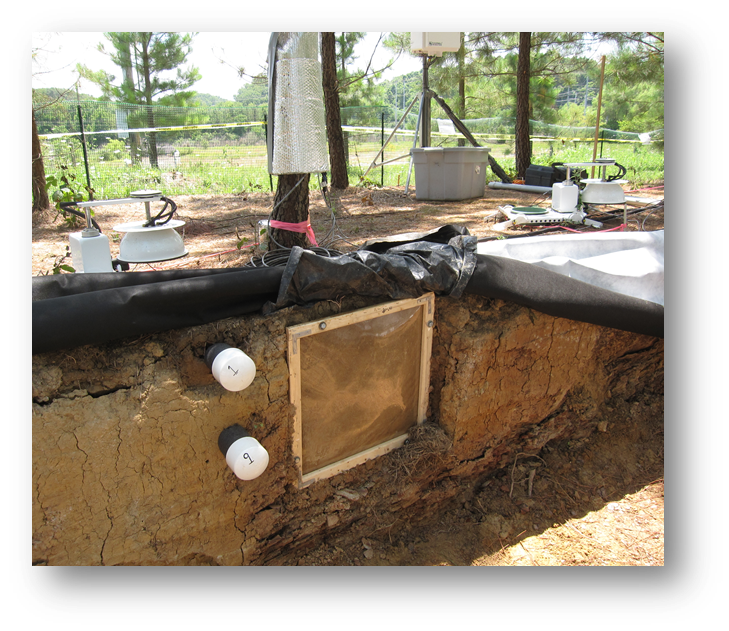 |
Carbon partitioning in a young loblolly pine stand
Our
objective was to improve the carbon partitioning routines in existing
ecosystem models, and test the models using short-term, comprehensive
field measurements of processes related to carbon partitioning from
leaves to roots and roots to soil.
Publications:
Mao J, Ricciuto DM, Thornton PE, Warren JM, King AW, Shi X, Iversen CM, Norby RJ. 2016. Evaluating the Community Land Model in a pine stand with 13CO2 labeling and shading manipulations. Biogeosciences 13: 641-657.
Warren JM, Iversen CM, Garten CT, Norby RJ, Childs J, Brice DJ, Evans RM, Gu L, Thornton PE, Weston DJ. 2012. Timing
and magnitude of carbon partitioning through a young loblolly pine
(Pinus taeda L.) stand using 13C labeling and shade treatments. Tree Physiology 32: 799-813.
|
Oak Ridge National Laboratory
Free-Air CO2 Enrichment Experiment
*A CO2-enriched sweetgum plantation located in Oak Ridge, TN, USA (1998 - 2009). While ORNL FACE has ended, plant and soil samples have been archived and are available to the scientific community upon request.
|

|
Data-model interactions: on-going research
Data from ecosystem-scale Free-Air CO2 Enrichment
experiments provide a unique opportunity to test model assumptions and
reduce model uncertainty in the representation of ecosystem responses
to rising atmospheric CO2 concentrations.
Publications:
De Kauwe MG, Medlyn BE, Zaehle S, Walker AP, Dietze MC,
Wang Y-P, Luo Y, Jain AK, El-Masri B, Hickler T, Warlind D, Weng E,
Parton WJ, Thornton PE, Wang S, Prentice IC, Asao S, Smith B, McCarthy
HR, Iversen CM, Hanson PJ, Warren JM, Oren R, Norby RJ. 2014.
Where
does the carbon go? A model-data intercomparison of vegetation carbon
allocation and turnover processes at two temperate forest free-air CO2 enrichment sites. New Phytologist 203: 883-899.
Iversen CM, Norby RJ. 2014. Terrestrial plant
productivity and carbon allocation in a changing climate. In Freedman
B, ed. Handbook of Global Environmental Pollution: Global
Environmental Change, New York, NY: Springer, pp. 297-316.
Medlyn BE, Zaehle S, De Kauwe MG, Walker AP, Dietze MC, Hanson P,
Hickler T, Jain A, Luo Y, Parton W, Prentice IC, Thornton PE, Wang S,
Wang Y-P, Weng E, Iversen CM, McCarthy H, Warren JM, Oren R, Norby RJ.
2015. Using ecosystem experiments to improve vegetation models. Nature Climate Change 5: 528-534.
Walker AP, Hanson PJ, De Kauwe MG, Medlyn BE, Zaehle S,
Asao S, Dietze M, Hickler T, Huntingford C, Iversen CM, Jain A,
Lomas M, Luo YQ, McCarthy H, Parton WJ, Prentice IC, Thornton PE, Wang
SS, Wang YP, Warlind D, Weng ES, Warren, JM, Woodward FI, Oren R, Norby
RJ. 2014. Comprehensive ecosystem model-data synthesis using multiple data sets at two temperate forest free-air CO2 enrichment experiments: Model performance at ambient CO2 concentration. Journal of Geophysical Research: Biogeosciences 119: 937-964.
Zaehle S, Medlyn BE, De Kauwe NG, Walker AP, Dietze MC,
Hickler T, Luo Y, Wang Y-P, El-Masri B, Thornton P, Jain A, Wang S,
Warlind D, Weng E, Parton W, Iversen CM, Gallet-Budynek A,
McCarthy H, Finzi A, Hanson PJ, Prentice IC, Oren R, Norby
RJ. 2014. Evaluation of 11 terrestrial carbon–nitrogen cycle models against observations from two temperate Free-Air CO2 Enrichment studies. New Phytologist 202: 803–822.
|
|
|
Belowground harvest: on-going research
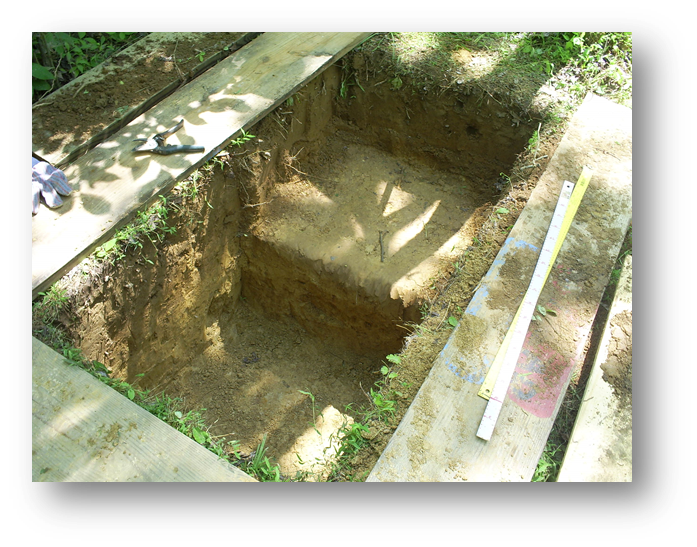
We
excavated two large soil pits by hand in each treatment ring in late
June, 2009 at the conclusion of the ORNL FACE experiment. Roots were separated into diameter classes for biomass and
nutrient analyses. Subsamples of sieved soil were used in a soil
incubation experiment to determine carbon and nitrogen mineralization
throughout the soil profile.
Publication:
Iversen CM, Keller JK, Garten CT, Norby RJ. 2012. Soil carbon and nitrogen cycling and storage throughout the soil profile in a sweetgum plantation after 11 years of CO2-enrichment. Global Change Biology 18: 1684-1697.
|
|
|
Nitrogen cycling throughout the soil profile under elevated [CO2]
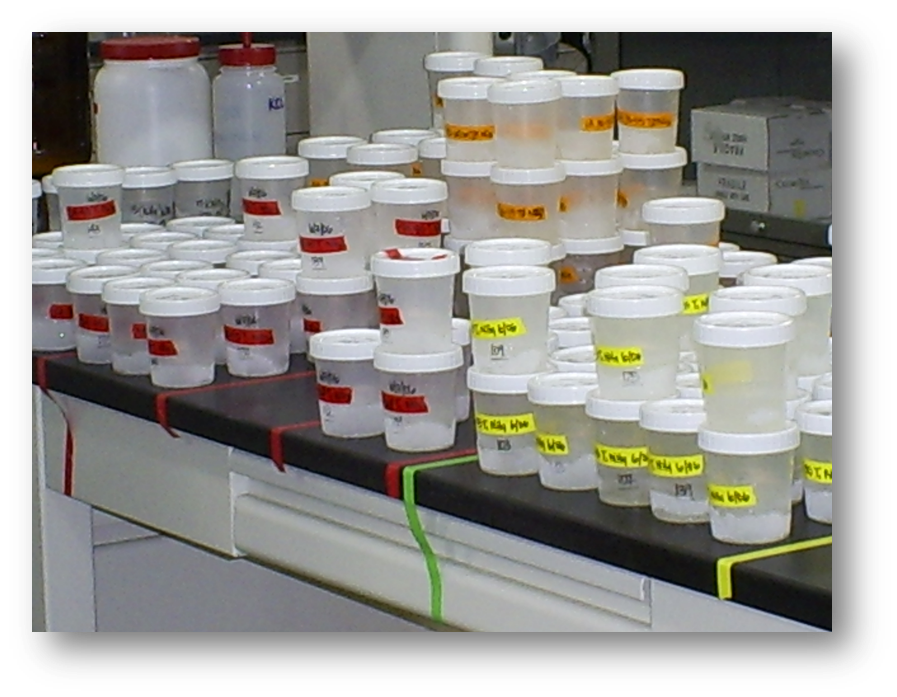
We
used isotope pool dilution to measure potential gross nitrogen cycling
rates throughout the soil profile. We found that nitrogen
mineralization at depth in the soil, combined with increased root
exploration of the soil volume under elevated [CO2], may be
more important than changes in potential gross nitrogen cycling rates
in sustaining forest responses to rising atmospheric CO2.
Publication:
Iversen CM, Hooker TD, Classen AT, Norby RJ. 2011. Net mineralization of N at deeper soil depths as a potential mechanism for sustained forest production under elevated [CO2]. Global Change Biology 17: 1130-1139.
|
|

|
Digging deeper: Rooting distributions in CO2- enriched forests
Experimental evidence from a diverse set of forested ecosystems indicates that CO2-enrichment
may lead to deeper rooting distributions. Altered rooting distributions
are expected to affect important ecosystem processes such as root
physiology and soil nutrient cycling.
Publication:
Iversen CM. 2010. Digging deeper: Fine root responses to rising atmospheric [CO2] in forested ecosystems. New Phytologist 186: 346-357.
*This paper was a finalist in the New Phytologist Tansley Medal competition.
Related Publications:
Garten CT, Iversen CM, Norby RJ. 2011. Litterfall 15N abundance indicates declining soil nitrogen availability in a free air CO2-enrichment experiment. Ecology 92: 133-139.
McMurtrie RE, Iversen CM, Dewar RC, Medlyn BE, Nasholm T, Pepper DA, Norby RJ. 2012. Plant root distributions and nitrogen uptake predicted by a hypothesis of optimal root foraging. Ecology and Evolution 2: 1235-1250.
|
|

|
Missing links in the root-SOM continuum
Our goal was to synthesize root- and soil-centric studies into an
integrated understanding of belowground ecosystem processes in an
organized oral session at an annual Ecological Society of America meeting. Speakers emphasized
the importance of the rhizosphere and soil environment for the
transformation of root-derived carbon to long-lived SOM. Integration of
observations made along the root-SOM continuum can lead to a more
holistic view of belowground ecology.
Publications:
Iversen CM, O’Brien SL. 2010. Organized Oral Session 3. Missing links in the root–soil organic matter continuum. Bulletin of the Ecological Society of America 91: 54-64.
O ’Brien SL, Iversen CM. 2009. Missing links in the root-soil organic matter continuum. New Phytologist 184: 513-516.
|
|
|
Root-derived carbon and nitrogen input to the soil
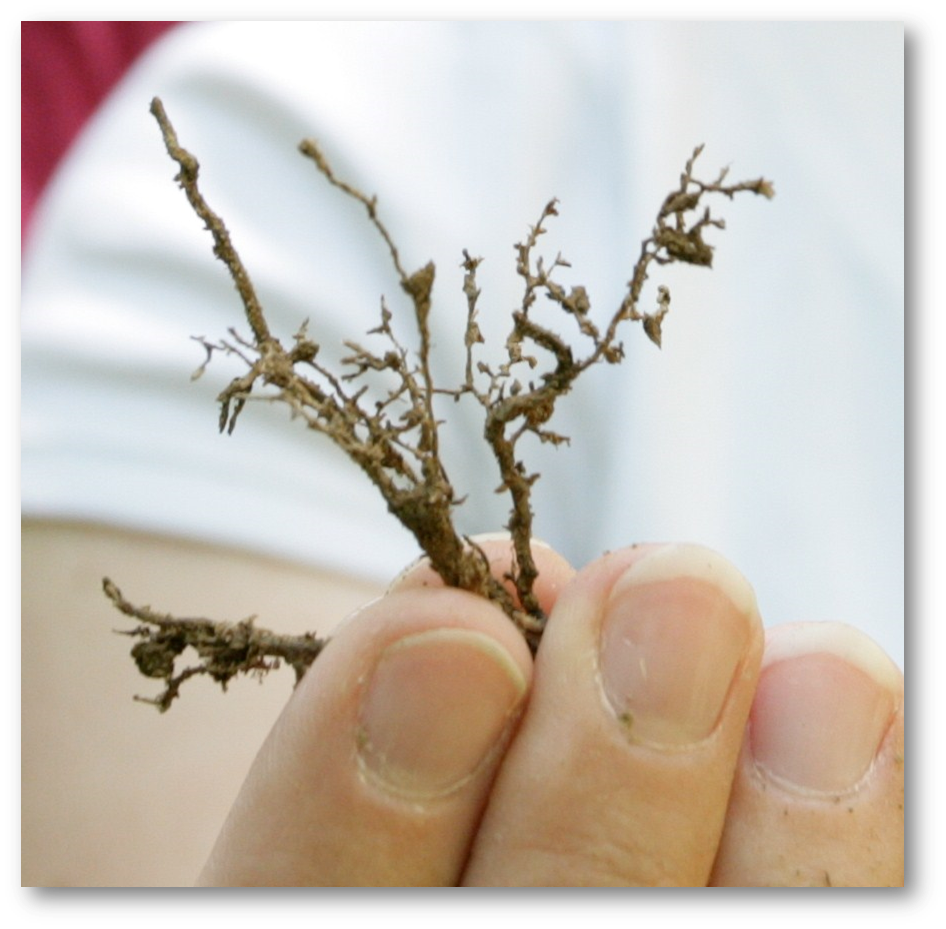
We
combined a long-term minirhizotron data set with continuous,
root-specific measurements to assess carbon and nitrogen input from
root mortality. We found that the flux of carbon and nitrogen into the
soil nearly doubled under elevated [CO2] due to stimulated
root production and mortality. Moreover, much of the carbon and
nitrogen input occurred relatively deep in the soil profile where
decomposition dynamics are likely to be different from what is commonly
observed and modeled in the upper soil.
Publication:
Iversen CM, Ledford J, Norby RJ. 2008. CO2 enrichment increases carbon and nitrogen input from fine roots in a deciduous forest. New Phytologist: 179: 837-847.
Related Publications:
Franklin O, McMurtrie RE, Iversen CM, Crous KY, Finzi A, Tissue DT, Ellsworth DS, Oren R, Norby RJ. 2009. Forest fine-root production and nitrogen use under elevated CO2: contrasting responses in evergreen and deciduous trees explained by a common principle. Global Change Biology 15: 132-144.
Hockaday WC, Gallagher ME, Masiello CA, Baldock JA, Iversen CM, Norby RJ. 2015. Forest soil carbon oxidation state and oxidative ratio responses to elevated CO2. Journal of Geophysical Research: Biogeosciences 120: 1797-1811.
|
|
|
Nitrogen limitation controls carbon partitioning under elevated atmospheric [CO2]
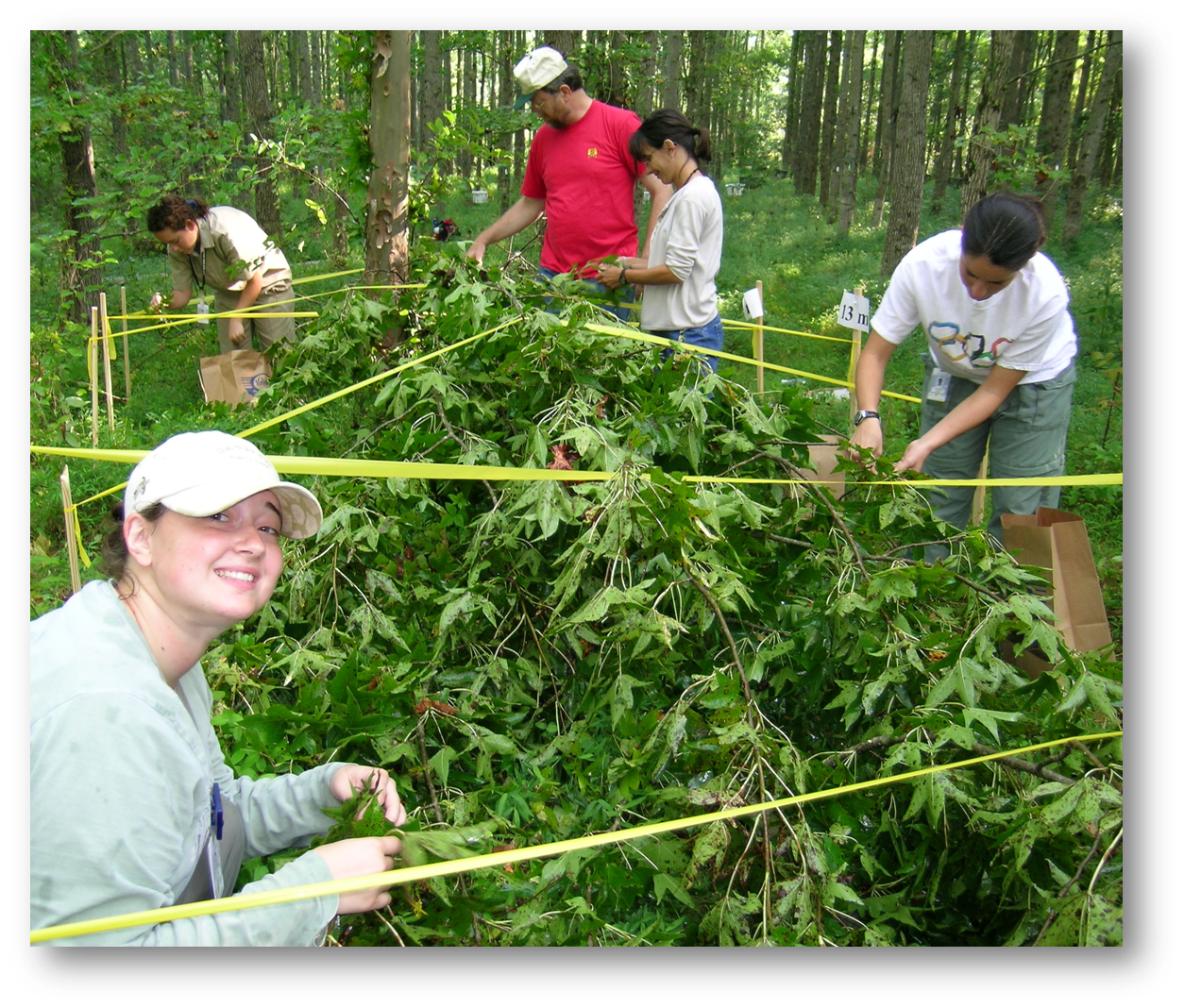
In
a nitrogen fertilization experiment in an adjacent sweetgum stand, we
found that the increased production of ephemeral roots under elevated
[CO2] was most likely a mechanism for greater nitrogen
acquisition in response to nitrogen limitation within the stand.
Publication:
Iversen CM, Norby RJ. 2008. Nitrogen limitation in a sweetgum plantation: Implications for carbon allocation and storage. Canadian Journal of Forest Research 38: 1021-1032.
Related Publications:
Finzi AC, Norby RJ, Calfapietra C,
Gallet-Budynek A, Gielen B, Holmes WE,
Hoosbeek MR, Iversen CM, Jackson RB, Kubiske MB,
Ledford J, Liberloo M, Oren R, Polle A, Pritchard S, Zak
DR, Schlesinger WH, Ceulemans R. 2007. Increases
in nitrogen uptake rather than nitrogen-use efficiency support higher
rates of temperate forest productivity under elevated CO2. Proceedings of the National Academy of Sciences, USA 104: 14014-14019.
Norby RJ, Iversen CM. 2006. Nitrogen uptake, distribution, turnover, and efficiency of use in a CO2-enriched sweetgum forest. Ecology 87: 5-14.
|
|
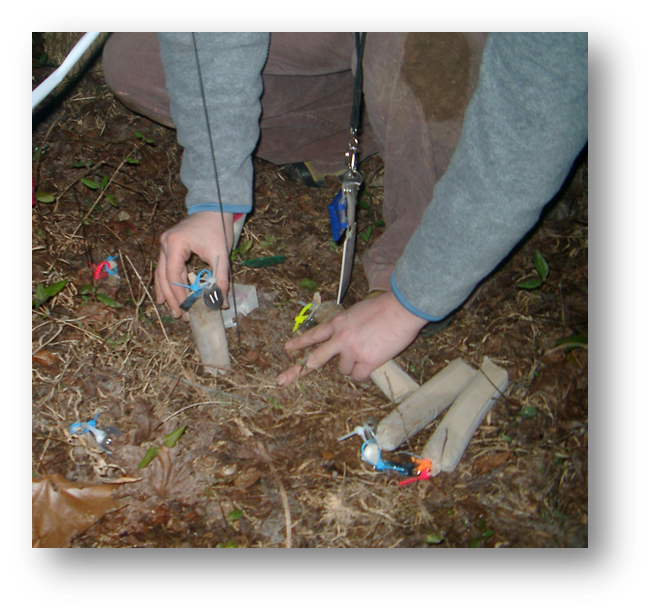 |
Root decomposition and carbon storage in soil organic matter: on-going research
We
combined root decomposition techniques with soil fractionation
techniques to quantify the transfer of carbon and nitrogen from
decomposing fine-root litter to relatively long-lived SOM using the
unique depleted C-13 signature of organic material in plants and soils
enriched with elevated [CO2]. This
research was funded by a dissertation improvement grant from the National Science Foundation.
People:
Julie Jastrow, Rich Norby, Colleen Iversen
|
|
Nutrient-limited peatland ecosystems
|
|
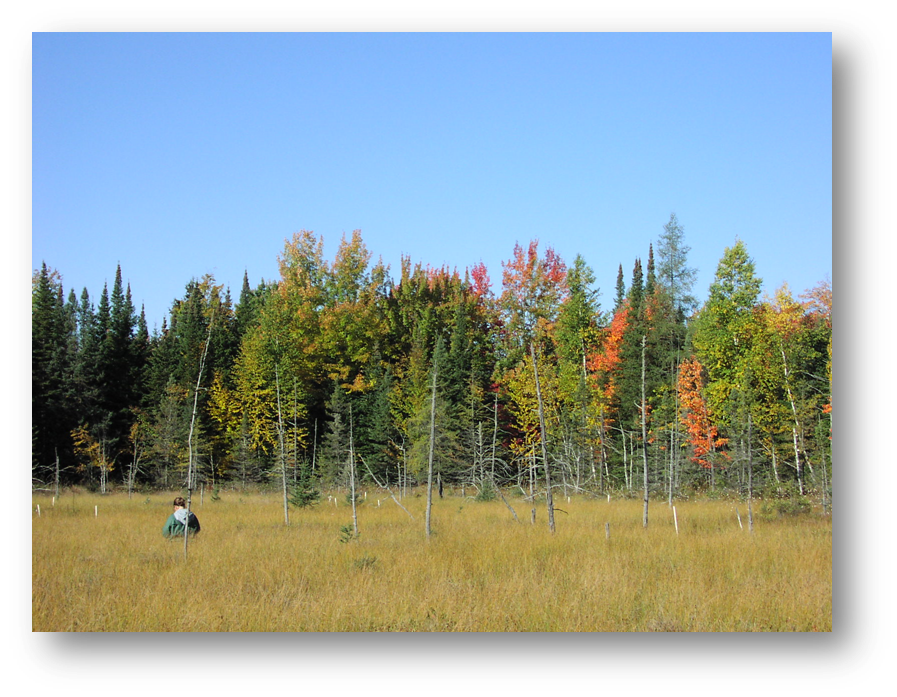
Scaling plant nutrient use in peatland ecosystems
We
fertilized a natural gradient of nutrient-limited peatland ecosystems
in Michigan, USA, with nitrogen, phosphorus, or a combination of both
nutrients. Our objectives were to determine how changes in carbon and
nitrogen partitioning within a plant, and changes in community
composition, would affect plant nitrogen-use efficiency.
Publication:
Iversen CM, Bridgham SD, Kellogg LE. 2010. Scaling plant nitrogen-use and uptake efficiencies in response to nutrient addition in peatlands. Ecology 91: 693-707.
Related Publications:
Keller JK, Bauers AK, Bridgham SD, Kellogg LE, Iversen CM. 2006. Nutrient control of microbial carbon cycling along an ombrotrophic-minerotrophic peatland gradient. Journal of Geophysical Research 111: G03006.
Keller JK, Bridgham SD, Chapin CT, Iversen CM. 2005. Limited effects of six years of fertilization on carbon mineralization dynamics in a Minnesota fen. Soil Biology and Biochemistry 37: 1197-1204.
|
|
|